Interior doors are used every day, so they should not feel like an afterthought.
A good door should swing smoothly, sit with a clean reveal, latch without being forced, and look like it belongs in the room. When a door rubs, sticks, rattles, shows uneven gaps, or needs to be lifted to close, the problem is usually not only the door itself. The opening, jamb, hinges, latch, casing, floor level, and wall condition all have a part in the final result.
Wood Job Finish Carpentry provides owner-led interior door installation and replacement for homeowners, builders, designers, contractors, and renovators across Oakville, Milton, Mississauga, Burlington, Cambridge, Guelph, Kitchener, Hamilton, Vaughan, Toronto and surrounding areas.
The work is handled with personal responsibility by Jack Cenk Ozer. That means the small decisions on site — how the door is trimmed, how the hinges sit, how the latch meets the strike plate, how the casing reveal is kept, and how the final gaps are adjusted — are not passed down a chain.
They are handled by the person whose name is attached to the company.
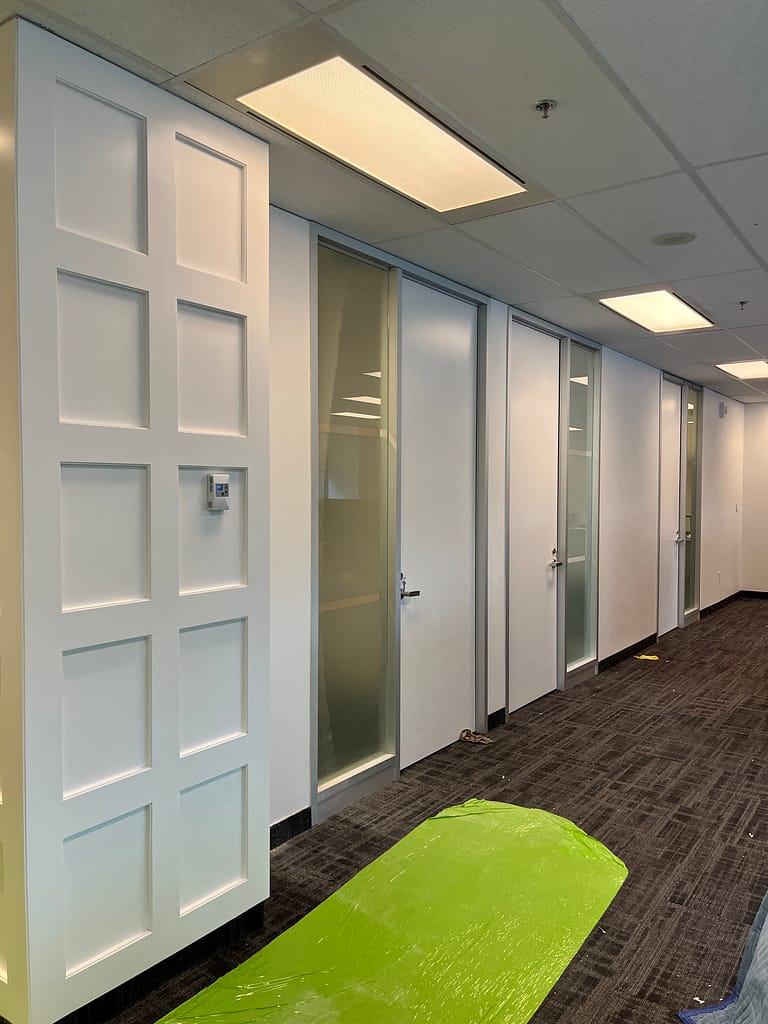
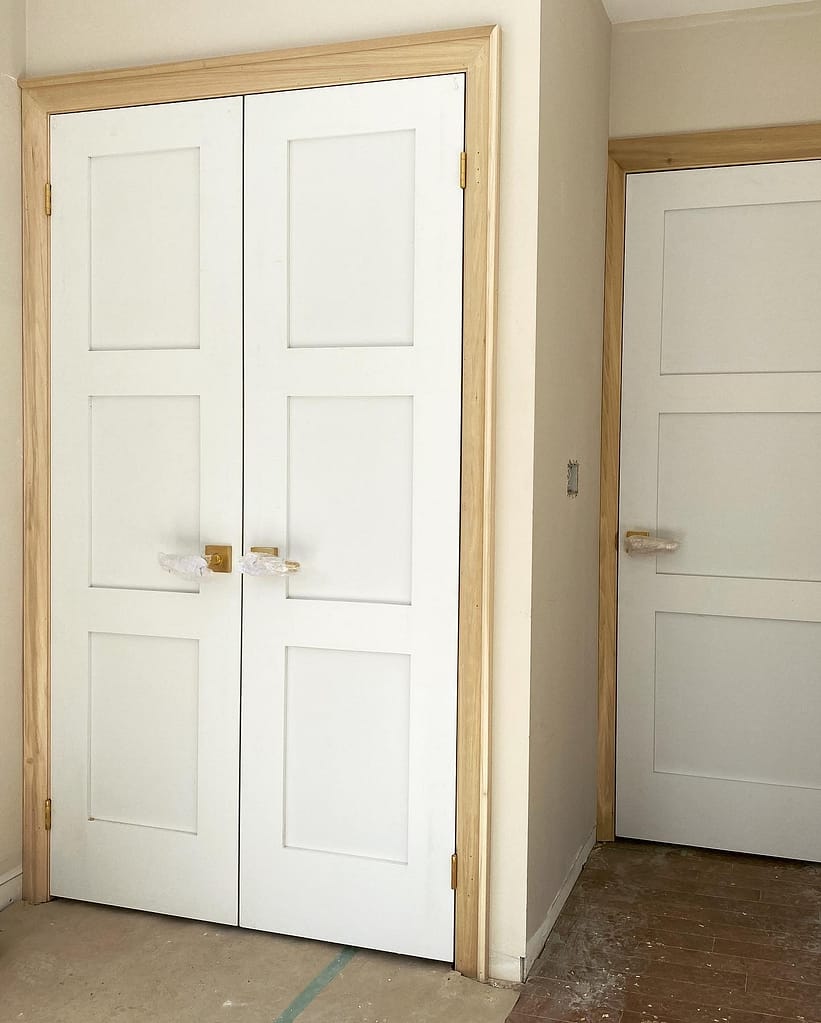
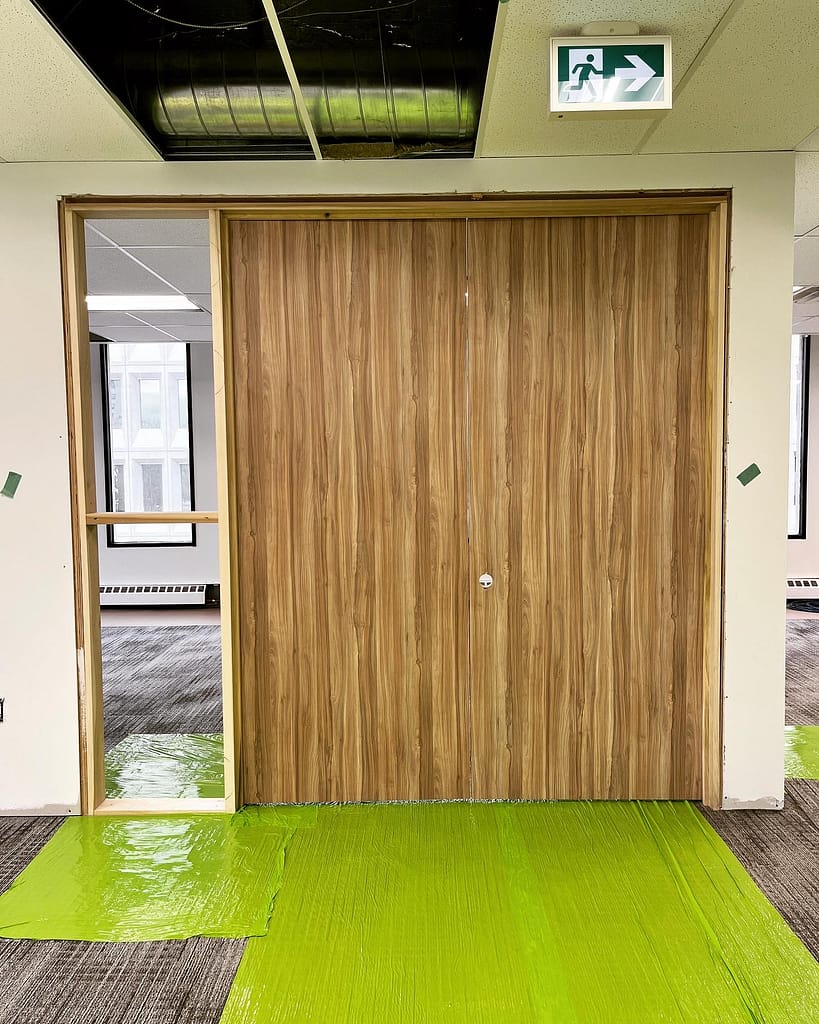
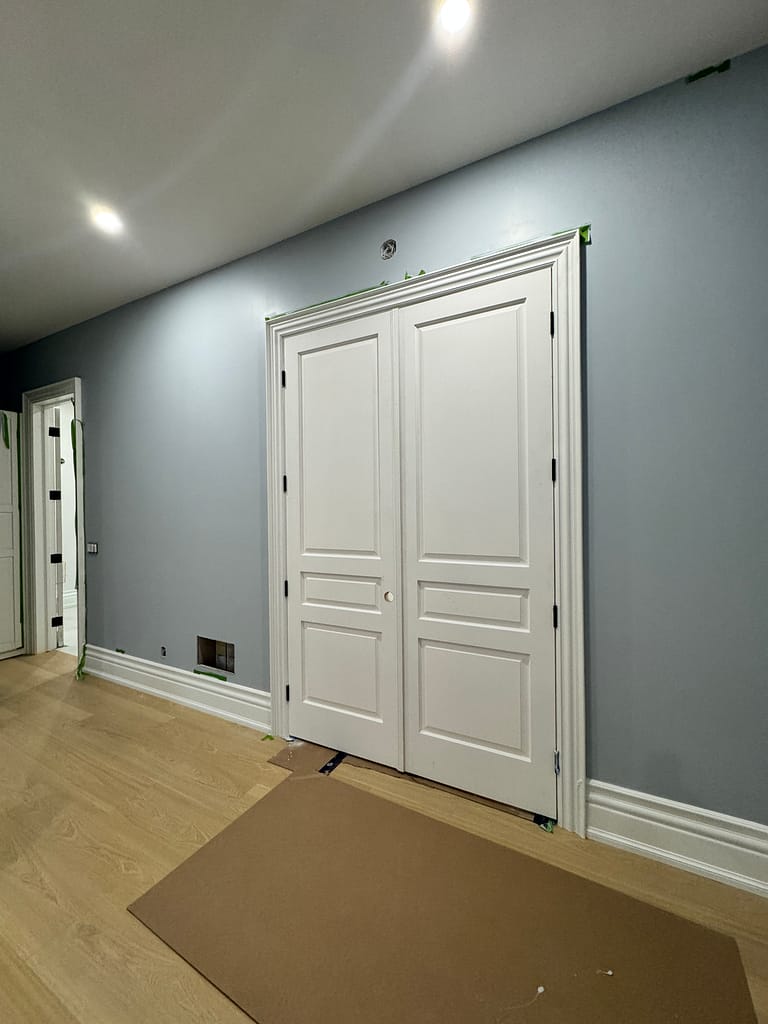
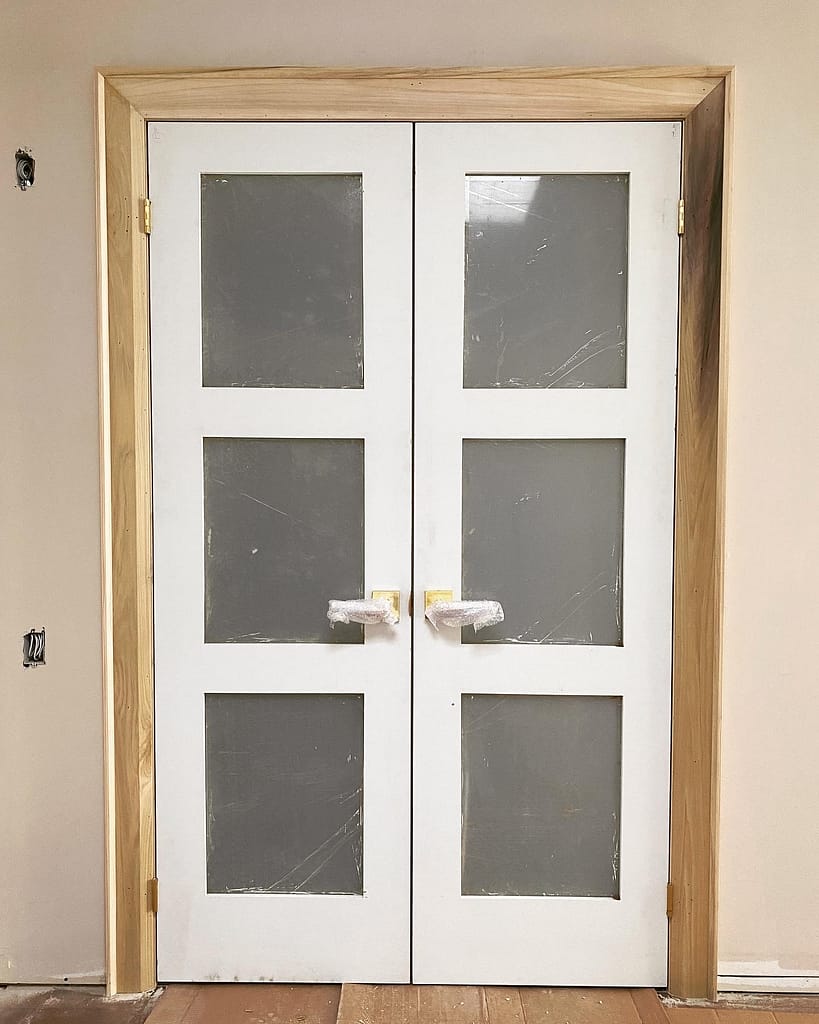
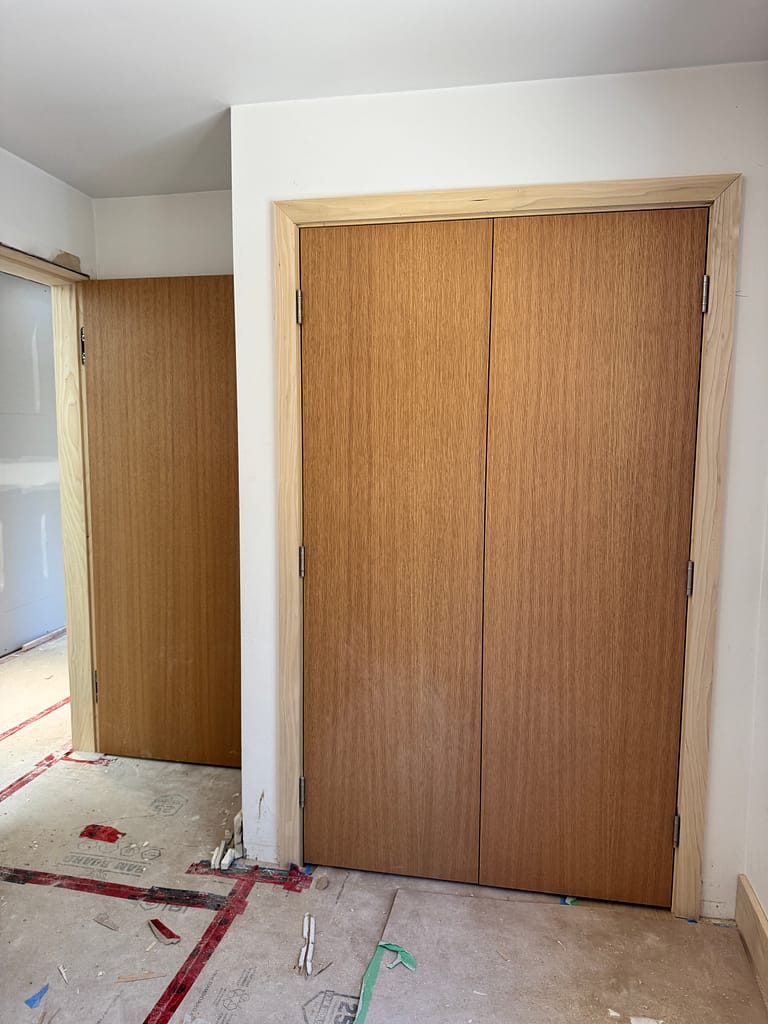
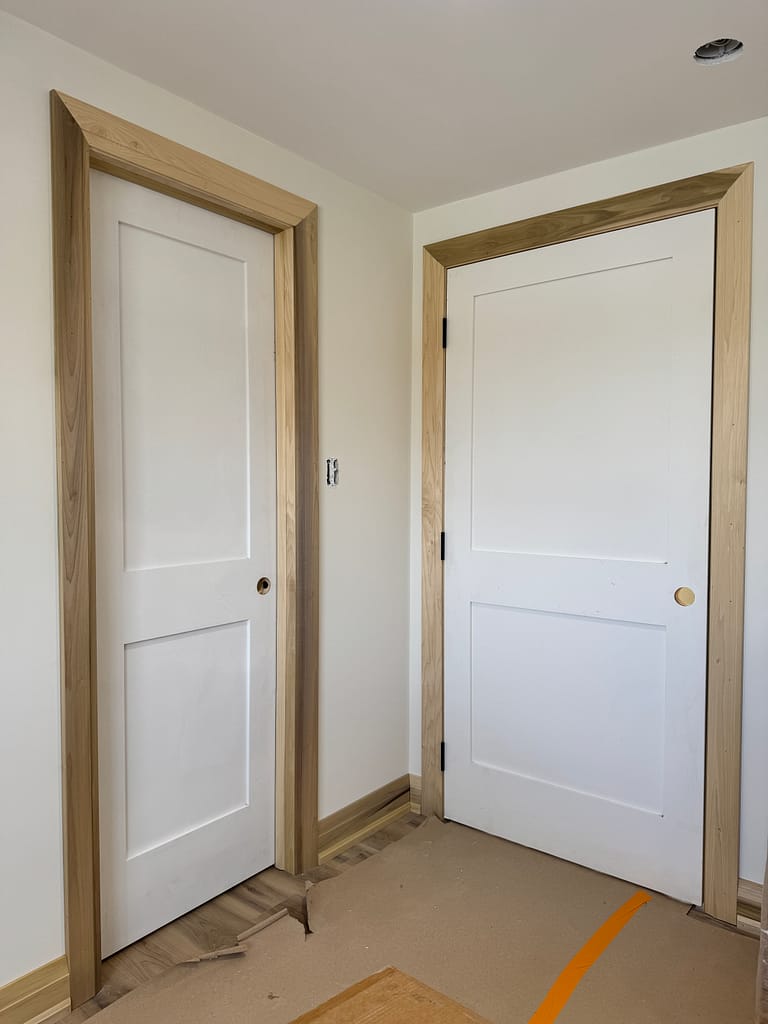

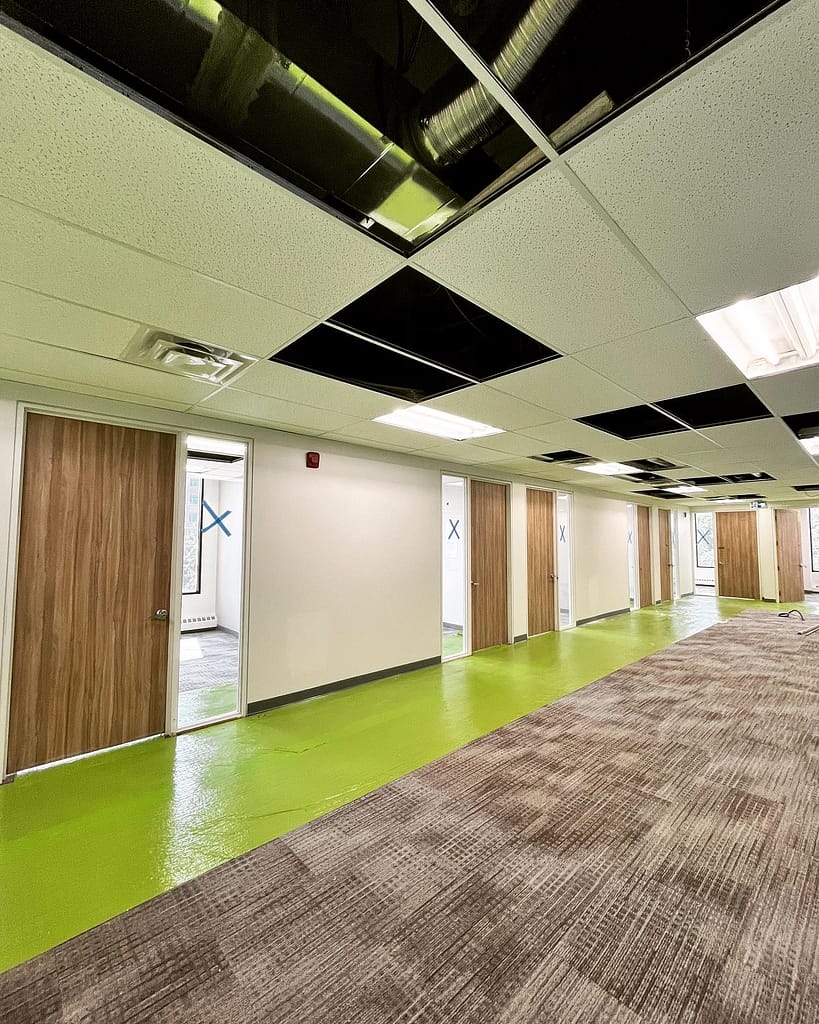
Interior door installation is not only about hanging a slab.
In real homes, openings are not always square. Floors are not always level. Old jambs may be twisted. Existing casing may be hiding rough drywall. A new solid-core door may be heavier than the old hollow-core door. Hardware may not line up with the previous holes.
That is why Wood Job looks at the opening before treating the door as a simple product.
★★★★★
70 Google Reviews.
Earned One Job at a Time.
Real projects. Real homes. Real customers.
Wood Job Finish Carpentry has earned trust through interior door installation, custom jambs, casing, solid-core door replacement, closet doors, French doors, pocket doors, and detailed finish carpentry across Oakville, Milton, Halton Region, Waterloo Region, and the GTA.
Many clients mention the same things: clean work, clear communication, reliability, careful fitting, and the ability to solve problems when the home does not give perfect conditions.
Interior Door Installation That Feels Built Into the Home
A properly installed interior door should feel natural in the room.
It should not scrape the floor. It should not swing open by itself. It should not need a shoulder push to latch. The gap around the door should look balanced. The hinges should sit cleanly. The handle should feel aligned. The casing should frame the opening instead of trying to hide a bad fit.
If the existing door already rubs, sticks, swings open or refuses to latch, our guide to common interior door alignment problems explains what those symptoms may reveal about the jamb, hinges and opening.
At Wood Job Finish Carpentry, we focus on the details that make a door feel right after the tools are packed away: the opening, jamb, reveal, hinge mortises, latch alignment, casing, hardware, baseboard connection, and floor clearance.
This kind of work matters because homeowners do not look at a door once.
They use it every day.
What We Check Before Installing Interior Doors
Before a door is installed or replaced, the opening has to be understood.
A door can be well-made and still perform poorly if the frame is out of square, the jamb is twisted, the floor is high on one side, or the old hinge locations do not match the new door.
Wood Job checks details such as:
- opening width and height
- jamb condition
- wall thickness
- floor level
- door swing direction
- hinge locations
- latch and strike plate alignment
- casing space
- baseboard transitions
- flooring clearance
- wall straightness
- whether the existing frame can be reused
- whether a custom jamb or adjustment is needed
These checks help decide whether the project is a straightforward slab replacement, a full pre-hung door installation, a custom jamb situation, or a more detailed finish carpentry repair.
Homeowners ordering their own doors should also record the actual slab width, height, thickness, bevel, hinge locations and hardware preparation. Our interior door measuring guide explains what to check before purchasing the replacement.
Slab Doors, Pre-Hung Doors, and Existing Frames
Homeowners often ask whether they can replace only the door slab or whether the whole frame needs to be replaced.
The honest answer is: it depends on the opening.
A slab door is only the door panel. It can be a good option when the existing jamb is straight, solid, and worth keeping. But slab replacement still needs careful work. The new door may need trimming. Hinges must be cut accurately. The latch has to meet the strike plate. The reveal has to be adjusted. If the old frame is not square, the new slab will not magically fix it.
A pre-hung door comes already mounted in a jamb. This can be useful when the old jamb is damaged, missing, badly installed, or not worth saving. But a pre-hung door still needs proper setting, shimming, leveling, casing, and final adjustment.
Neither option is automatically better.
The right choice depends on the existing frame, the wall, the floor, the door type, the finish goal, and the level of correction needed.
For homeowners comparing the main door options, this guide may help: Slab Door vs Pre-Hung Door: Which One Do You Need for Interior Door Replacement?
If the main question is whether the existing jamb can stay, read Can You Replace Interior Doors Without Replacing the Frame? before choosing the replacement method.
Solid-Core Door Replacement
Solid-core doors can make a home feel quieter, heavier, and more finished.
They are often a good upgrade from basic hollow-core builder-grade doors, especially for bedrooms, bathrooms, home offices, basement rooms, and areas where privacy matters.
But solid-core doors also make poor installation more obvious. They are heavier. They put more demand on the hinges. They need better alignment. If the jamb is weak, twisted, or poorly fastened, the weight of the new door can expose problems that were easier to ignore with a lighter hollow-core door.
For solid-core door installation, Wood Job pays close attention to hinge support, reveal lines, latch alignment, clearance, and how the door feels when it opens and closes.
A solid door should feel solid for the right reason — not heavy, awkward, or forced.
For a deeper look at this upgrade, see: Should You Replace Hollow-Core Interior Doors With Solid-Core Doors?
Custom Jambs and Non-Standard Door Openings
Not every home gives you standard openings.
Basements, older homes, condos, additions, renovated spaces, and previous DIY work often create openings that are wider, narrower, deeper, shallower, or less square than expected.
In these cases, forcing standard material into the opening usually leads to a poor result.
Wood Job can build or adjust custom jambs for openings that need a more careful approach. This may include resizing doors, working with MDF jamb material, adjusting casing width, dealing with uneven wall returns, or fitting a door into an opening that was never prepared properly in the first place.
A custom jamb is not about making the project sound fancy.
It is about making the door fit the real space.
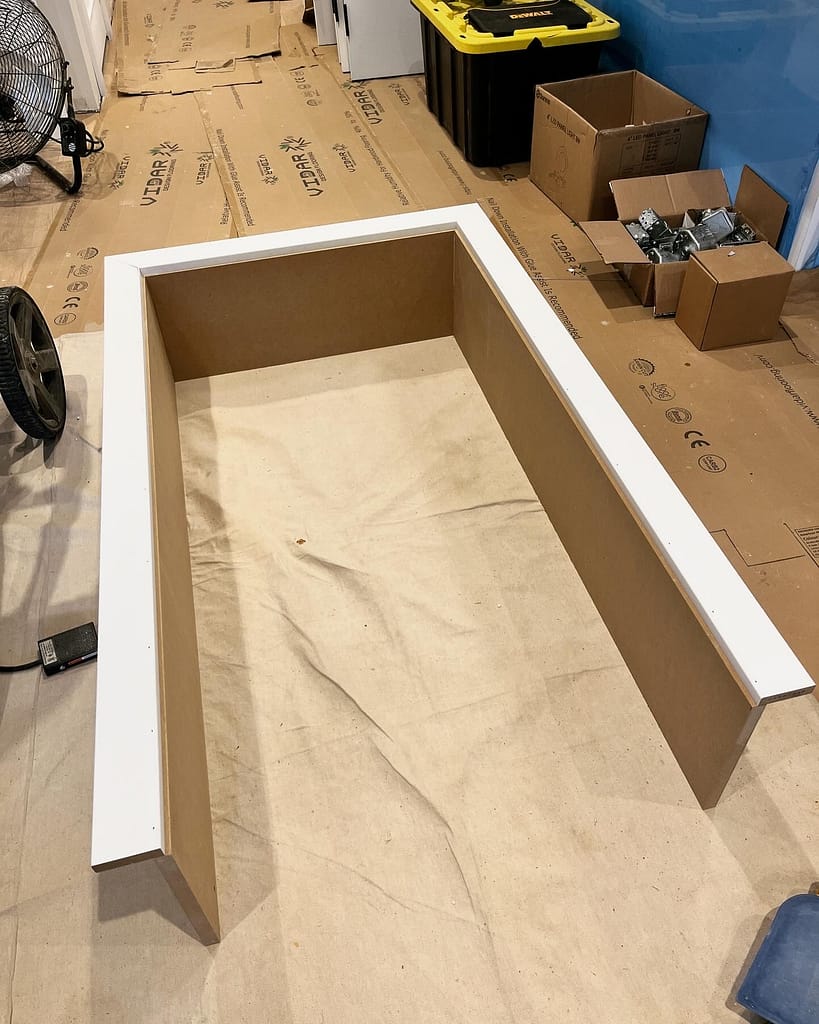
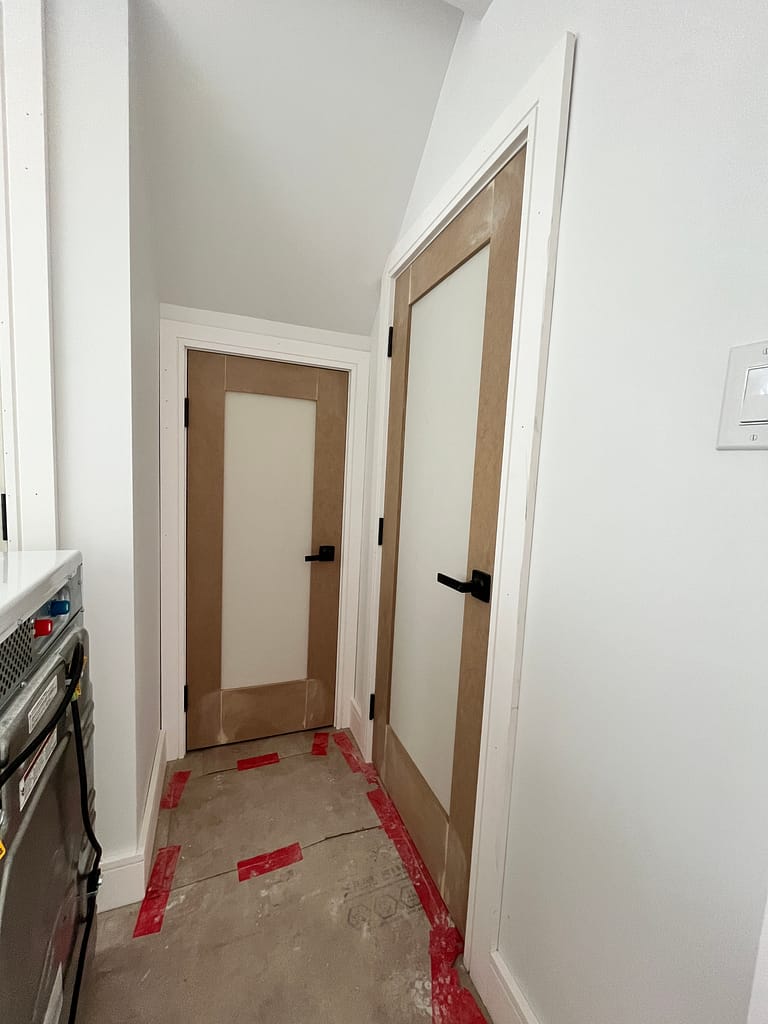
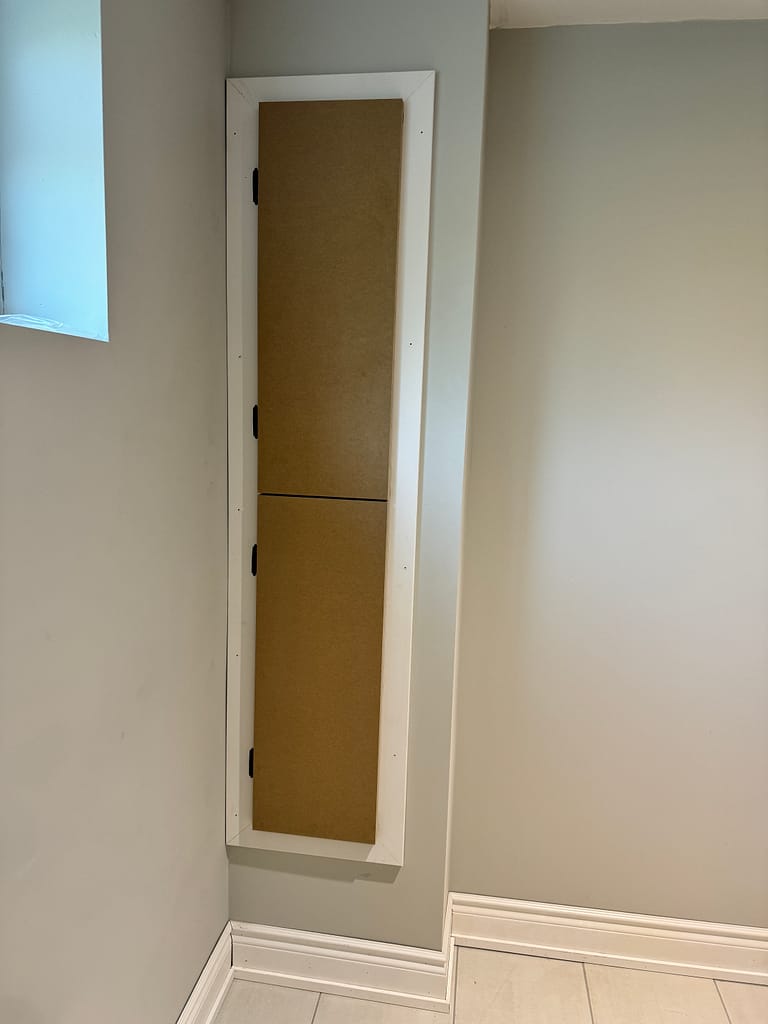
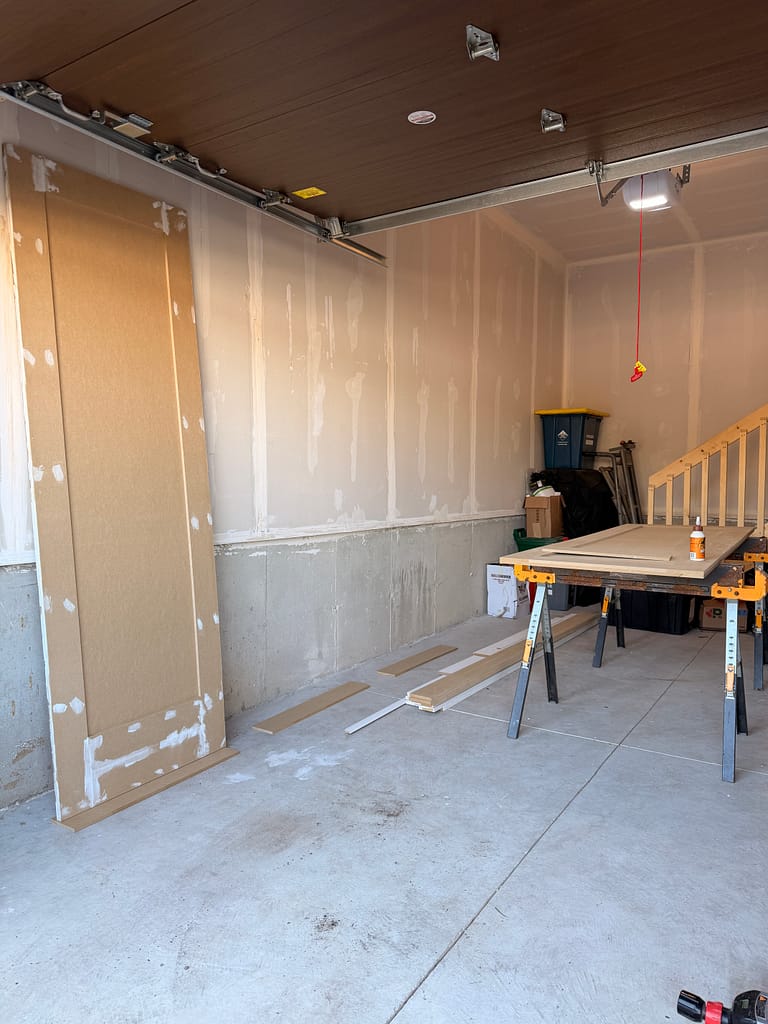
Custom door and frame prepared off-site for a tight storage opening. Careful prep made the on-site installation faster, cleaner, and easier to control.
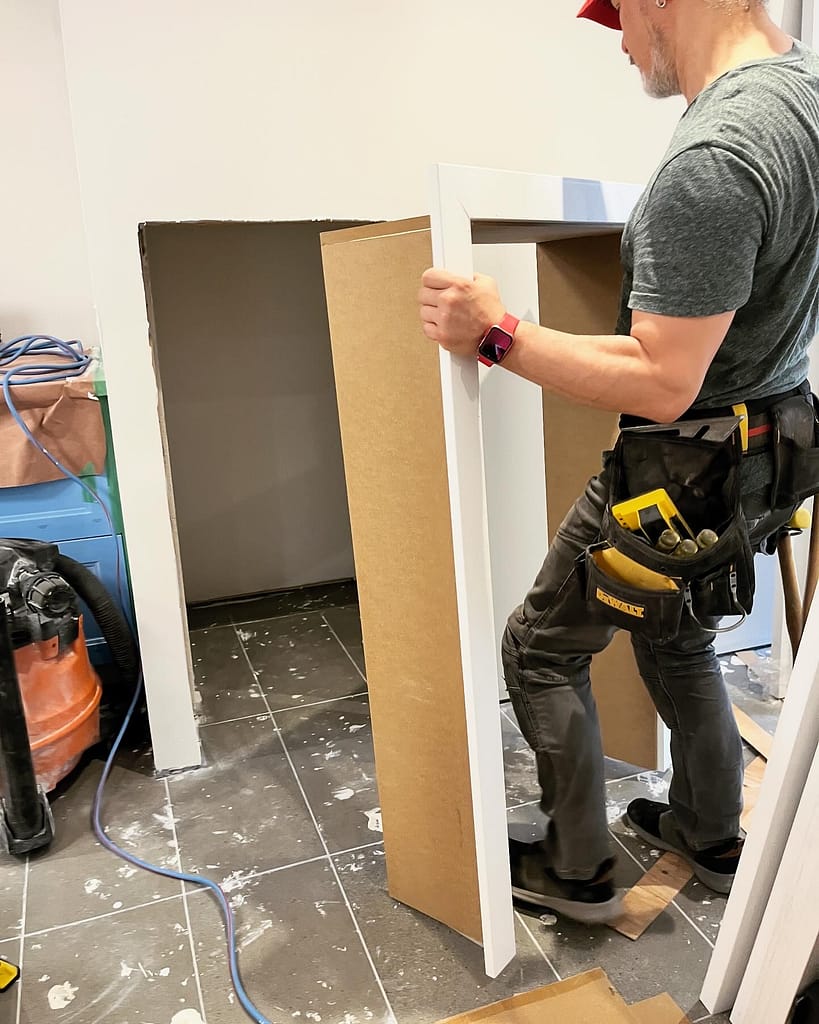
Jack Cenk Ozer installing the custom frame into a compact wall space. In small openings, the fit has to be planned carefully before the casing and trim can look clean.
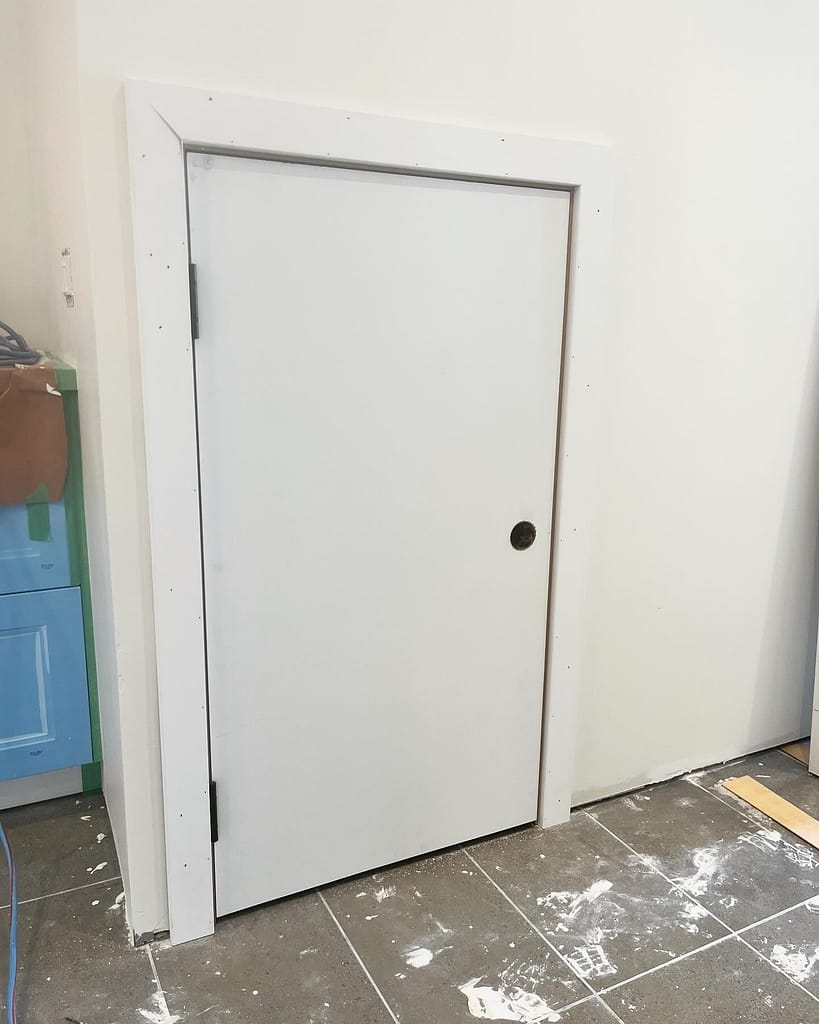
A custom-size storage door installed with clean lines and flush trim. A small-space solution that feels simple, practical, and properly finished.
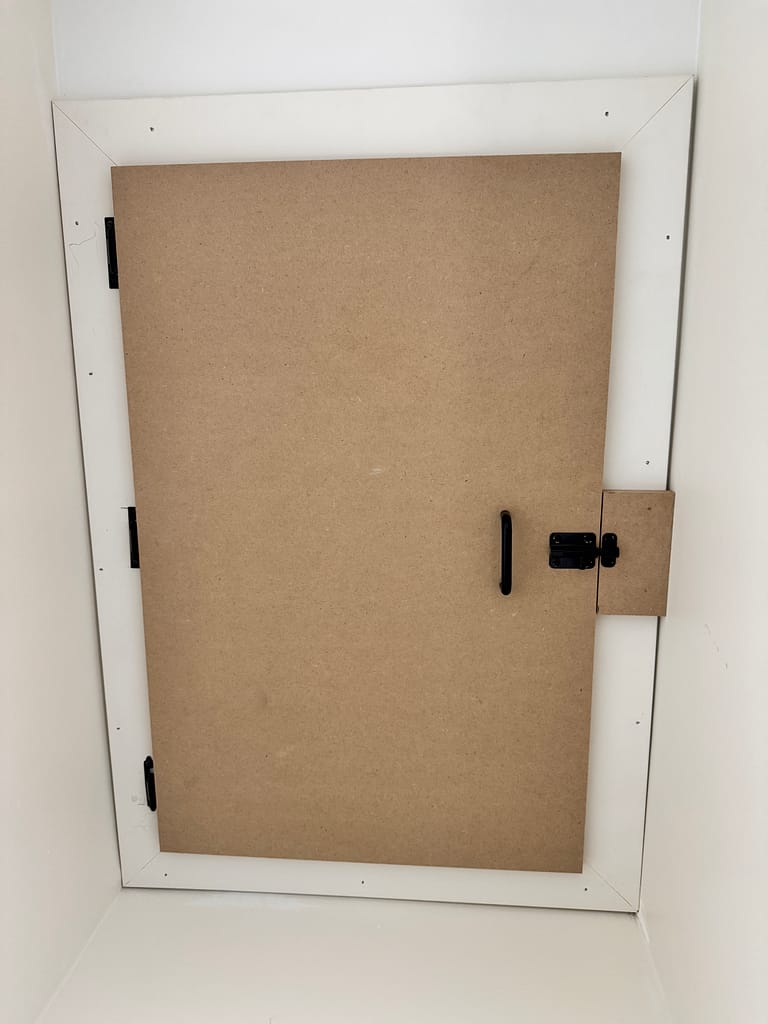
Door Casing and Trim Around the Opening
A door is not visually finished until the casing is handled properly.
Casing frames the opening. It covers the joint between the jamb and the wall. It creates the reveal around the door. It connects to the baseboard. If the casing is rushed, the whole door installation can look unfinished even when the door itself swings well.
Wood Job installs and adjusts door casing as part of interior door projects where needed.
This can include replacing old casing, matching or updating trim profiles, working around tight wall returns, cutting casing near baseboards, fitting trim against uneven drywall, and keeping the reveal lines clean.
Caulking can help finish a small paint-grade joint, but it should not be used as a replacement for proper fitting.
French Doors, Glass Doors, and Home Office Openings
French doors and glass interior doors need more planning than a single bedroom door.
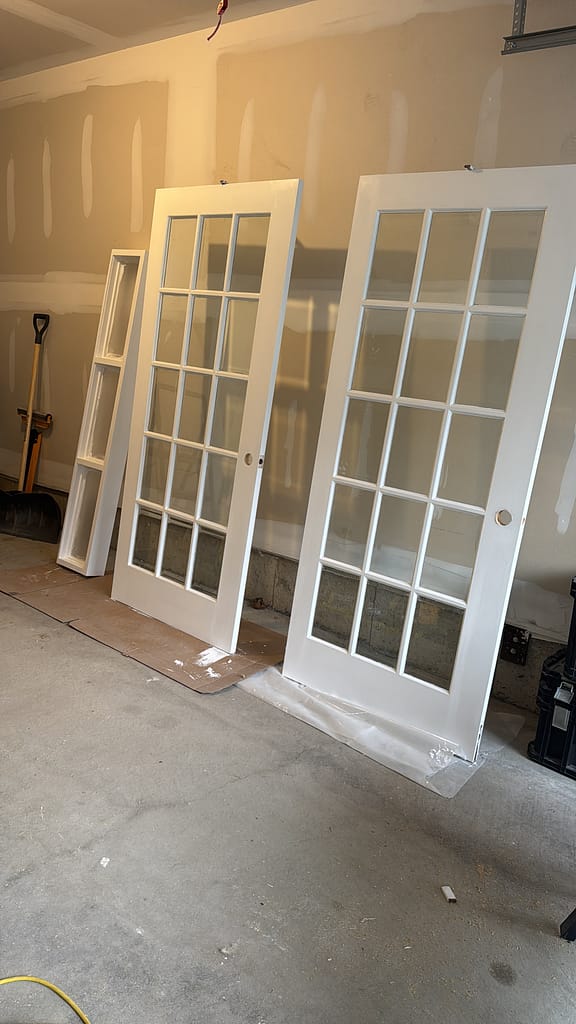
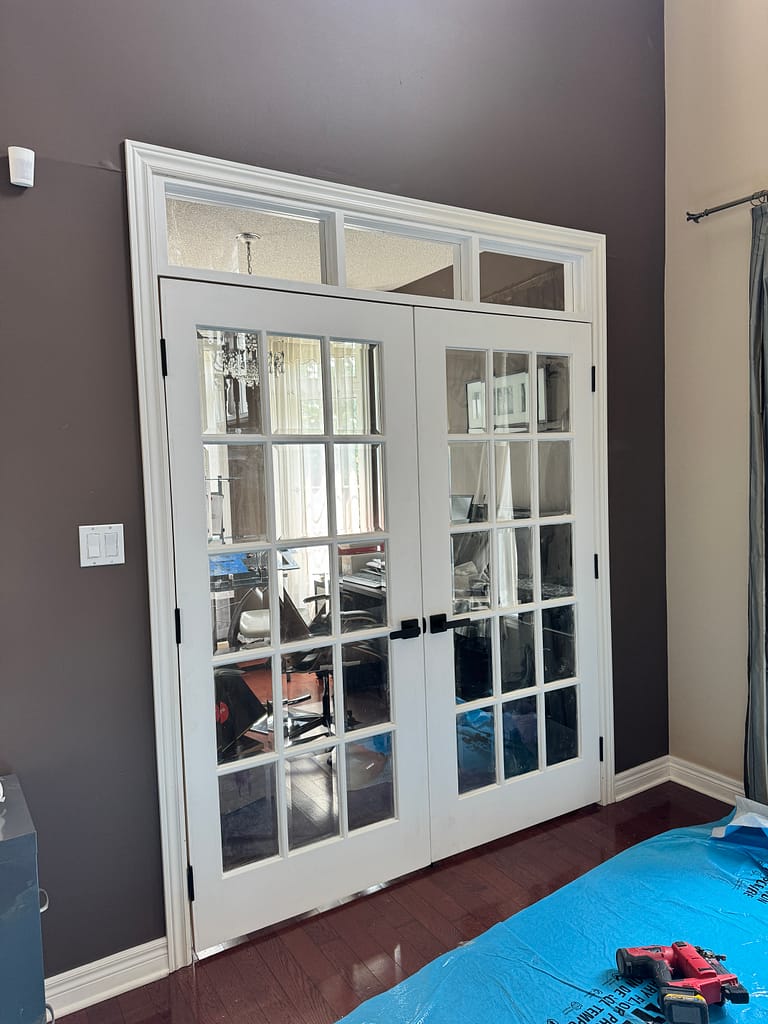
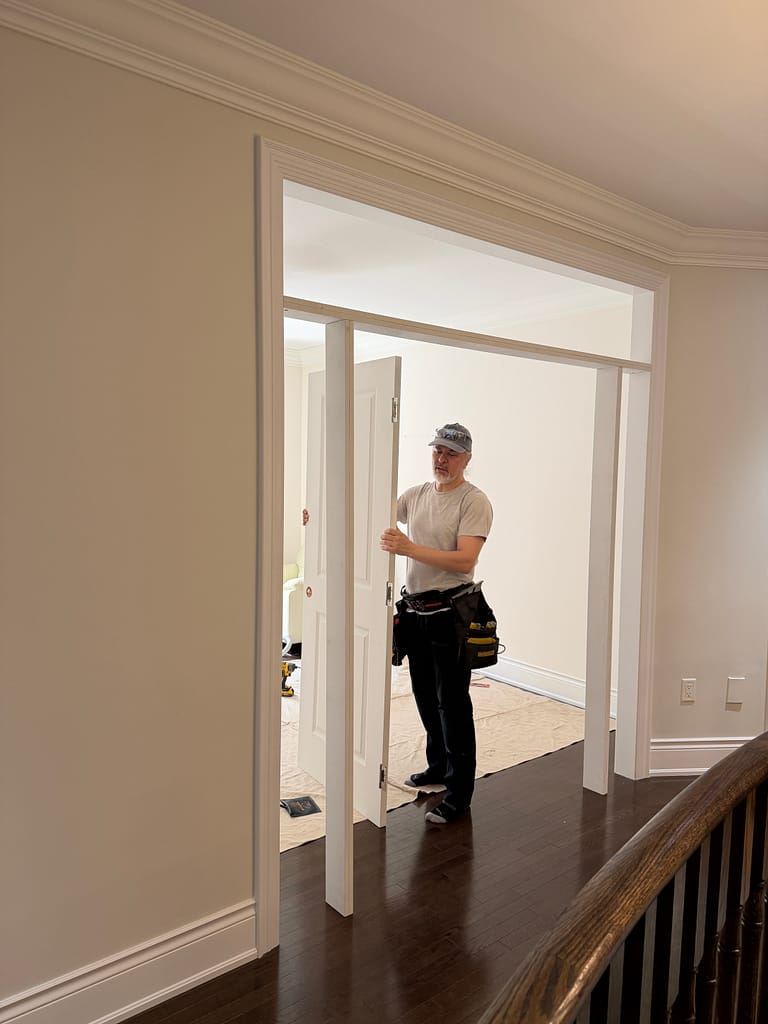
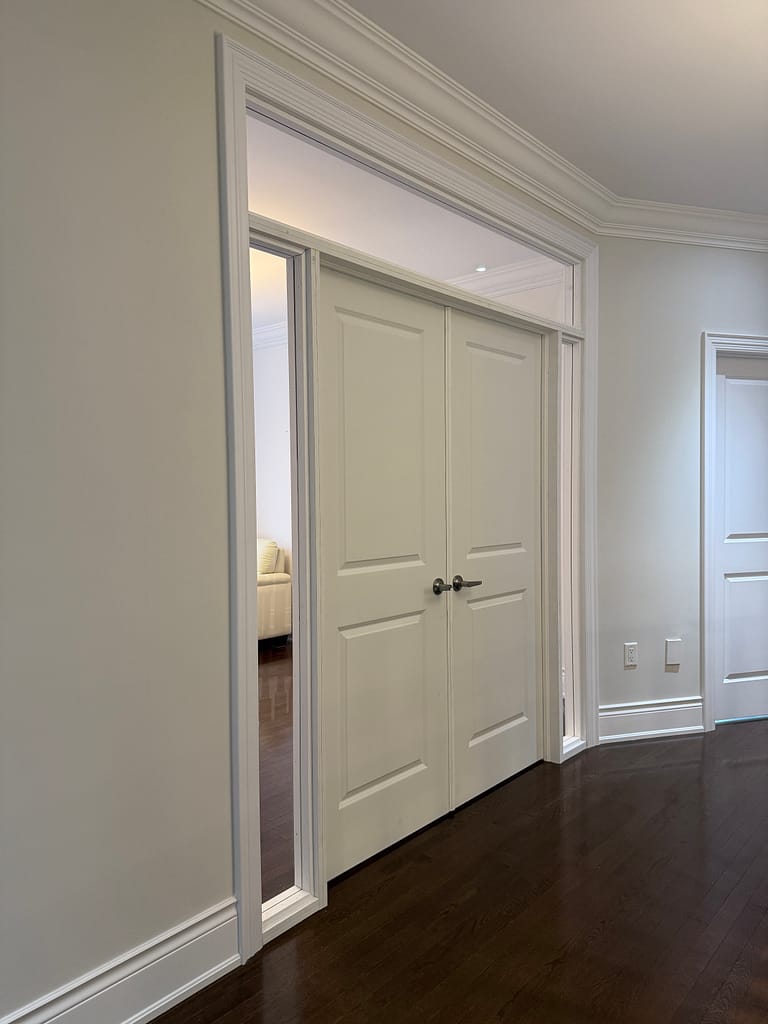
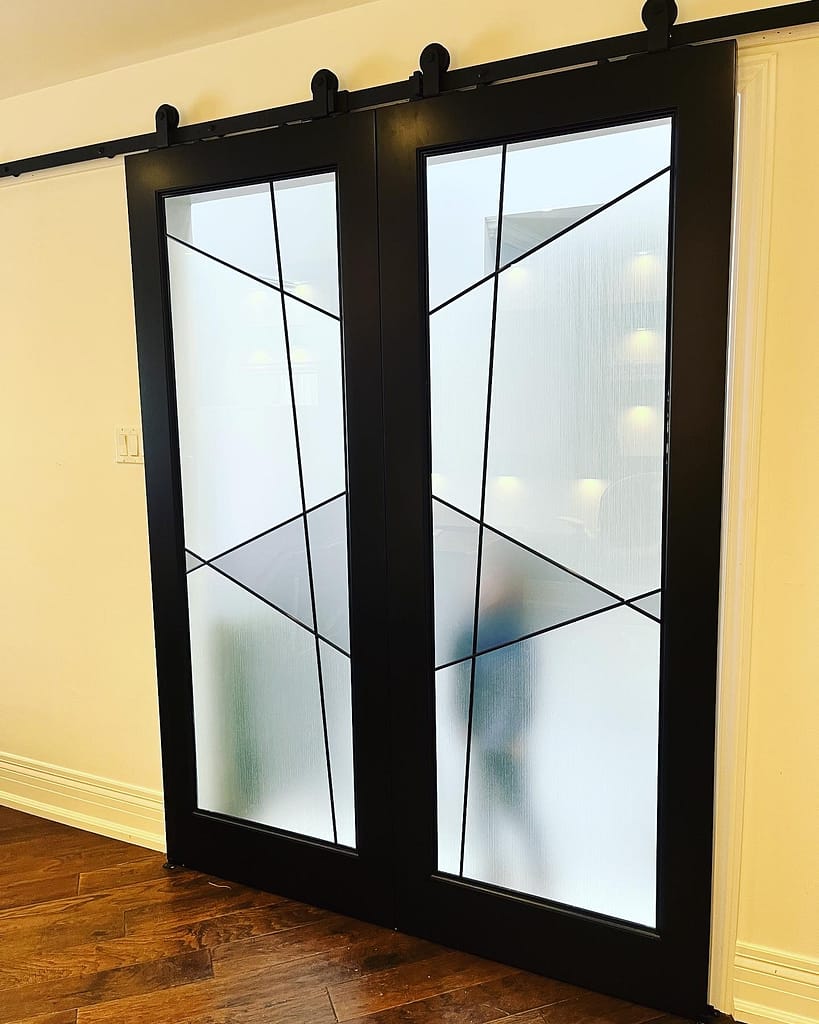
The doors must meet evenly. The gap between them has to look balanced. The latch or ball catch has to work properly. The top line matters. If there is a transom, sidelight, or custom opening, the proportions have to feel connected to the room.
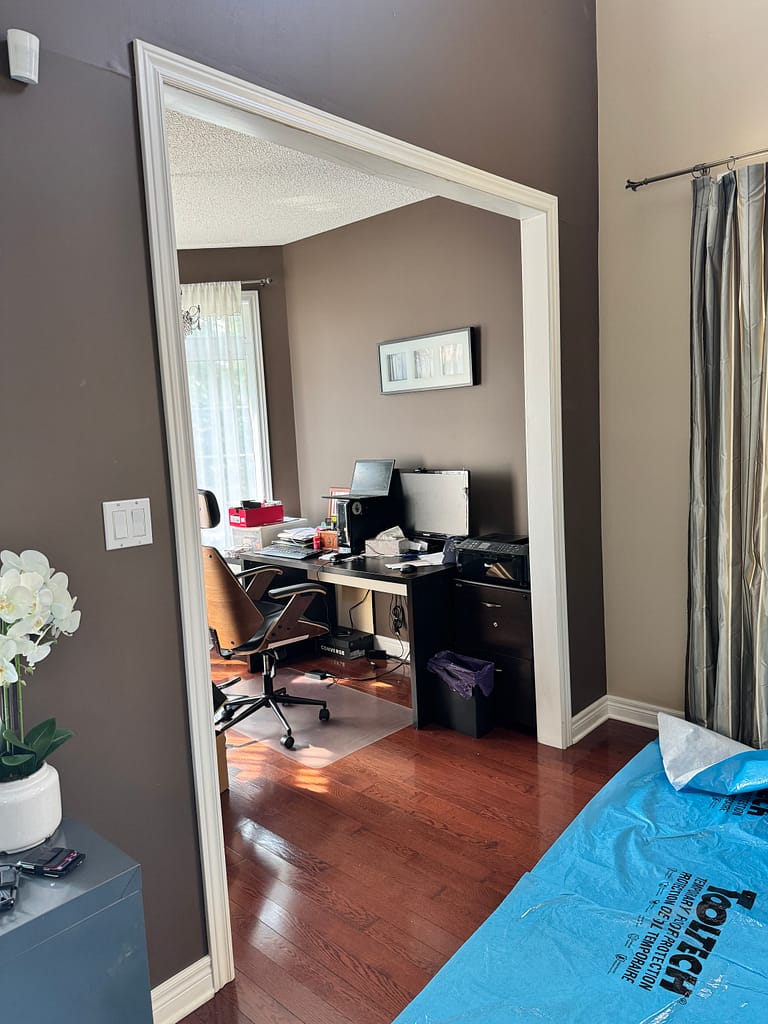
These projects are common in home offices, dining rooms, basement rooms, and open-concept homes where privacy is needed without making the space feel closed off.
Wood Job can help with interior double doors, glass French doors, transom details, custom-width openings, and room separation projects where both function and appearance matter.
A home office door opening has to do two things at the same time: give privacy and still feel like it belongs to the main floor.
For more detailed service page: Home Office Doors, Transoms and Sidelights
Pocket Doors and Sliding Doors
Pocket doors and sliding doors can be useful when a swinging door takes up too much space.
But they need the right conditions.
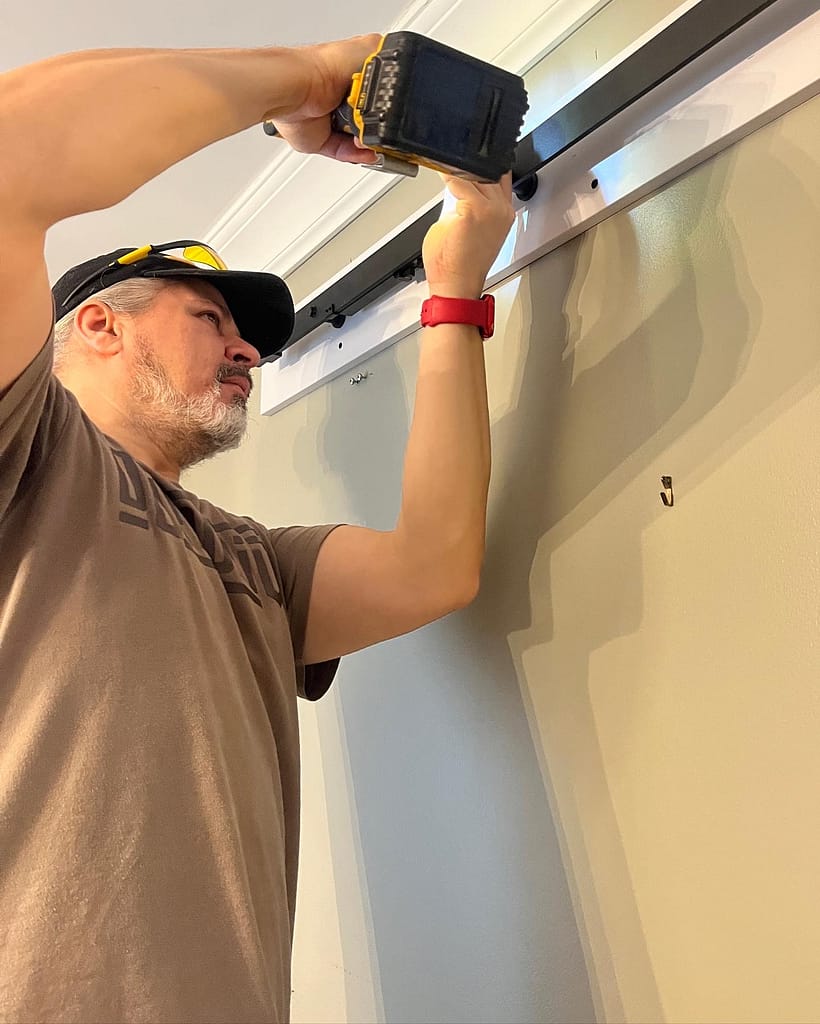
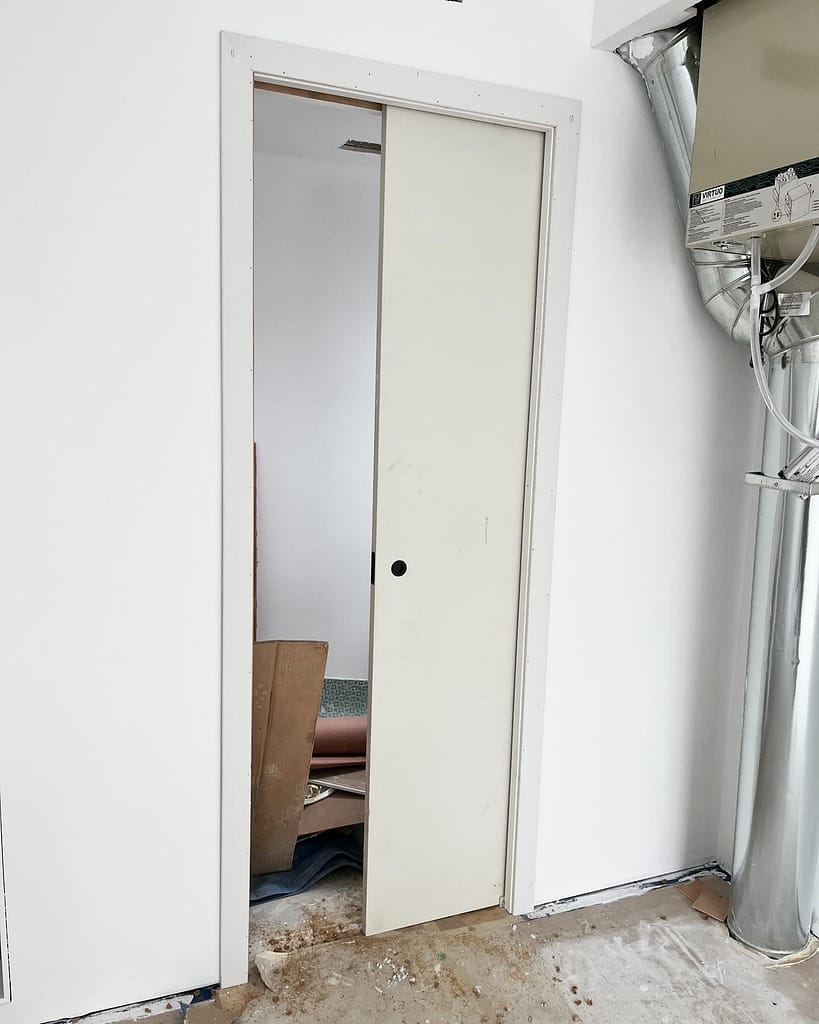
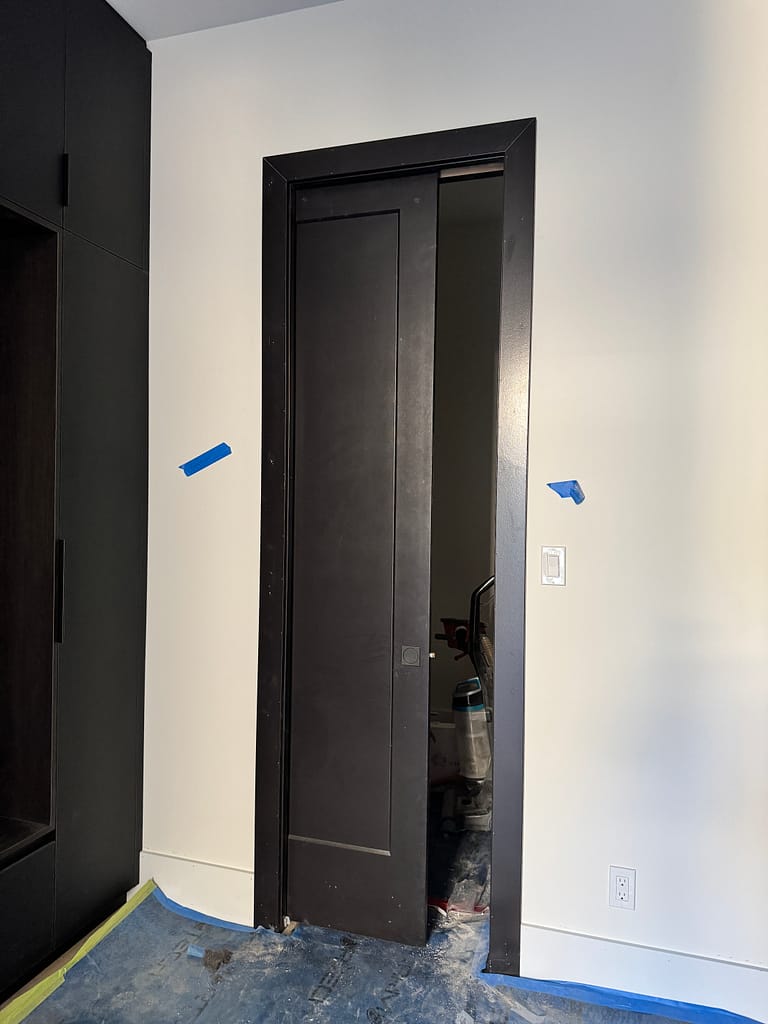
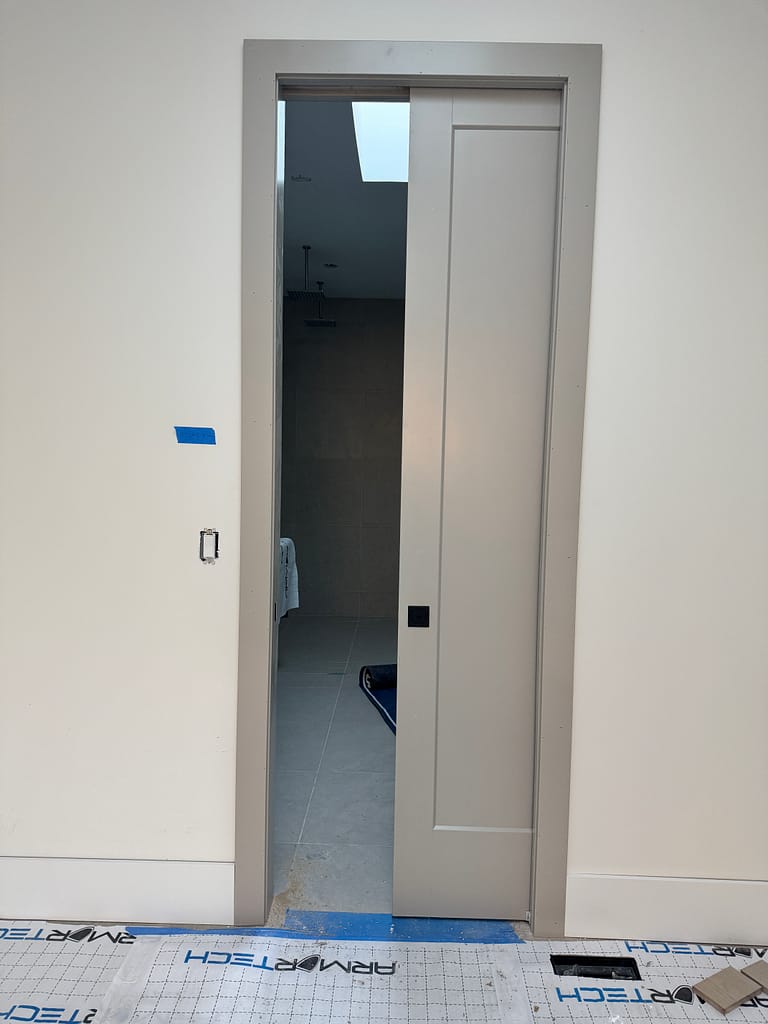
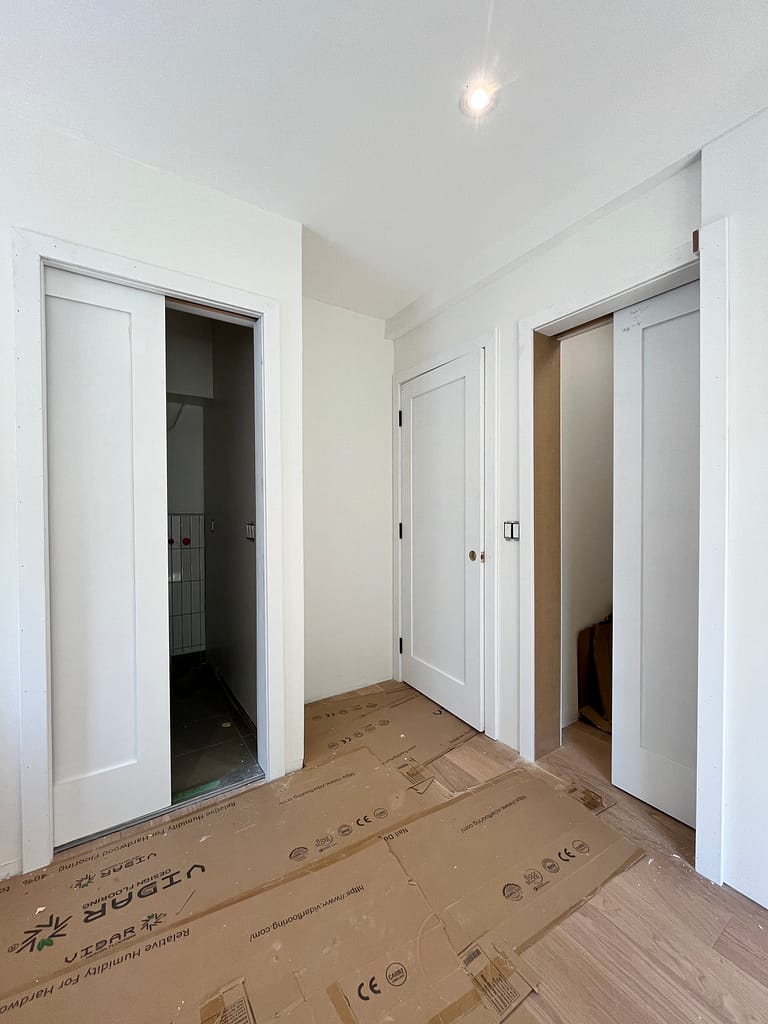
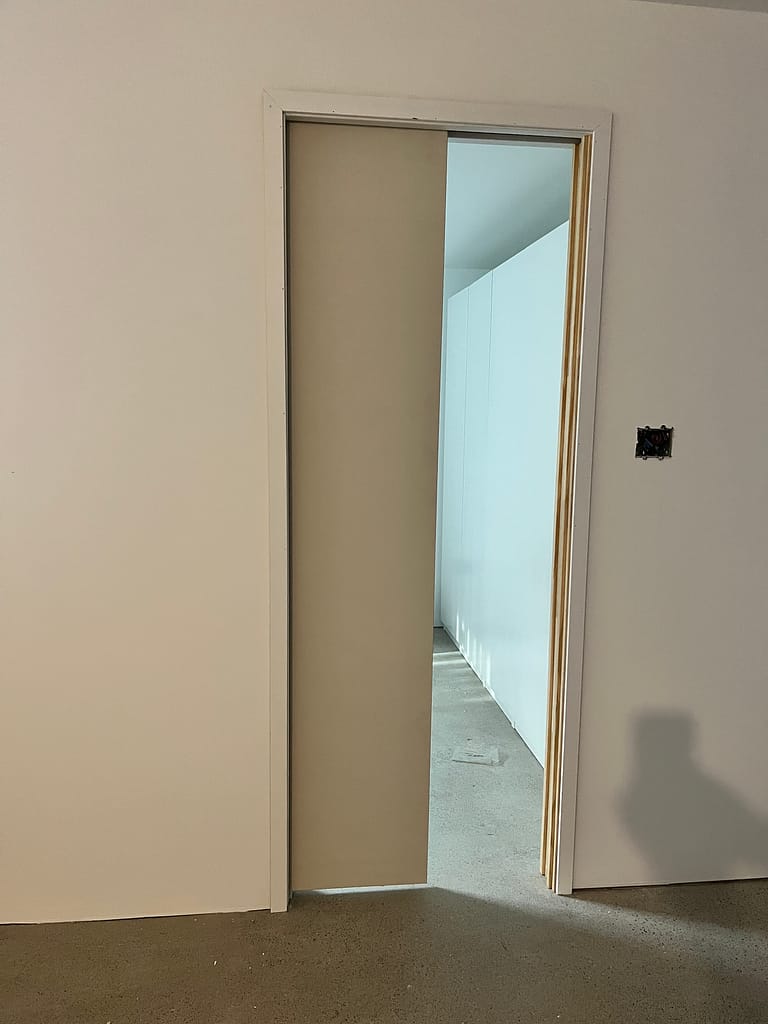
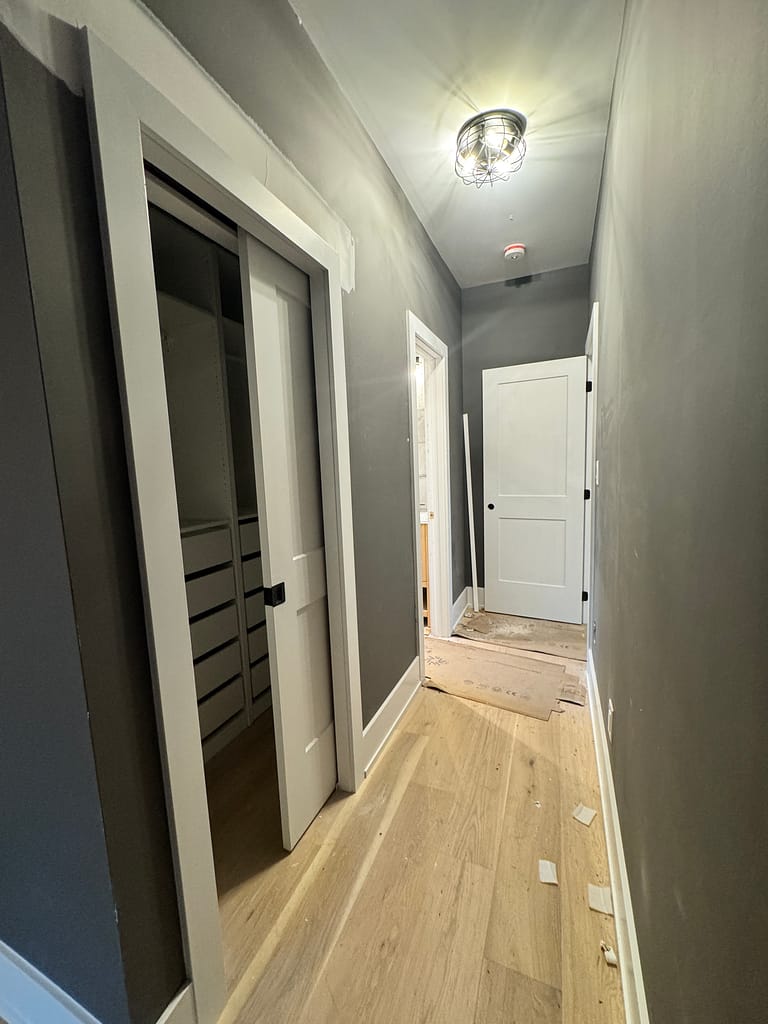
A pocket door depends on the wall cavity, framing, track, rollers, clearance, jamb detail, and final trim. If the framing is not prepared properly or the hardware is weak, the door may rub, wobble, or feel loose over time.
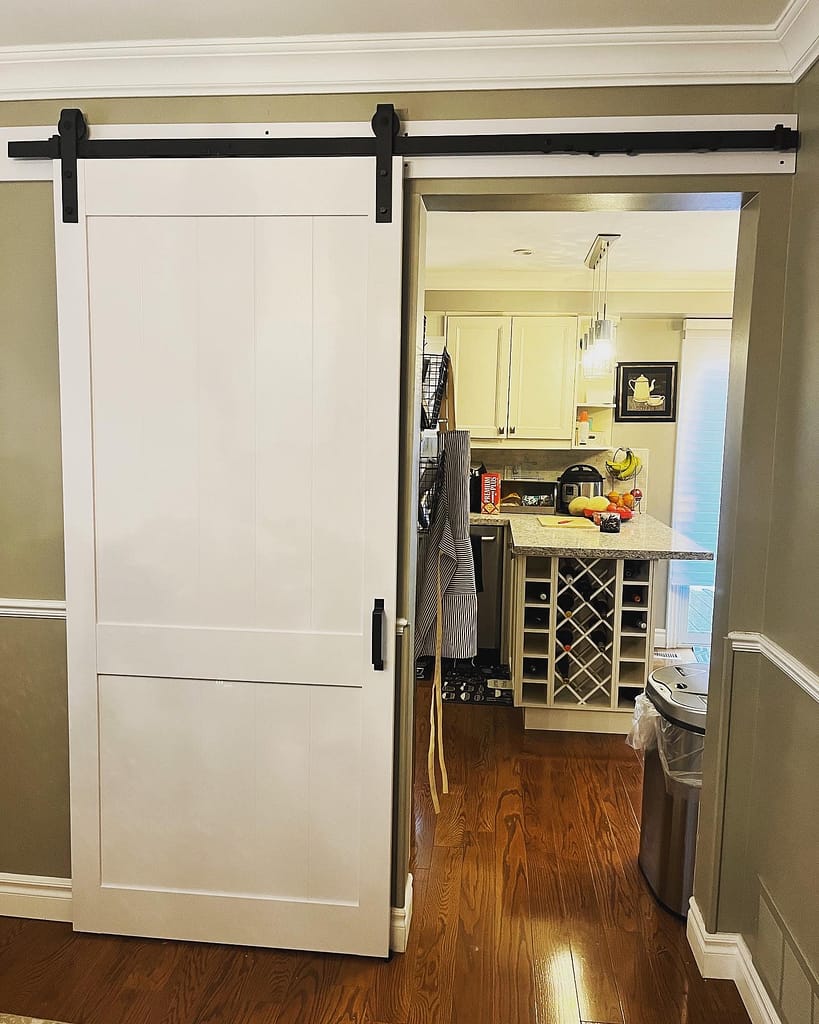
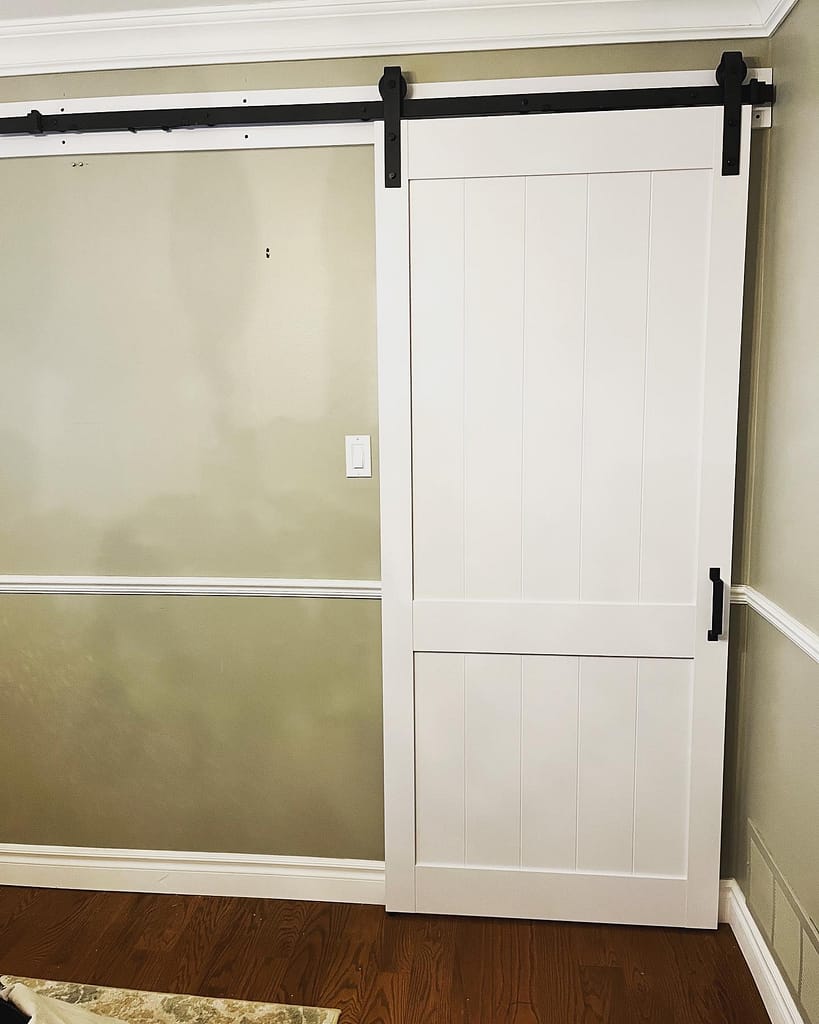
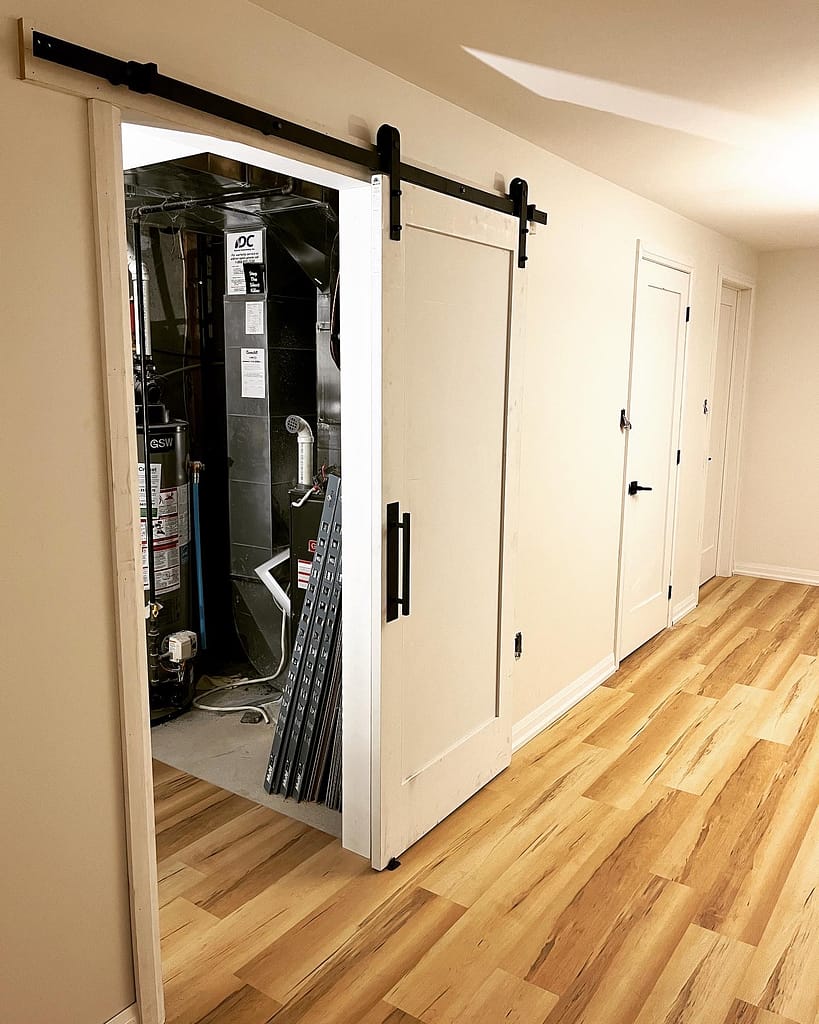
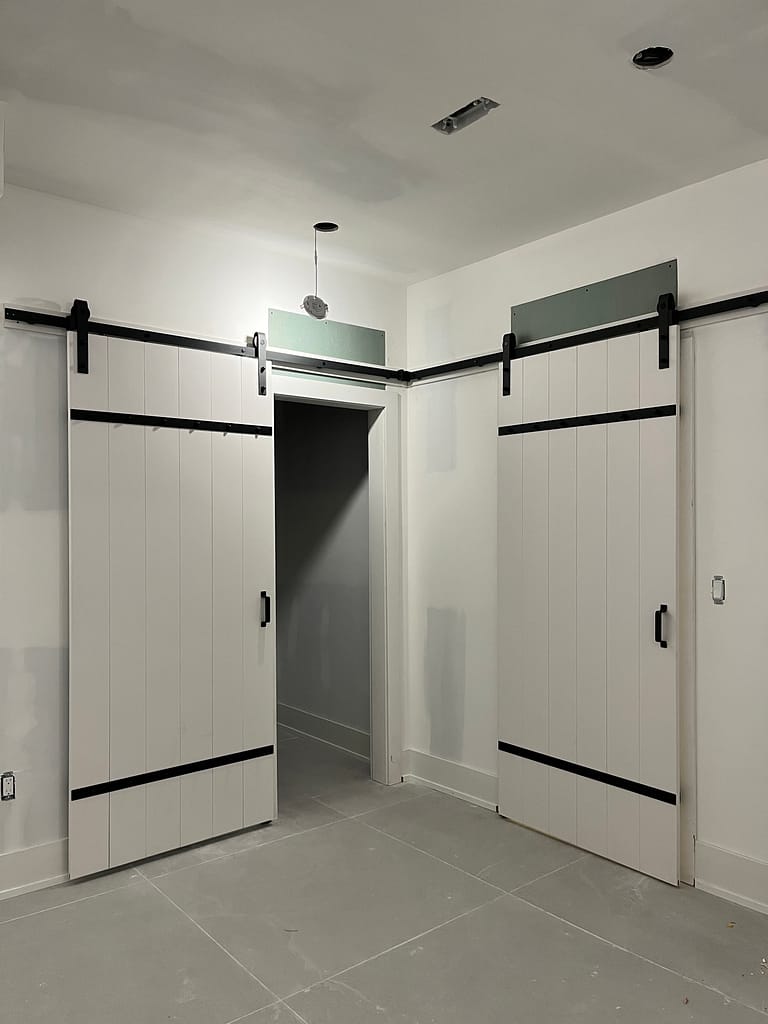
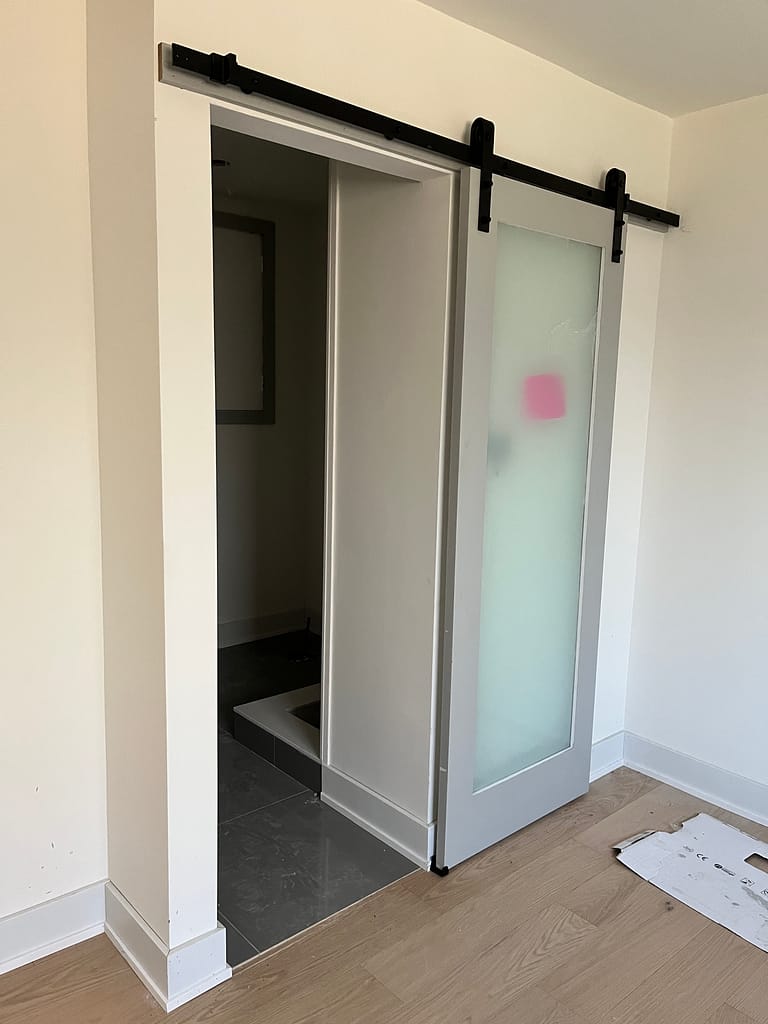
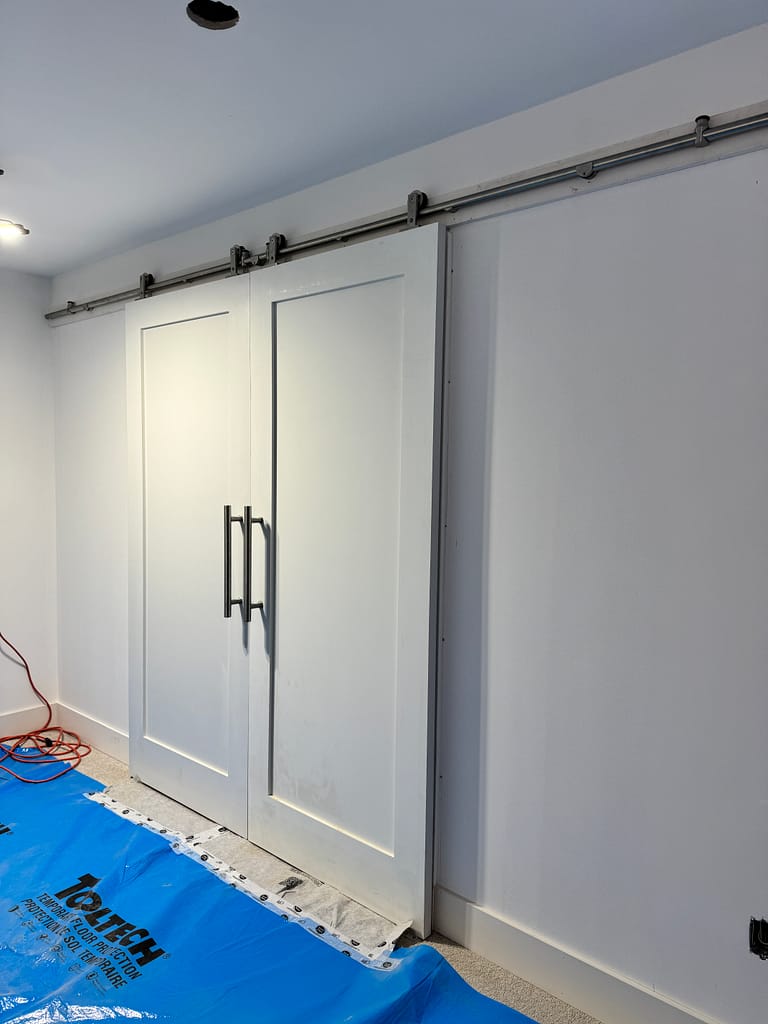
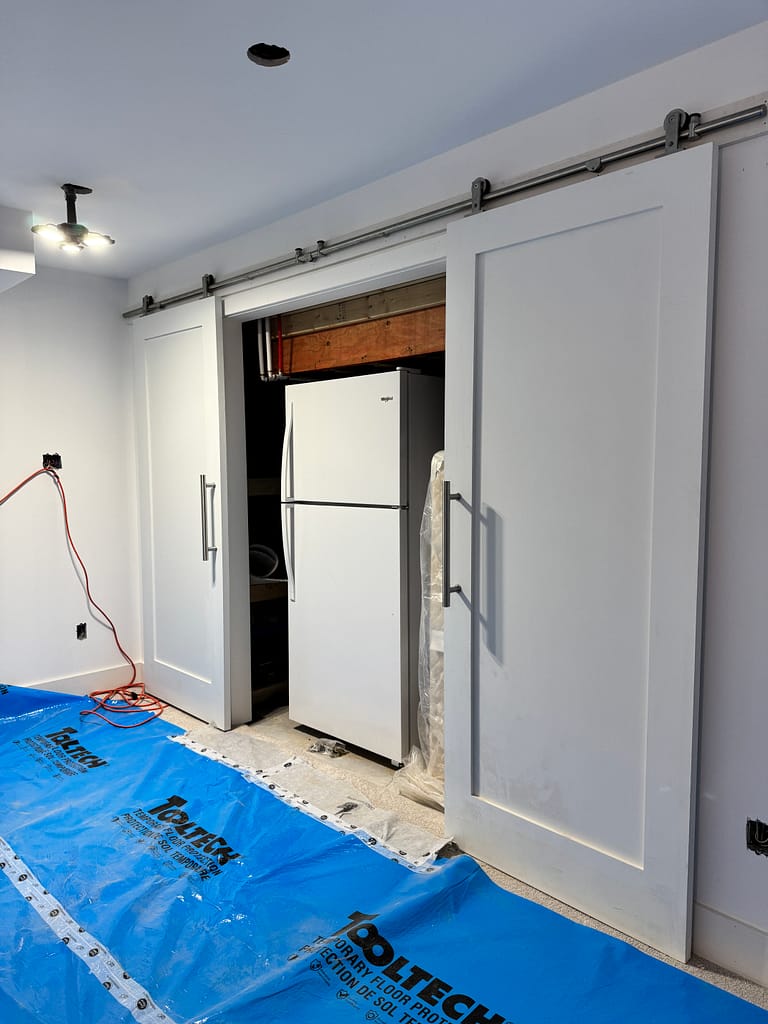
Sliding doors and barn doors also need careful layout. The wall must have proper backing for the track. The door needs enough room to slide. The floor guide has to be placed correctly. The door should not feel like it was added without thinking about the room.
Wood Job can review whether a pocket door, sliding door, or barn door makes sense for your opening before the project starts.
Sometimes it is the right solution.
Sometimes a different door type will work better.
Closet Doors and Builder-Grade Door Replacement
Closet doors are often treated as simple, but they still affect the way a room feels.
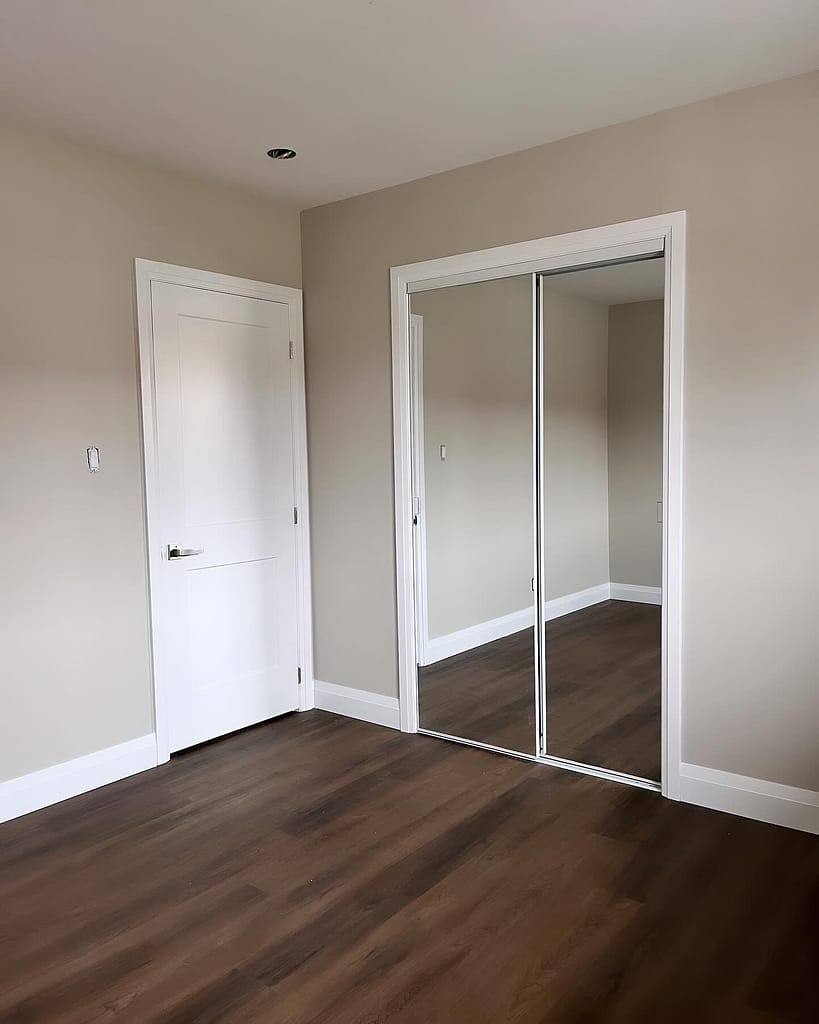
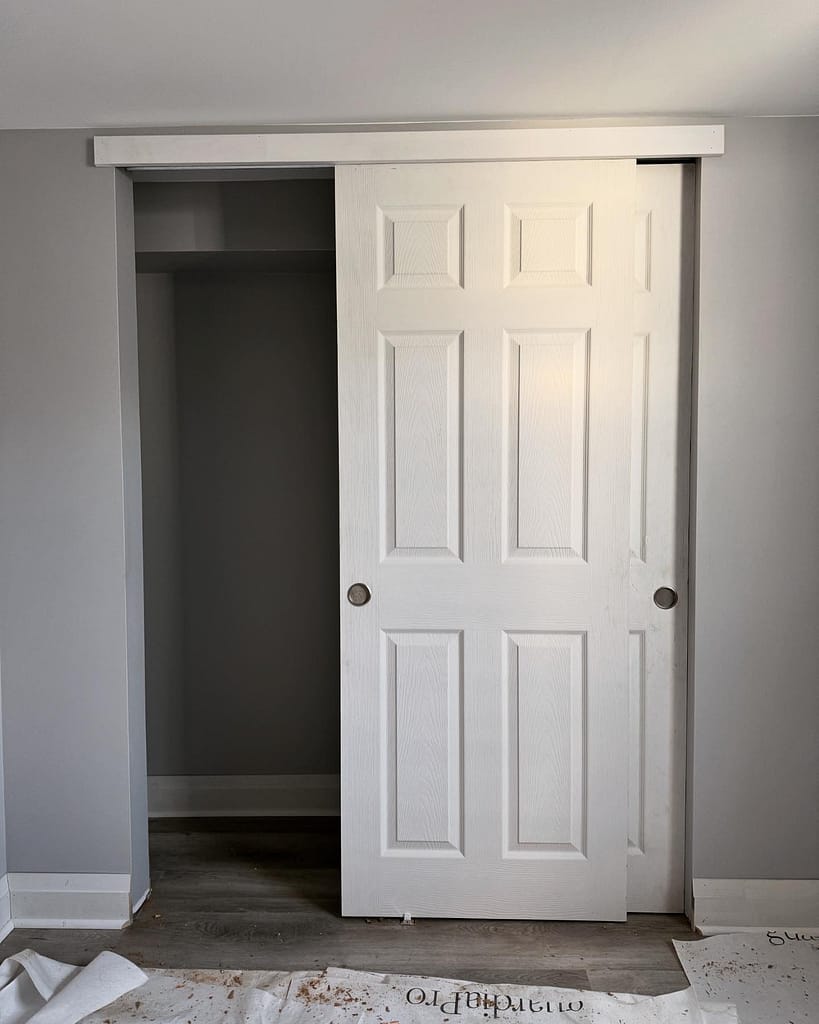
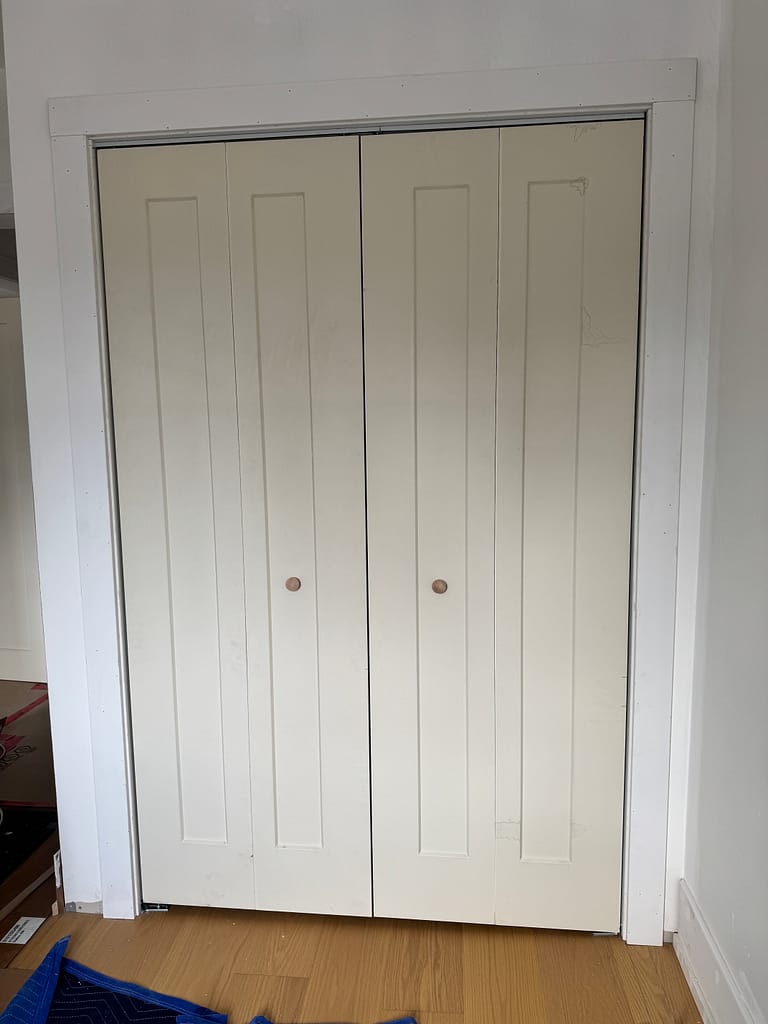
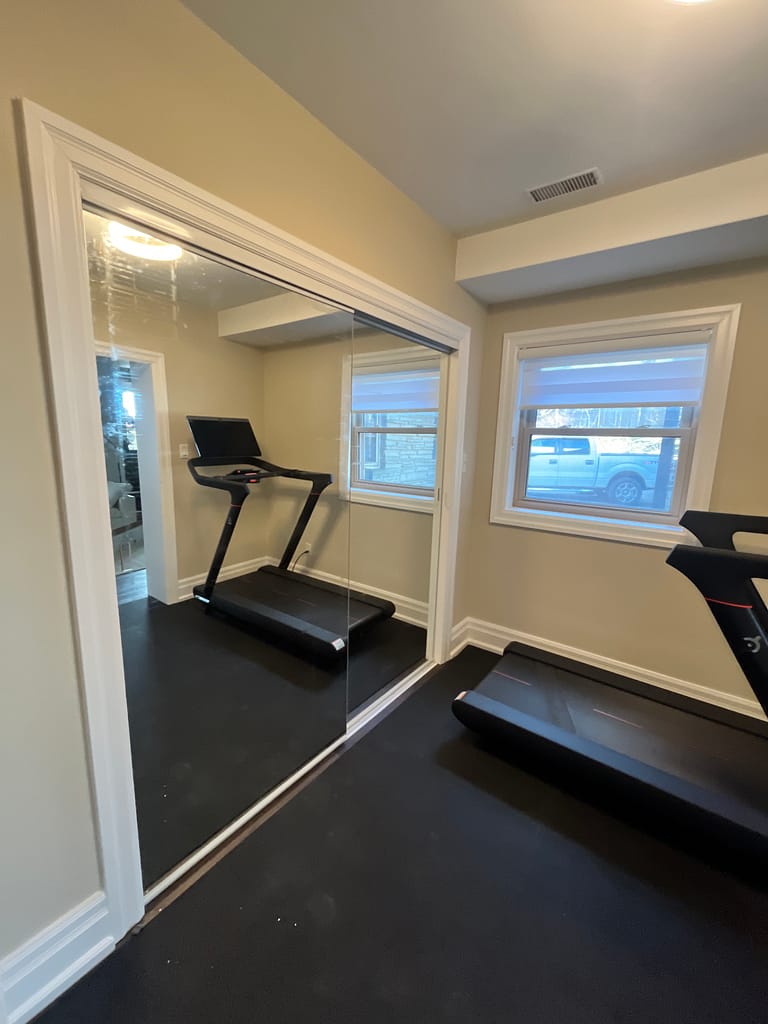
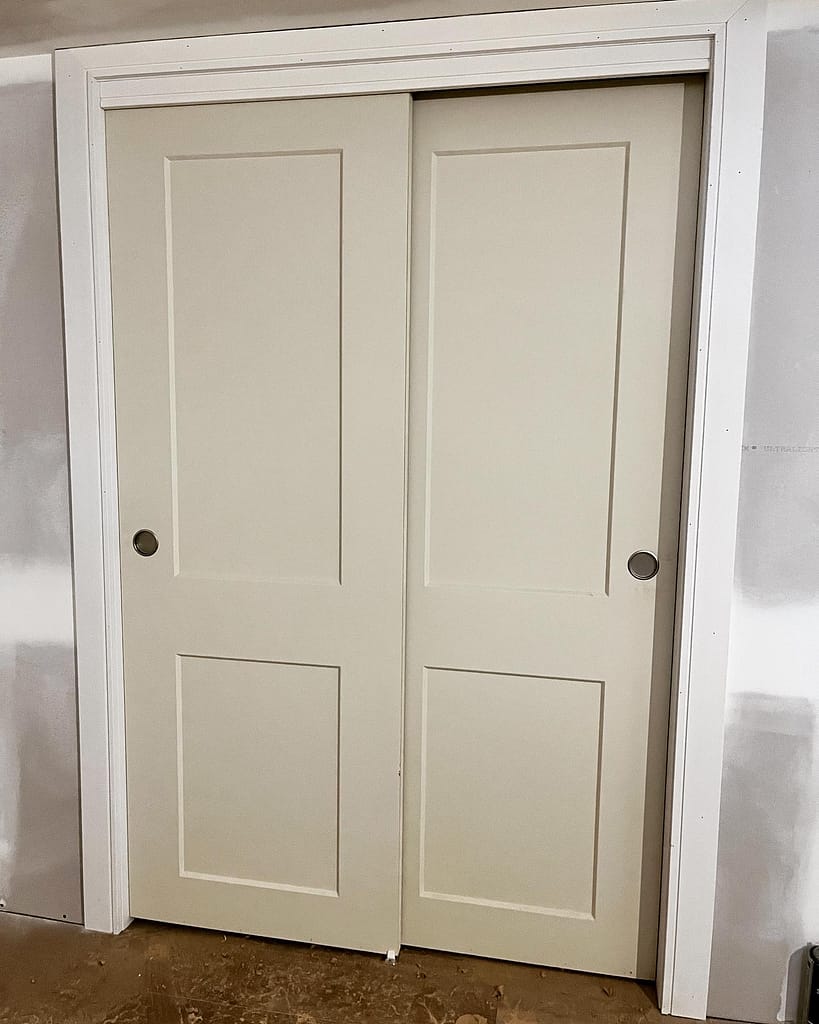
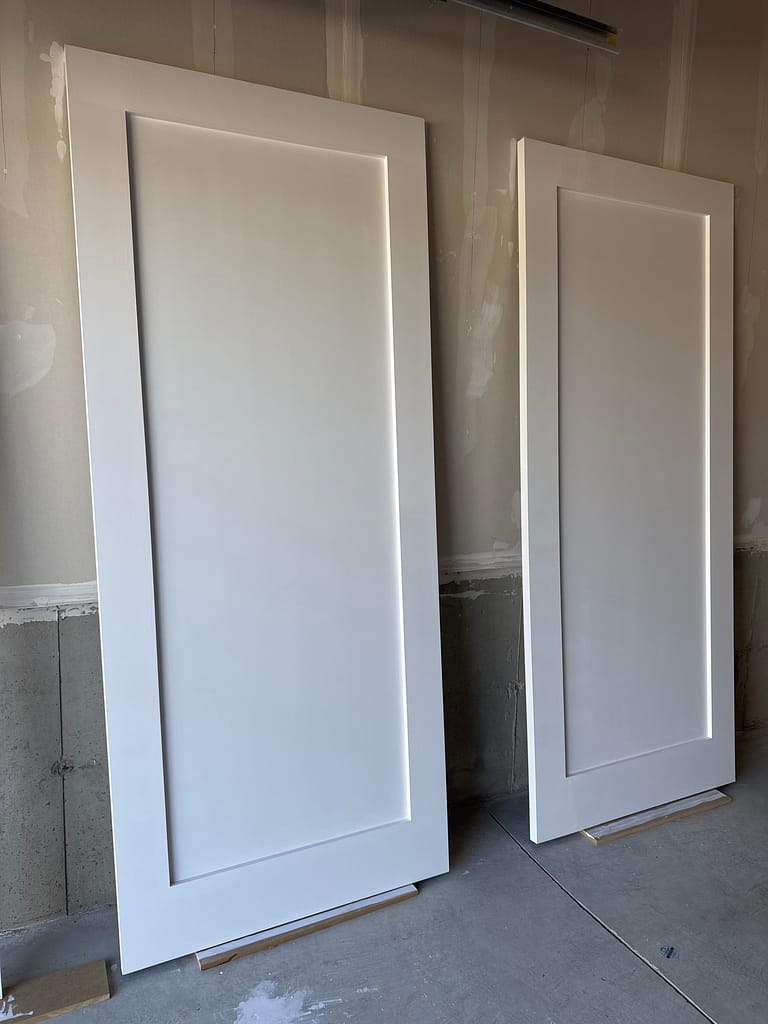
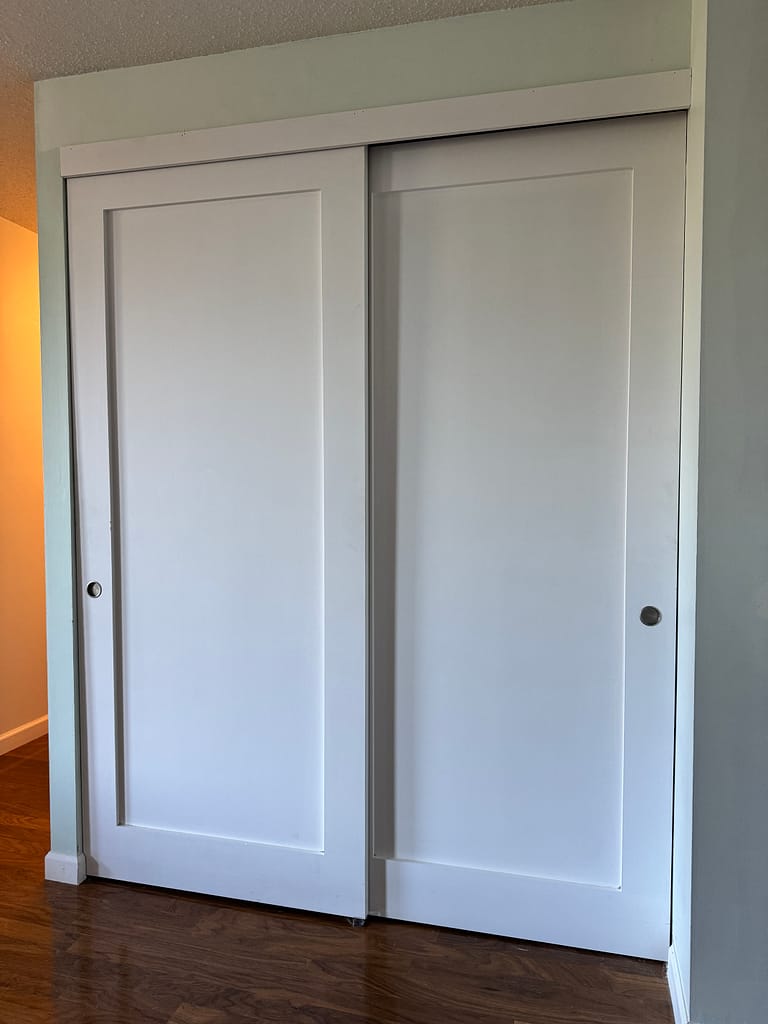
Sliding closet doors, bifold doors, shaker closet doors, and custom closet doors all depend on clean alignment, proper clearance, and a good relationship with the surrounding trim.
Many homeowners also call Wood Job when they want to replace older builder-grade doors throughout the home. This may include old six-panel hollow-core doors, dated mirrored closet doors, damaged basement doors, or doors that no longer match the updated style of the house.
Replacing these doors can make a home feel cleaner and more finished, but the work still has to be fitted to each opening.
In a full-home door replacement, one door may be straightforward and the next one may need trimming, jamb work, hinge adjustment, or casing correction.
That is normal in real homes.
When Door Problems Come From the Opening, Not the Door
A door problem is not always caused by the door.
Sometimes the real issue is the frame.
Common problems include:
- uneven gaps
- door rubbing at the top or bottom
- door not latching
- door swinging open or closed by itself
- hinges sitting proud or too deep
- strike plate not lining up
- casing pulling away from the wall
- old jambs twisted or damaged
- new flooring changing the door clearance
- wall or floor movement after renovation work
These problems need to be looked at before deciding what to replace.
Sometimes the door can be adjusted. Sometimes the slab needs trimming. Sometimes the hinges need correction. Sometimes the jamb is the real problem. Sometimes the best answer is to rebuild the opening properly.
Related Door Installation Projects
Interior Door Installation, Trim and Baseboards in Milton
Matt’s Milton renovation included interior doors, casing, baseboards, window trim, patio door trim, flooring transitions, and other finishing details. The goal was to make the doors, trim, baseboards, and surrounding details feel connected throughout the home.
Custom Door Jambs and Interior Door Installation in Milton
Babak’s basement unit had oversized and inconsistent door openings. Wood Job custom-built MDF jambs and resized six doors so the finished openings looked cleaner and more intentional.
Interior Door Replacement and Trim Installation in Oakville
Nicholle’s Oakville project included interior door replacement, casing, and trim work. The goal was to replace the old doors with a cleaner finished look before the final painting stage.
French Doors and Transom Installation in Oakville
Ryan’s open home office archway needed privacy without losing light. Wood Job installed custom-width glass French doors with a transom detail so the opening felt more finished and more useful.
Interior Door Replacement and Crown Moulding in Oakville
Jim first hired Wood Job to replace older six-panel interior doors with raised two-panel doors, then invited us back for crown moulding work.
Correcting Unfinished Door and Trim Work in Kitchener
P.D. contacted Wood Job after previous door and trim work was left unfinished, with visible jamb, hinge, casing, and door gap issues. The project was about correcting the details so the openings looked and worked better.
Custom Shaker Closet Door Replacement in Hamilton
Susan and Brad wanted to replace mirrored sliding closet doors with custom one-panel shaker closet doors made to fit non-standard condo openings.
Replacing the Old Six-Panel Doors with a New One-Panel Shaker Doors in Vaughan
Joseph contacted Wood Job to replace old six-panel interior doors with one-panel shaker doors in his Vaughan home.
Solid Doors and Trim Project in Vaughan
For Greg’s Vaughan renovation, Wood Job prepared solid doors before painting, then returned after the painting stage to complete the installation. The project also included casing and archway trim details.
Home Office Doors, Transoms and Interior Room Separation
Wood Job also works on home office separation projects using double doors, transoms, and sidelights for open-concept homes where privacy and light both matter.
Interior Door Installation Cost in Ontario
Interior door installation cost depends on what the opening actually needs.
A simple slab replacement in a good existing frame is very different from installing a heavy solid-core door, building a custom jamb, correcting a bad opening, replacing casing, adjusting hardware, or installing French doors with a transom.
The biggest cost factors usually include:
- door type
- slab door or pre-hung door
- existing jamb condition
- casing on one side or both sides
- hardware and hinge requirements
- solid-core vs hollow-core doors
- floor level and clearance
- wall condition
- number of doors
- old door removal
- painting or finishing expectations
- non-standard openings
The better question is not only “How much per door?”
The better question is:
“What needs to happen for this door to look right, close properly, and feel finished?”
Planning your budget before replacing interior doors? Read our 2026 Ontario interior door installation labor price guide to see starting prices for slab doors, pre-hung doors, casing, custom jambs, solid-core doors, French doors, and non-standard openings.
Interior Door Installation Service Areas
Wood Job Finish Carpentry provides interior door installation, door replacement, custom jambs, casing, closet doors, French doors, pocket doors, sliding doors, and related finish carpentry across Halton Region, Waterloo Region, and the Greater Toronto Area.
Service areas include:
- Interior Door Installation in Oakville
- Interior Door Installation in Milton
- Interior Door Installation in Cambridge
- Interior Door Installation in Mississauga
- Interior Door Installation in Burlington
- Interior Door Installation in Guelph
- Interior Door Installation in Kitchener
- Interior Door Installation in Hamilton
- Interior Door Installation in Toronto
- Interior Door Installation in Vaughan
Each project is reviewed based on the actual condition of the home. Whether the work is one bedroom door, a full-home solid-core door upgrade, a basement door package, a custom jamb, or a home office door opening, the same idea applies: the door should work properly, look clean, and feel like it belongs in the space.
What to Send for a Door Installation Estimate
For a better rough estimate, send clear photos and basic project details.
Helpful information includes:
- your project city
- number of doors
- photos of each existing opening
- photos of both sides of the door or opening
- close-up photos of the hinges
- close-up photos of the latch and strike plate
- photos showing casing and baseboards
- door sizes, if available
- whether the new doors are already purchased
- whether the existing jambs will stay or need replacement
- whether casing is included
- whether painting is expected or handled separately
If you are replacing several doors, label the photos by room.
For example: Bedroom 1, Bedroom 2, Bathroom, Basement Door, Closet Door.
Clear photos help Wood Job understand whether a rough estimate is possible from photos or whether a walkthrough would be better.
Interior Door Installation Questions
Can you replace only the door slab without replacing the frame?
Sometimes, yes. If the existing jamb is straight, solid, and in good condition, a slab replacement may be possible. But the new door still has to be trimmed, mortised for hinges, prepared for hardware, and adjusted to the opening. If the jamb is twisted or damaged, replacing only the slab may not solve the problem.
Do I need a pre-hung door?
A pre-hung door can be a good option when the old jamb is damaged, missing, badly installed, or not worth saving. But it still needs careful setting, shimming, leveling, casing, and final adjustment. A pre-hung door is not automatically a shortcut if the opening itself is out of square.
Can you install solid-core interior doors?
Yes. Wood Job installs solid-core doors for bedrooms, bathrooms, offices, basements, and full-home upgrades. Solid-core doors feel heavier and quieter than basic hollow-core doors, but they also need careful hinge support, reveal adjustment, and latch alignment.
Can you install doors in older or uneven openings?
Yes, but the opening has to be reviewed carefully. Older homes, basements, condos, and renovated spaces often have uneven floors, twisted jambs, narrow casing space, or non-standard opening sizes. In some cases, the door can be adjusted. In others, a custom jamb or opening correction may be needed.
Do you install casing around the doors?
Yes, Wood Job can install or replace casing as part of a door installation project. Casing is important because it frames the opening and completes the look of the door. The estimate should always be clear about whether casing is included on one side, both sides, or not included.
Do you paint the doors after installation?
Wood Job focuses on the carpentry and installation work. Painting, caulking, nail hole filling, or final finishing should be discussed during the estimate process so everyone understands what is included. Some projects are coordinated before or after the painter, depending on the door type and renovation schedule.
Can you install French doors or home office doors?
Yes. Wood Job can help with French doors, glass doors, double doors, transoms, and home office separation projects. These openings need careful planning because privacy, light, proportion, swing, latch alignment, and trim details all matter.
Can you fix doors or trim installed badly by someone else?
In many cases, yes. Wood Job can review unfinished or poorly fitted door and trim work and explain what may be possible. Sometimes the fix is an adjustment. Sometimes casing, jambs, hinges, or hardware need correction. Photos are the best first step.
Planning Interior Door Installation or Door Replacement?
Send clear photos, approximate measurements, the number of doors, your project city, and a short description of what you want done.
Wood Job Finish Carpentry can review the details and let you know whether a rough estimate is possible from photos or whether the opening should be seen in person.