
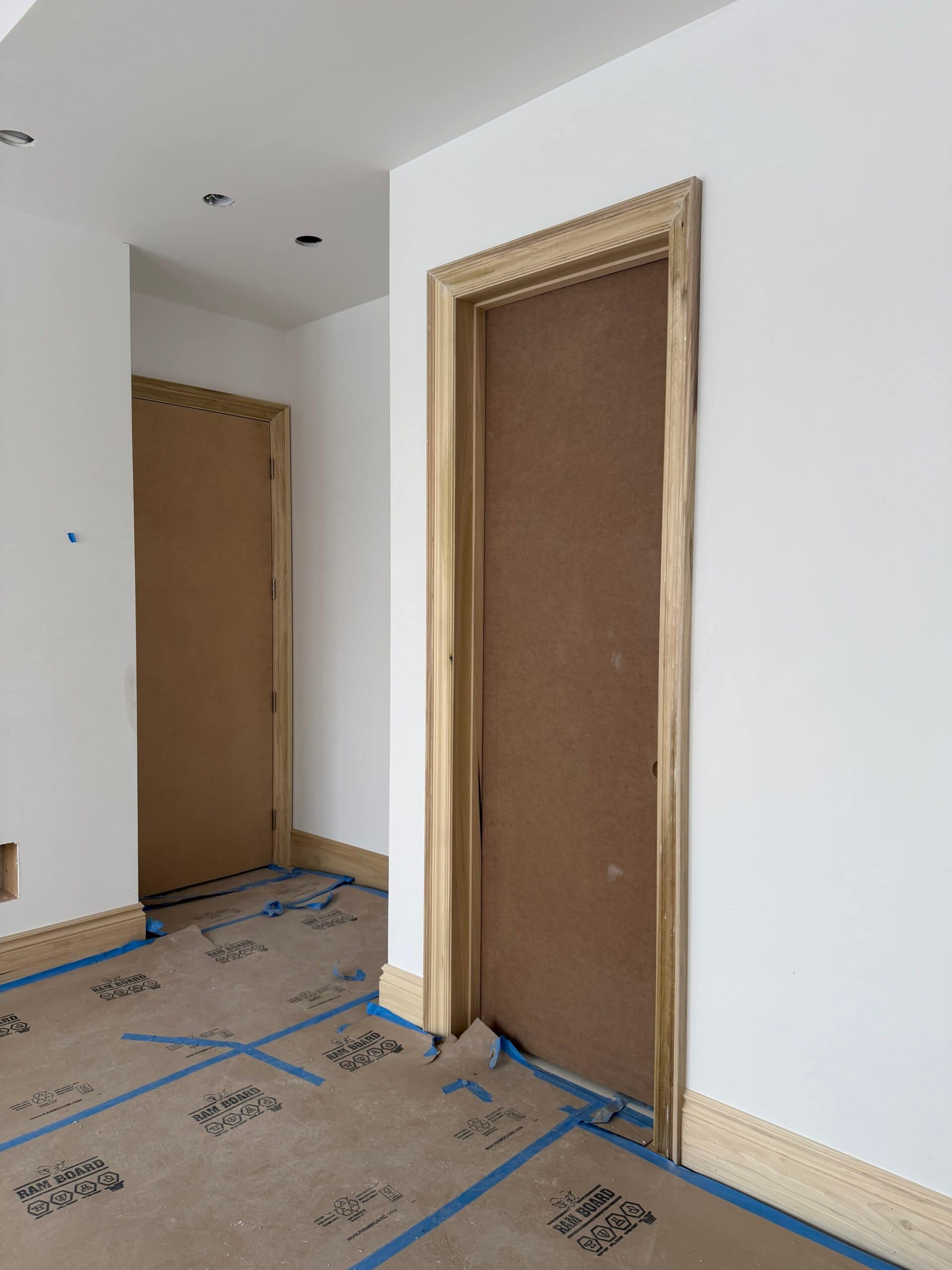
Interior door installation in Kitchener is not only about hanging a new slab.
The condition of the opening affects how the finished door will swing, close, latch and sit within the frame. Existing jambs may be out of square. Flooring changes can reduce bottom clearance. Hinge mortises may not align with the new door. Casing may be hiding unfinished drywall or an opening that was not prepared properly.
In homes renovated over time, one doorway may be straightforward while the next needs adjustment.
Wood Job Finish Carpentry provides owner-led interior door installation in Kitchener, including slab and prehung doors, solid-core doors, shaker doors, jamb installation, casing, hardware preparation and the correction of unfinished door and trim work.
The work is led hands-on by Jack Cenk Ozer, with attention to the door, jamb, hinges, latch, strike plate, reveal, floor clearance and surrounding trim.
A new door should not fight the opening.
It should work naturally every time it is used.
★★★★★
77 Google Reviews.
Earned One Job at a Time.
Real projects. Real homes. Real customers.
Wood Job Finish Carpentry helps homeowners in Kitchener with new interior door installation, door replacement, custom jambs, casing and unfinished door or trim work that needs to be corrected.
Many projects take place inside occupied homes or renovations that have already begun. The work may involve existing flooring, painted walls, older jambs or details left incomplete by a previous installer.
The approach stays practical: understand the condition, explain what can be done and complete the work without hiding problems behind new trim.
What a Properly Installed Interior Door Should Do
A door can be hanging in the opening and still not be properly installed.
A good interior door should:
- swing without rubbing the floor or jamb
- remain where it is left instead of swinging by itself
- close without being pushed or lifted
- latch cleanly into the strike plate
- sit with a balanced reveal around the slab
- feel securely supported at the hinges
- work with the casing and surrounding trim
Small errors are noticeable because doors are used every day.
A rough hinge mortise can leave the hinge sitting proud of the slab. A twisted jamb can create an uneven gap. A poorly positioned strike plate can make the homeowner push or pull the door every time it closes.
These are not only visual details.
They affect how the door functions.
What Wood Job Checks Before Installation
The opening is reviewed before deciding how the new door should be installed.
This may include checking:
- the condition of the existing jamb
- whether the hinge side is secure
- whether the jamb is plumb
- whether the head jamb is level
- existing hinge locations
- latch and strike-plate alignment
- floor level and bottom clearance
- wall thickness
- casing condition
- door swing
- slab size and weight
- whether the existing frame can be reused
A sticking door does not always need replacement.
The problem may be a loose hinge, jamb movement, floor clearance, seasonal movement or poor latch alignment.
The cause should be understood before material is removed or a new slab is ordered.
For common operating problems, read Why Your Interior Door Rubs, Sticks, Swings Open or Won’t Latch.
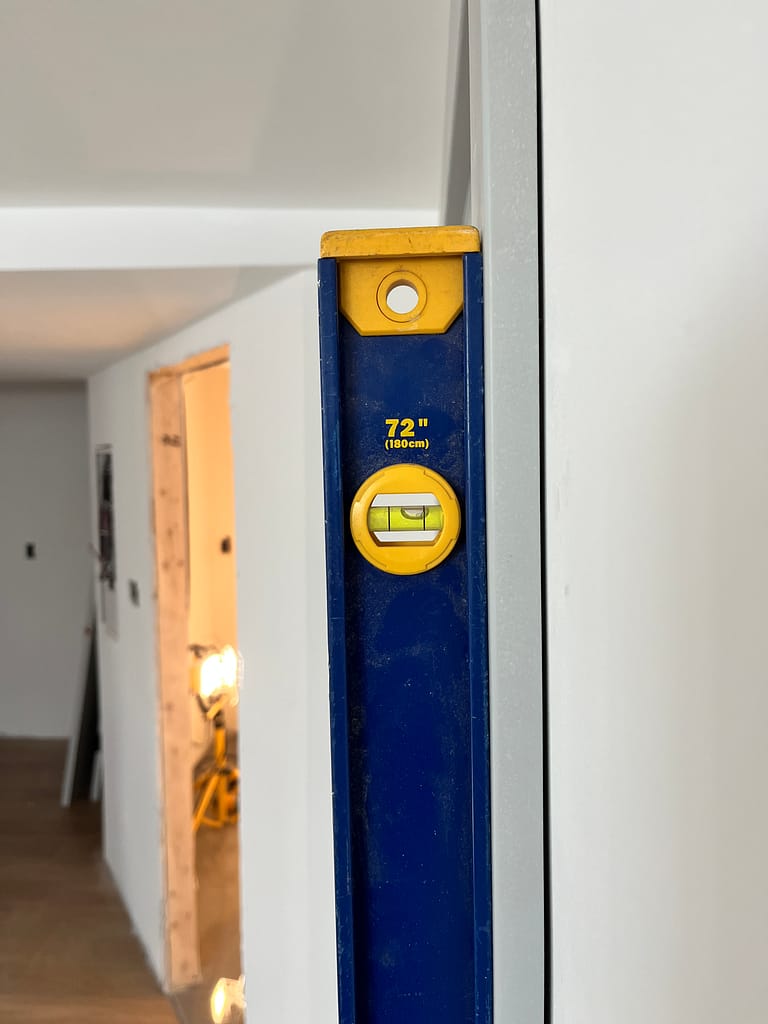
Slab Door Installation in Existing Frames
A slab door is the door itself without a new jamb.
Installing one into an existing frame can make sense when the jamb is secure, reasonably straight and worth keeping.
The slab still needs to be fitted to the actual opening.
That may involve:
- checking the width and height
- trimming or resizing the slab
- preparing hinge mortises
- boring for the handle
- aligning the latch
- adjusting the strike plate
- confirming floor clearance
- balancing the reveal
The old door may have been altered over time to compensate for an uneven opening. A new slab starts straight, but the existing jamb may not be.
That is why slab replacement is not always a simple door-for-door exchange.
For a full comparison, see Slab Door vs Pre-Hung Door: Which One Do You Need for Interior Door Replacement?.
Homeowners hoping to keep the old frame can also read Can You Replace Interior Doors Without Replacing the Frame?.
When a New Jamb or Prehung Door Makes More Sense
Keeping the old frame is not always the most practical option.
A new jamb or prehung door may be better when:
- the existing jamb is damaged or loose
- hinge areas have been repaired repeatedly
- the opening is badly out of square
- the wall thickness has changed
- the casing is also being replaced
- the old jamb cannot support a heavier door
- the existing frame cannot produce a reasonable reveal
A prehung door still needs to be installed correctly within the rough opening.
The jamb must be shimmed, fastened and adjusted. The slab must sit properly after installation. The latch and strike plate still need to align. Casing must be fitted to the actual wall.
Prehung describes the product.
It does not guarantee the finished result.
Solid-Core Door Replacement
Solid-core doors can be a useful upgrade for bedrooms, bathrooms, offices and other rooms where homeowners want a heavier and quieter door.
The added weight requires better hinge support.
Before installing a solid-core slab into an existing jamb, Wood Job checks whether the frame is secure enough to carry it. Loose jambs, weak fastening points or poorly prepared hinges can allow a heavier door to move over time.
Proper solid-core installation may require:
- stronger hinge-side fastening
- suitable hinge size and quantity
- clean hinge mortises
- secure jamb support
- accurate latch alignment
- careful resizing
- consistent floor clearance
For more information about weight, sound, privacy and existing frames, read Should You Replace Hollow-Core Interior Doors With Solid-Core Doors?.
Correcting Unfinished Door and Trim Work
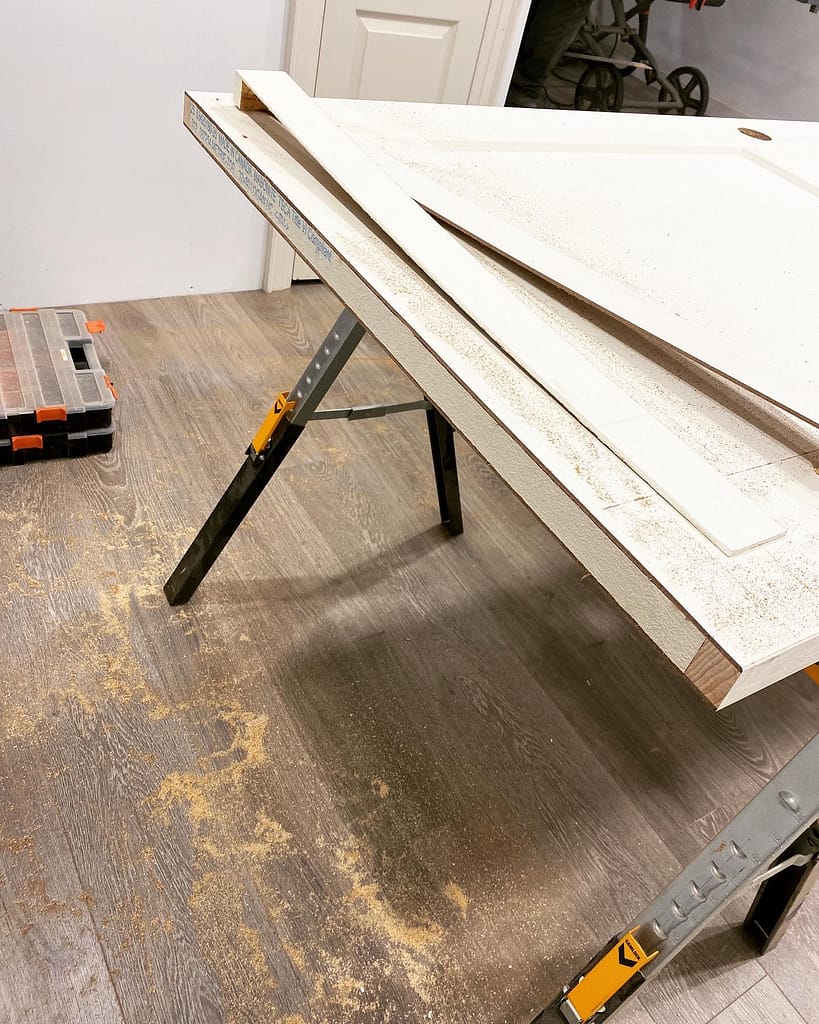
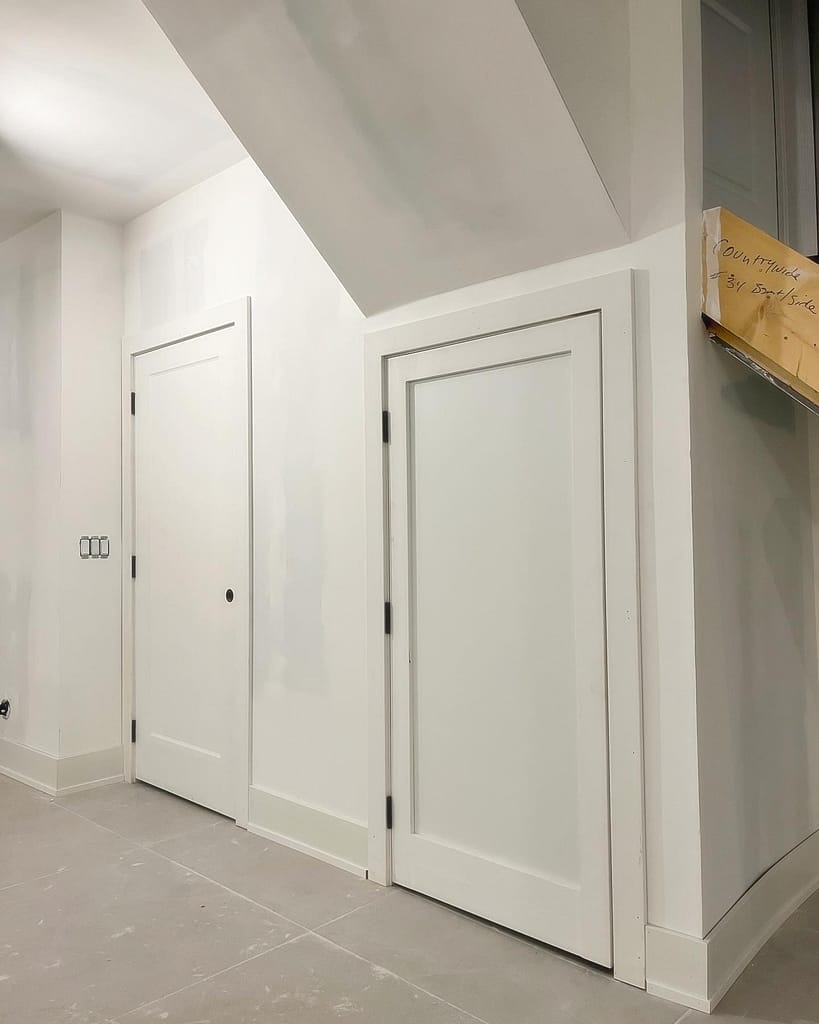
Sometimes Wood Job is contacted before any doors have been installed.
Other times, the project has already started and the homeowner can see that something is not right.
Correction work can involve:
- poorly fitted jambs
- rough or uneven hinge mortises
- visible nails and fastening
- inconsistent gaps around the door
- doors that rub or do not latch
- unfinished headers
- poorly fitted casing
- openings left incomplete
- trim used to cover installation problems
Correction work can be more difficult than starting from a clean opening.
The existing material must be reviewed first. Some parts may be reusable. Others may need adjustment or replacement. Removing too much can create unnecessary waste, but keeping a badly prepared component can carry the problem into the final result.
The goal is not to hide the previous work.
The goal is to determine what can realistically be corrected.
For other examples of unfinished or poorly completed work, visit Finish Carpentry Problems We Fix.
Real Kitchener Project: Correcting Door Jambs, Hinges and Casing
P.D., a Kitchener homeowner, contacted Wood Job after previous door and trim work had been started but left unfinished.
Several visible details were causing concern.
One jamb had been fitted poorly, with rough fastening and visible nails. The hinge mortises had not been prepared cleanly. Gaps around the door were inconsistent. Other openings had unfinished jamb, casing and header details.
P.D. stopped the work before the remaining doors were completed the same way.
Wood Job reviewed the jambs, hinges, gaps, casing and unfinished areas before deciding what could be adjusted and what needed more substantial correction.
The purpose was not to criticize another installer.
It was to help the homeowner move forward without covering the existing problems or wasting material unnecessarily.
See the complete project:
Correcting Unfinished Door and Trim Work in Kitchener
Door Casing and Related Trim
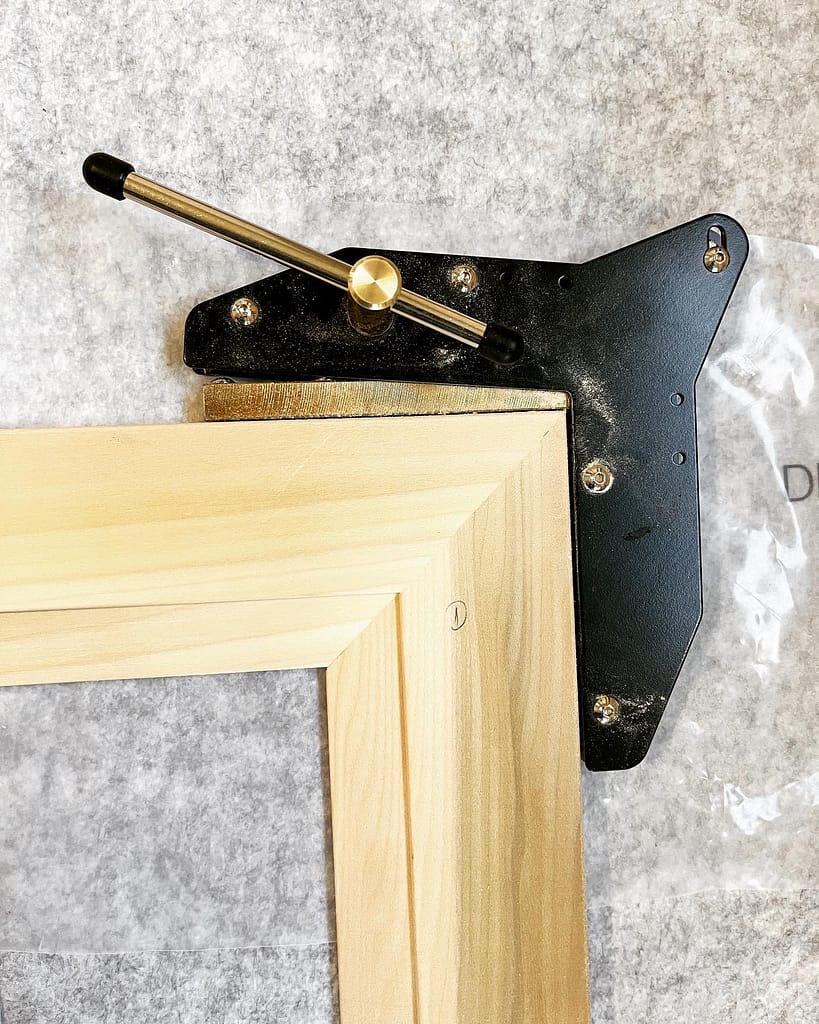
Door casing covers the transition between the jamb and the wall, but it should not be treated as a way to hide a poorly installed opening.
The casing should frame the door with a clean reveal.
Its profile should work with the baseboards and other trim in the room. The head and side pieces should meet cleanly. The baseboard transition should look intentional.
Existing casing may sometimes remain when it is in good condition and does not need to be removed for the door work.
New casing may make more sense when:
- the jamb is being replaced
- the old casing is damaged
- the profile no longer suits the home
- previous removal has damaged the material
- the wall condition prevents clean reinstallation
- baseboards and other trim are also changing
For casing, baseboards, window trim and jamb extensions, visit Finish Trim Carpentry.
Interior Doors During Basement and Renovation Work
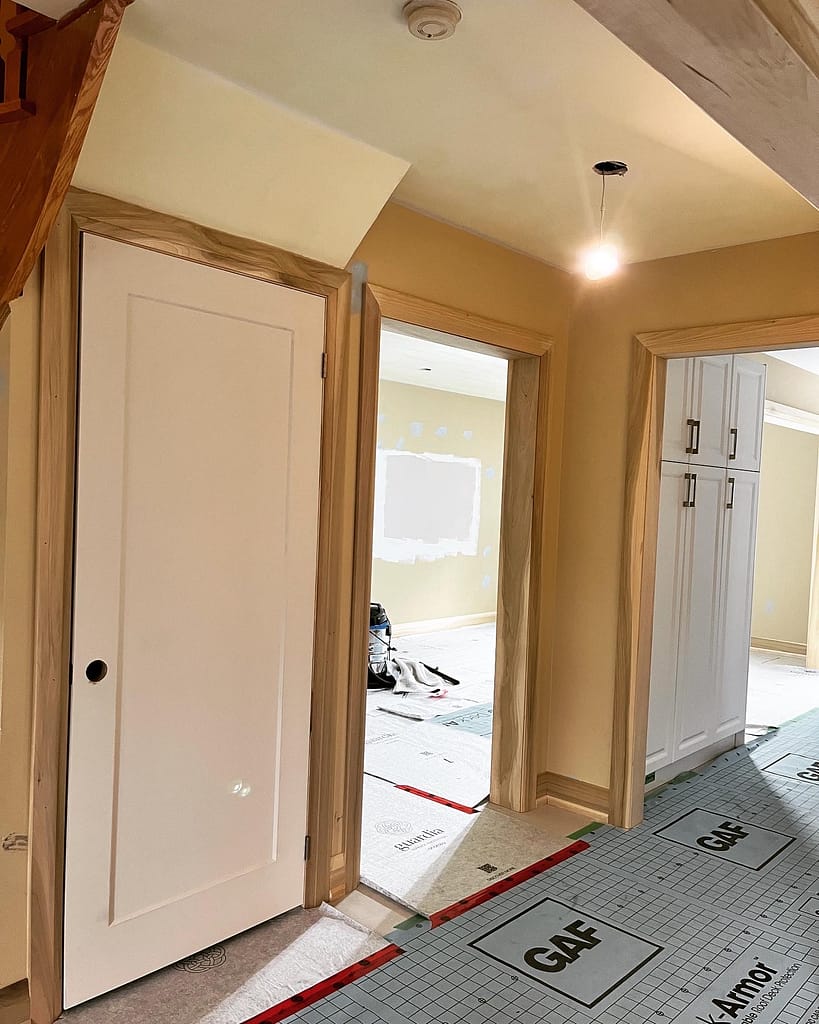
Door installation is often connected to other renovation stages.
New flooring can change bottom clearance.
Drywall repairs can affect jamb width and casing.
Painting may need to happen before or after installation depending on whether the doors are being prepared off-site or fitted into existing openings.
A basement project may involve the doors, jambs, casing and baseboards together.
Planning these details before ordering materials can prevent unnecessary adjustments later.
Useful information to confirm includes:
- finished floor height
- wall thickness
- rough-opening size
- door swing
- casing profile
- hardware function
- painting responsibility
- whether the existing jambs are staying
The door should be planned as part of the opening, not as an isolated product.
Owner-Led Door Installation in Kitchener
Wood Job is intentionally small and owner-led.
The person responsible for the business stays close to the measuring, preparation and installation.
This matters because door work often requires decisions after the opening has been examined closely.
A slab may need resizing.
A hinge mortise may need correction.
A jamb may need reinforcement.
The casing may need to be fitted against an uneven wall.
These decisions should be made with the final operation and appearance of the door in mind.
At Wood Job, the name, the hands and the responsibility stay connected.
Interior Door Installation Cost in Kitchener
Interior door installation cost depends on what the opening needs.
A straightforward hollow-core slab replacement is different from fitting a solid-core door, installing a new jamb, replacing casing or correcting unfinished work.
Cost may be affected by:
- slab or prehung construction
- hollow-core or solid-core material
- existing jamb condition
- door resizing
- hinge and hardware preparation
- casing replacement
- floor clearance
- number of doors
- old-door removal
- non-standard openings
- correction of previous work
- painting and finishing expectations
For current labour starting prices and a clearer explanation of what changes the scope, read How Much Does Interior Door Installation Cost in Ontario? 2026 Labour Prices.
Related Interior Door Advice
Can the Existing Door Frames Stay?
Should You Buy Slab or Prehung Doors?
Why Does the Existing Door Rub or Refuse to Latch?
Should You Upgrade to Solid-Core Doors?
Related Services in Kitchener
Finish Carpenter in Kitchener
For doors, casing, baseboards, archway trim, wall details and broader finish carpentry:
Main Interior Door Installation Service
For Wood Job’s full door installation and replacement service:
Finish Carpentry Corrections
For unfinished doors, jambs, casing, baseboards and other visible problems:
What to Send for an Estimate
Send clear photos of each door or opening from both sides.
Closer photos should show:
- hinges and hinge mortises
- jamb condition
- latch and strike plate
- casing
- gaps around the slab
- bottom clearance
- unfinished or damaged areas
Please also include:
- the Kitchener project location
- number of doors
- approximate door sizes
- slab or prehung preference, if known
- hollow-core or solid-core preference
- whether the new doors have already been purchased
- whether casing is included
- whether this is new installation or correction work
- a short description of the problem
A short video is useful when a door rubs, swings by itself or refuses to latch.
Photos may be enough to begin a rough estimate. Openings with unfinished work, damaged jambs or unclear framing may need an in-person review.
Interior Door Installation Questions
Can you install new doors in existing Kitchener frames?
Sometimes. If the existing jamb is solid, reasonably straight and suitable for reuse, a new slab may be fitted into it. Damaged, loose or badly twisted jambs may need correction or replacement.
Do you install solid-core interior doors?
Yes. The existing jamb and hinge support should be checked before installing a heavier solid-core slab. Some frames can be reused, while others may need reinforcement or replacement.
Can you correct a door installed poorly by someone else?
Often, yes. The jamb, hinges, slab, casing and gaps need to be reviewed first. Some parts may be adjustable, while others may need replacement before the opening can be completed properly.
Do you replace door casing as part of the project?
Yes, where needed. Existing casing can sometimes remain, but new casing may be required when the jamb is replaced, the old trim is damaged or the homeowner wants a coordinated door-and-trim upgrade.
Can you install only one or two doors?
Focused door projects may be possible depending on the scope, location and scheduling. A small number of doors still needs proper measuring, hinge preparation, fitting and latch alignment.
Should I buy slab or prehung doors?
That depends on the existing frames. A slab may work when the jamb is worth keeping. A prehung door or new jamb may be better when the frame is damaged, badly out of square or being replaced with the casing.
Can you provide an estimate from photos?
Clear photos, approximate sizes and a description of the work are often enough to begin a rough estimate. Unfinished installations, damaged jambs and non-standard openings may require a walkthrough.
Do you only install interior doors in Kitchener?
No. Wood Job Finish Carpentry also provides owner-led interior door installation across Oakville, Milton, Burlington, Mississauga, Cambridge, Guelph, Hamilton, Vaughan, Toronto and surrounding areas.




