
In a Cambridge home, interior door installation often connects with more than the door itself.
In a custom home, the doors have to match the clean lines of the architecture. In a renovated home, the new doors may need to work with existing trim, flooring, wall conditions and older openings. In a basement, the framing and drywall may leave openings that need more care than a standard door package allows.
The door is only one part of the finished opening.
The jamb, casing, baseboards, hinge side, latch, hardware and surrounding trim all decide whether the work feels clean when the room is complete.
Wood Job Finish Carpentry provides owner-led interior door installation in Cambridge, including solid-core doors, slab doors, prehung doors, custom jamb details, casing, hardware fitting, latch alignment, baseboard transitions and full door-and-trim packages for homeowners, builders and renovators.
The work is personally led by Jack Cenk Ozer, with attention to how the door fits the actual home — not just the product label.
★★★★★
76 Google Reviews.
Earned One Job at a Time.
Real projects. Real homes. Real customers.
Wood Job Finish Carpentry has earned trust in Cambridge through interior door installation, solid doors, casing, baseboards, custom jambs, trim packages, and careful finish carpentry for older homes, renovations, and custom homes.
Cambridge door projects can be very different from one home to another. Some openings are older and uneven. Some are part of a new custom build where every clean line is easy to see. In both cases, the door has to swing, latch, sit, and look right.
Many clients mention the same things: clean work, clear communication, careful fitting, reliability, and personal responsibility from the first measurement to the final adjustment.
Door Installation for Cambridge Custom Homes and Renovations
Cambridge has a wide mix of homes.
Some are newer custom homes with modern interiors and clean trim details. Some are older homes in Galt, Hespeler or Preston where openings, floors and walls may no longer be perfectly straight. Some are basement renovations where the door openings were framed after the main house was built.
Each type of home needs a different approach.
In a modern custom home, the door lines, casing, baseboards and reveals are easy to see because there is often less decoration to hide behind. Simple profiles can look sharp, but they also leave less room for mistakes.
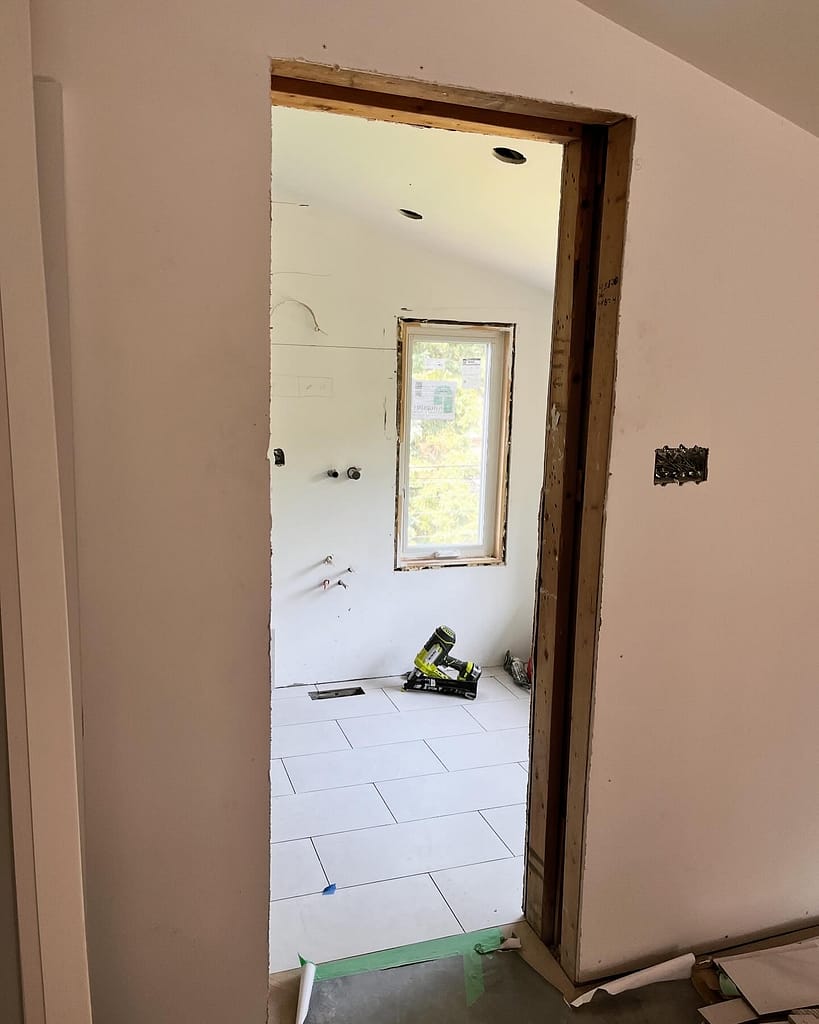
In an older home, the opening may decide more of the work. The jamb may not be plumb. The floor may slope. The casing may need to meet walls that are not perfectly flat.
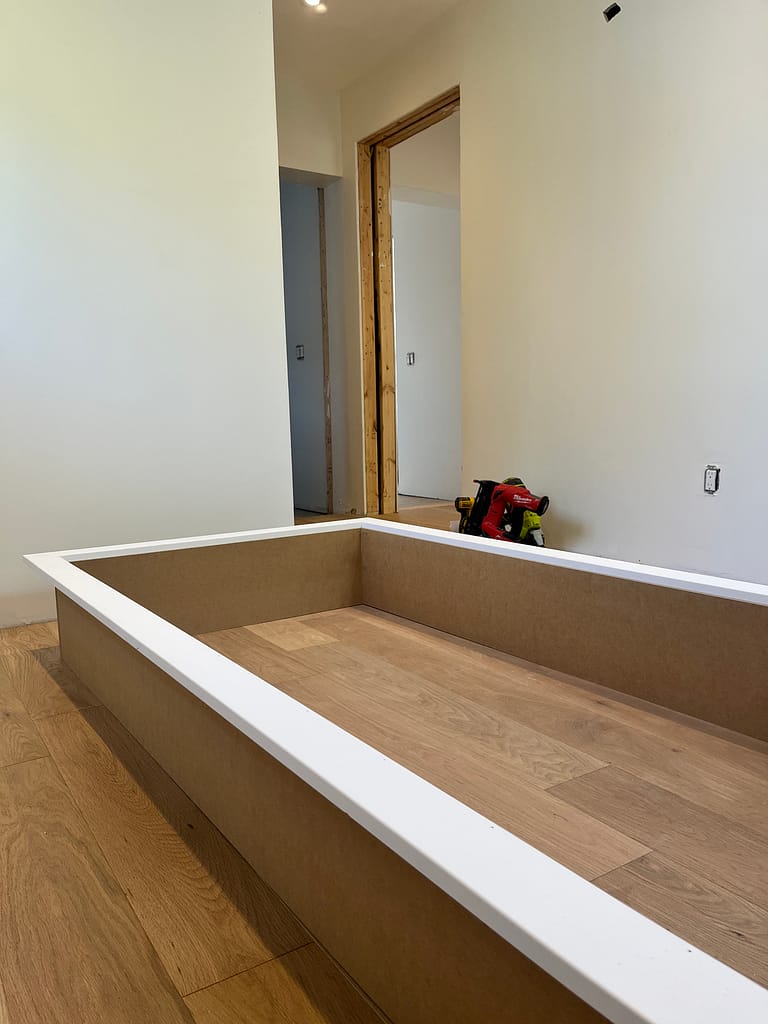
In a basement, the wall depth, flooring, drywall and framing can affect whether a standard jamb works or whether a custom detail is needed.
Good door installation starts by reading the opening.
When the Door Is Part of a Full Trim Package
Many Cambridge door projects are not only about replacing one slab.
The door usually connects to the casing, the casing connects to the baseboard, and the baseboard connects the room back to the floor. If one part is handled carelessly, the whole opening can feel unfinished.
This matters even more in homes with clean modern lines.
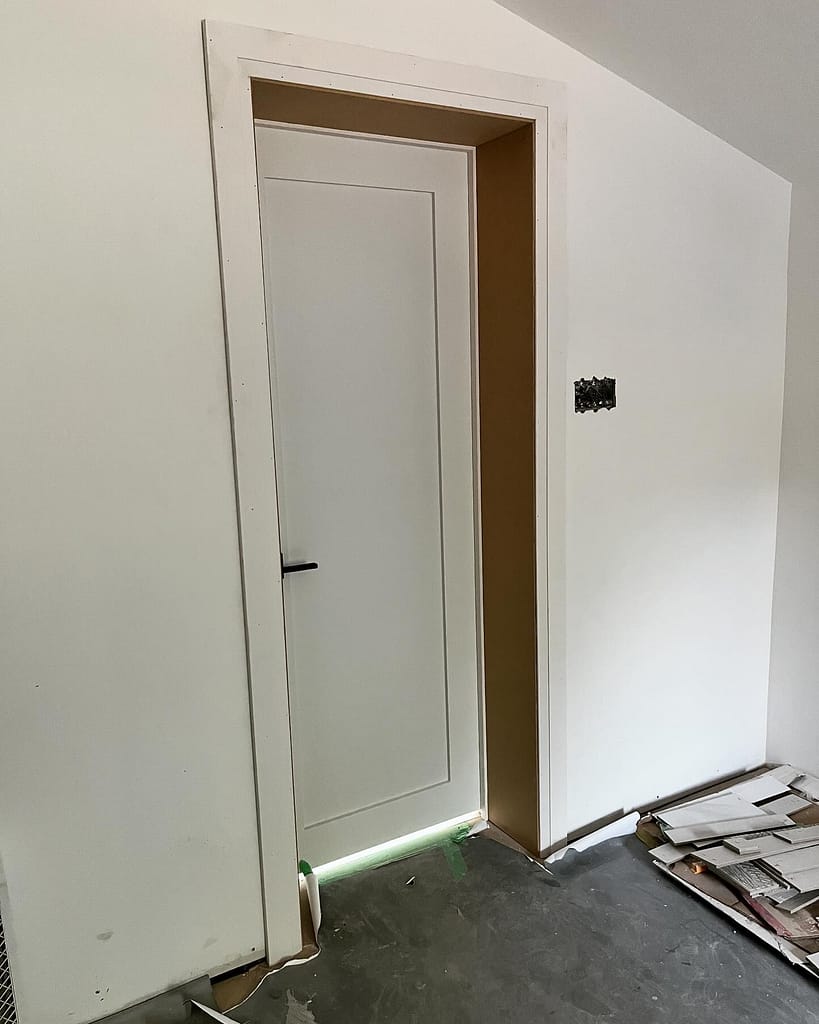
A simple one-panel or shaker-style door can look calm and balanced when the reveal is consistent, the casing sits flat and the baseboard meets the door trim cleanly. But the same simple style can show every mistake if the opening is rushed.
Wood Job can help with:
- solid-core interior door installation
- slab door installation
- prehung doors
- door casing
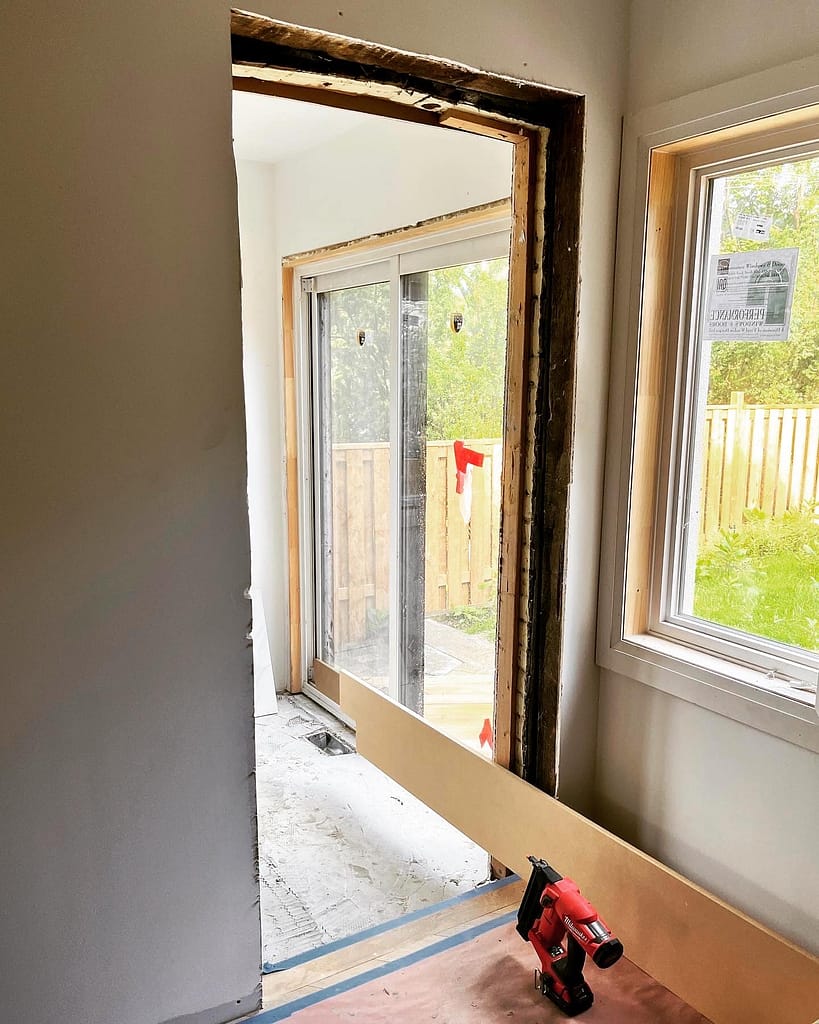
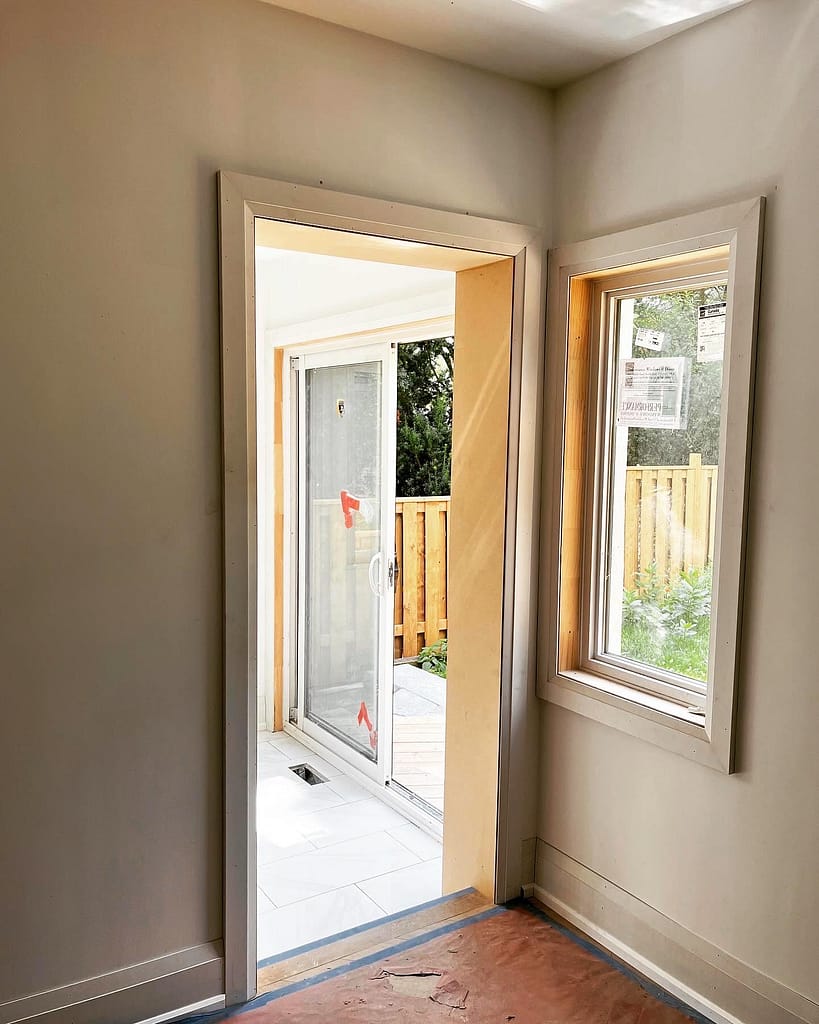
- window casing near door areas
- baseboard transitions
- jamb extensions
- hinge mortising
- latch and strike plate alignment
- hardware installation
- trim replacement around new doors
- full door, trim and baseboard packages
A door should work properly.
It should also belong to the room around it.
Cambridge Project Example: Doors, Trim and Baseboards in a Custom Home
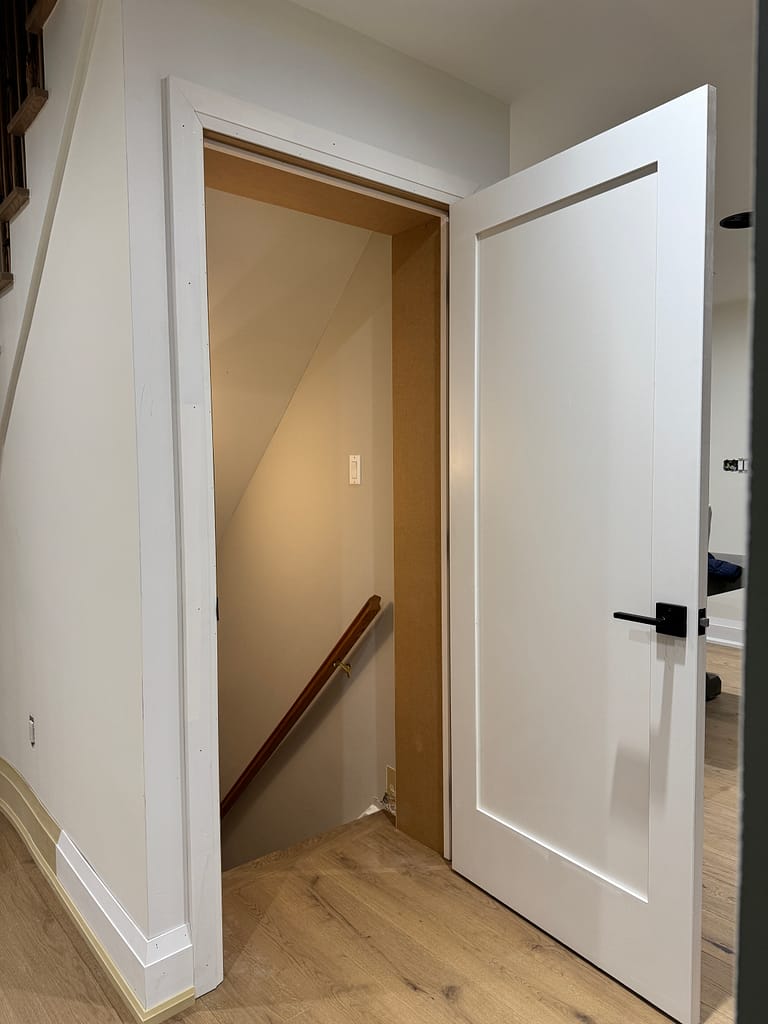
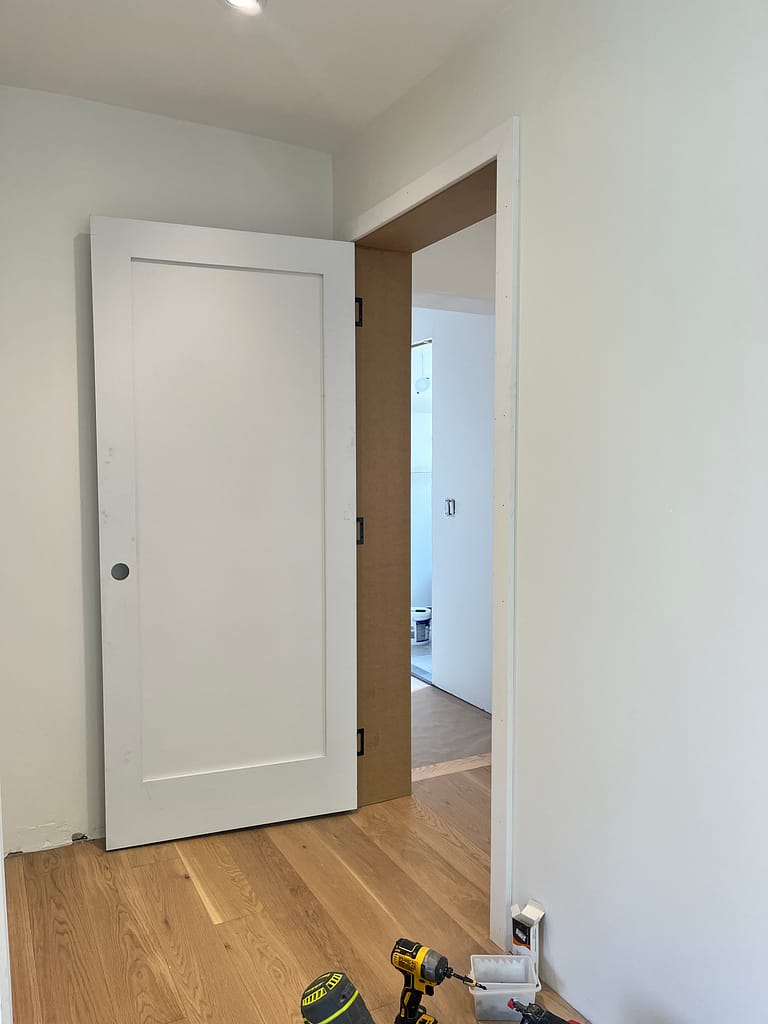
Anita and Jean’s Cambridge custom home is a strong example of how interior doors and trim work together.
The home had a modern, contemporary style with clean interior lines. The goal was not to make the trim overly decorative. The goal was to support the architecture with solid interior doors, trim and baseboards that felt consistent from room to room.
The project included:
- solid interior door installation
- door casing and trim
- baseboard installation
- clean joints and transitions
- careful handling of pre-painted materials
- consistent reveals and alignment
Pre-painted doors and trim can work very well, but they need careful handling. The finished surfaces have to be protected during cutting, fitting, fastening and installation. Solid doors also need proper alignment because their weight makes poor hinge placement more obvious.
About one year after the project, Anita left a kind 5-star review, saying Jack installed the doors, baseboards and trim in their custom build and did a fantastic job.
That kind of review matters because the work was remembered after the family had lived with it.
Solid-Core Doors in Cambridge Homes
Solid-core doors are a common choice when homeowners want a more substantial feel than standard hollow-core doors.
They can make bedrooms, offices, basements and main-floor rooms feel quieter and more finished. They also have more weight, which means the installation needs to be handled properly.
The hinge side matters.
The jamb matters.
The latch matters.
If a heavy door is installed into a weak or poorly aligned frame, the door may start rubbing, sagging or failing to latch. A solid-core door can be a very good upgrade, but it will not hide a bad opening.
Wood Job checks the existing condition before recommending whether a slab door, prehung door, jamb adjustment or custom jamb detail makes more sense.
For homeowners still comparing door types, Metrie’s interior door options can be a useful starting point for seeing slab, bifold, hollow-core, solid-core, smooth and textured door choices.
Slab Door, Prehung Door or Custom Jamb?
A slab door is only the door itself.
It may be a good choice when the existing jamb is straight, solid and worth keeping. The new slab still has to be fitted carefully, with hinge mortising, latch alignment and trimming where needed.
A prehung door comes already mounted in a jamb.
It may be better when the old frame is damaged, twisted, poorly installed or not worth saving.
A custom jamb or jamb extension may be needed when the wall thickness, drywall, framing or finished surface does not match a standard jamb properly.
This is common in some renovations and basement projects.
The wrong choice can make the job harder than it needs to be. Reusing a bad jamb can cause the same door problems to come back. Replacing a good jamb when it is not necessary can add cost without improving the final result.
Wood Job looks at the opening before recommending the better path.
Because the opening, jamb, wall thickness, casing, and door type can all affect the final labor, homeowners can review our 2026 interior door installation cost guide for Ontario before requesting an estimate.
What We Check Before Installing Interior Doors
Before installing or replacing an interior door, Wood Job looks at the conditions that affect the finished result.
That can include:
- opening size
- wall thickness
- jamb condition
- hinge locations
- latch and strike plate alignment
- floor level
- casing condition
- baseboard transitions
- door swing direction
- hardware choice
- whether the old frame can be reused
- whether the door is hollow-core or solid-core
- whether the trim is already painted
- whether a custom jamb or extension is needed
This checking stage is not about making the project complicated.
It is about avoiding the small problems homeowners notice later: doors that rub, doors that will not latch, casing that does not sit flat, baseboards that meet the door trim awkwardly or solid doors that feel heavy because the frame was not prepared properly.
Pre-Painted Doors and Trim
Some Cambridge projects use pre-painted doors, casing or baseboards.
This can be a good option when the schedule is tight or when the homeowner wants a cleaner painting process. But pre-painted material has to be handled carefully.
Cuts need to be clean. Fastening needs to be planned. Finished surfaces need protection during installation. Touch-ups will still be needed, but the goal is to avoid unnecessary damage during fitting.
Pre-painted doors also make reveal lines and casing details more visible.
That is why the installation has to be calm and organized.
Older Openings in Galt, Hespeler and Preston Homes
Not every Cambridge home is a new custom build.
Older homes in Galt, Hespeler and Preston can have openings that have moved over time. Floors may slope. Walls may not be flat. Older trim may have been painted many times. Old jambs may not accept new slabs cleanly without adjustment.
This does not mean the project is impossible.
It means the opening has to be respected.
Sometimes a door can be adjusted. Sometimes a new slab can be fitted. Sometimes the jamb needs work. Sometimes the casing should be replaced because the old trim will not meet the new door cleanly.
A good interior door installation should be honest about what the existing home allows.
Owner-Led Interior Door Installation in Cambridge
Wood Job is intentionally small.
That matters in finish carpentry because the final result depends on small decisions made on site.
A reveal may need to be adjusted. A hinge may need to be mortised more carefully. A casing piece may need to be fitted to a wall that is not perfectly flat. A baseboard may need to meet the door trim in a way that looks clean to the eye.
These decisions should not be passed through a chain of people who are not close to the finished work.
At Wood Job Finish Carpentry, the work is personally led by Jack Cenk Ozer. Clients know who they are speaking with, who is reviewing the project and who is responsible for the finished result.
The goal is not to make the job sound bigger than it is.
The goal is to install the door properly, fit the surrounding trim carefully and leave the opening feeling complete.
Related Services for Cambridge Homeowners
Finish Carpenter in Cambridge
See how Wood Job Finish Carpentry helps Cambridge homeowners, builders and renovators with interior doors, trim, baseboards, casing, crown moulding, wall paneling, flooring transitions and renovation finishing.
Interior Door Installation
For the main door installation service page, including solid-core doors, slab doors, prehung doors, casing, jambs, hardware and custom fitting.
Finish Trim Carpentry
Door installation often connects with casing, baseboards, shoe moulding, jamb extensions and final finish details around the opening.
Request a Rough Estimate for Interior Doors in Cambridge
Planning interior door installation in Cambridge?
Send clear photos, basic measurements, your project location and a short description of what you need.
Useful details include:
- number of doors
- photos of both sides of each opening
- current door size, if known
- photos of the jamb, casing and hinges
- whether the doors are slab or prehung
- whether you want hollow-core or solid-core doors
- whether hardware is already purchased
- whether casing and baseboards should be replaced
- whether the materials are pre-painted
- whether the home is occupied, under renovation or a new build
- a short video if a door rubs, swings open or will not latch
For many projects, Wood Job can review photos and provide a rough starting range. If the opening, jamb, wall condition or project scope needs a closer look, an on-site walkthrough may be the better next step.
Interior Door Installation Questions
Do you install interior doors in Cambridge custom homes?
Yes. Wood Job can help with solid interior doors, casing, baseboards and trim details in custom homes where clean lines and consistent room-to-room details matter.
Can you install pre-painted doors and trim?
Yes, depending on the material and project conditions. Pre-painted doors and trim need careful handling during cutting, fitting and fastening so the finished surfaces are protected as much as possible.
Can you replace hollow-core doors with solid-core doors?
Yes, in many homes. The existing jamb, hinge locations and fastening points should be checked first because solid-core doors are heavier and make poor alignment more noticeable.
Do older Cambridge homes need custom door work?
Sometimes. Older homes in Galt, Hespeler and Preston may have uneven floors, older jambs, paint buildup or openings that are not square. Some doors can be adjusted or replaced simply, while others may need jamb work or new casing.
Do I need new casing when replacing doors?
Not always. If the existing casing is clean, solid and works with the new door and jamb condition, it may be possible to keep it. If it is damaged, heavily painted, too narrow or does not sit flat, replacing it may give a better result.
Can you provide a rough estimate from photos?
Yes. Clear photos, basic measurements, number of doors, project location and a short description are usually enough to start. If the openings are irregular or the trim details need closer inspection, a walkthrough may be needed before a firm quote.
Do you work with builders and renovators in Cambridge?
Yes. Wood Job supports homeowners, builders and renovators with interior doors, casing, baseboards, trim packages and final finish carpentry details.




