
Working from home has changed how people use their houses. An open dining room, den, front room, or wide archway may now need to become a private home office — but that does not mean the space has to feel dark, closed off, or disconnected from the rest of the home.
Wood Job Finish Carpentry designs and installs custom home office doors, interior French doors, transoms, sidelights, casing, trim, and room separation details for homeowners across Toronto GTA, including Vaughan, Oakville, Mississauga, Burlington, Milton, Hamilton, Cambridge, Guelph, and Kitchener.
These custom door systems are especially useful when you want privacy for work calls, less visual distraction, and a more finished look than curtains, temporary partitions, or a basic door installation — while still keeping natural light moving through the home.
Led by Jack Cenk Ozer, Wood Job is a small, hands-on finish carpentry business focused on careful measuring, custom fitting, clean reveals, aligned hardware, and paint-ready finish details that look like they belonged in the home from the beginning.
Close Off a Home Office Without Losing Light
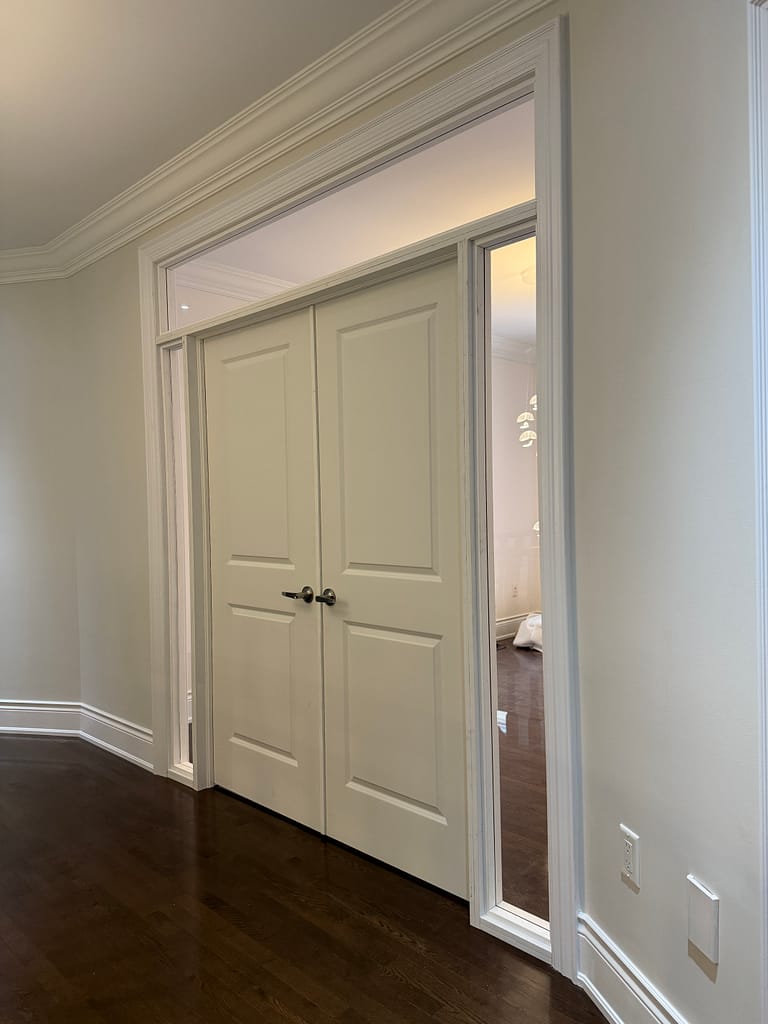
Many homeowners do not want to fully wall off a room.
They want privacy, but they still want light.
They want separation, but they do not want the room to feel small.
They want doors, but they want the opening to look intentional.
They want the home office to function better without making the main floor feel chopped up.
That is where glass doors, transoms, and sidelights can work beautifully.
A pair of glass French doors can close the room when privacy is needed. A transom above the doors can keep the height and light of the original opening. Sidelights can make a wider opening feel balanced instead of squeezed into a standard door size.
This type of finish carpentry is not just about installing doors. It is about designing the opening so the doors, glass, trim, proportions, and surrounding room all work together.
What Are Transoms and Sidelights?
A transom is the fixed glass section above a door or opening. It helps keep light moving through the space and can make a tall opening feel more architecturally complete. Transoms are often used above doors to add height, light, and character.
Sidelights are fixed glass panels beside a door. They are commonly used to make an opening feel wider, brighter, and more balanced. Design sources often describe sidelights and transoms as ways to add light, openness, and architectural character around a door.
For interior home office projects, these details can be used in a practical way:
- A transom above the doors keeps the opening bright.
- Sidelights on the left and right help fill a wide opening.
- Glass French doors provide privacy while keeping visual connection.
- Casing and trim make the system look finished.
The result is a room that feels separated, but not shut down.
When This Type of Door System Makes Sense
A custom glass door, transom, and sidelight system can be a good fit when:
- You have an open archway with no door.
- You want to turn a dining room into a home office.
- You need privacy for work calls.
- You want to separate a living room from an office or den.
- You want doors but do not want to lose natural light.
- The opening is too wide for regular double doors alone.
- The opening is too tall and needs a transom above.
- You want the new doors to look like they were always part of the home.
- You want a cleaner alternative to temporary partitions or curtains.
- You want a more refined finish than a basic door installation.
These projects are common in main floors, home offices, studies, front rooms, dens, dining rooms, and flexible living spaces.
Custom Interior Glass Door Options
Every opening is different. Some homes need a simple pair of French doors. Others need a complete framed system with a transom and sidelights.
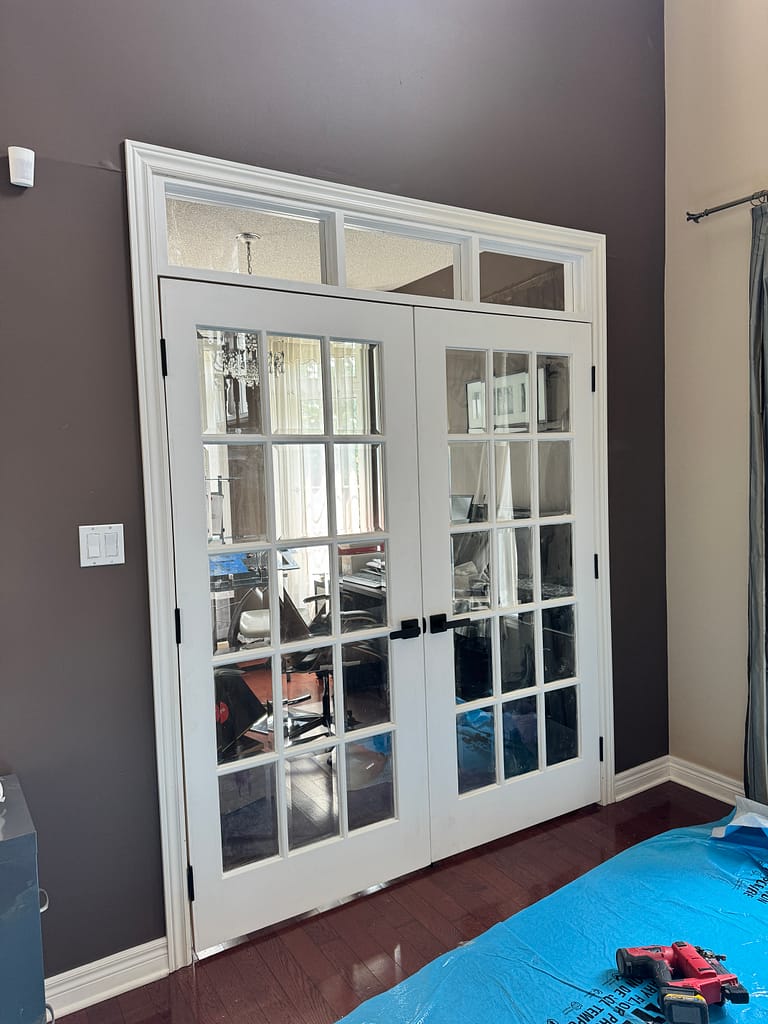
Glass French Doors for Home Offices
Glass French doors are a strong choice for home offices because they give the room a proper entrance while keeping the space bright.
They can help reduce visual distraction, make the office feel more private, and create a professional backdrop for work-from-home routines.
For best results, the doors need careful fitting, clean reveals, proper hardware alignment, and casing that matches the rest of the home.
Transom Above Interior Doors
A transom works especially well when the original opening is tall.
Instead of installing oversized doors that feel awkward, the opening can be divided into two parts: the lower section for doors and the upper section for a fixed transom.
This keeps the height of the opening, allows light to pass through, and makes the installation feel more balanced.
Ryan’s Oakville home office project used this approach: an 8-foot open archway was fitted with custom-width glass French doors and a fixed transom detail.
Sidelights Beside Double Doors
When an opening is wider than a standard double-door setup, sidelights can help fill the space cleanly.
Instead of forcing oversized doors into the opening, the layout can include:
- Fixed sidelight on the left
- Double glass doors in the centre
- Fixed sidelight on the right
- Transom above, if the opening is tall
This creates a more architectural look and keeps the opening bright.
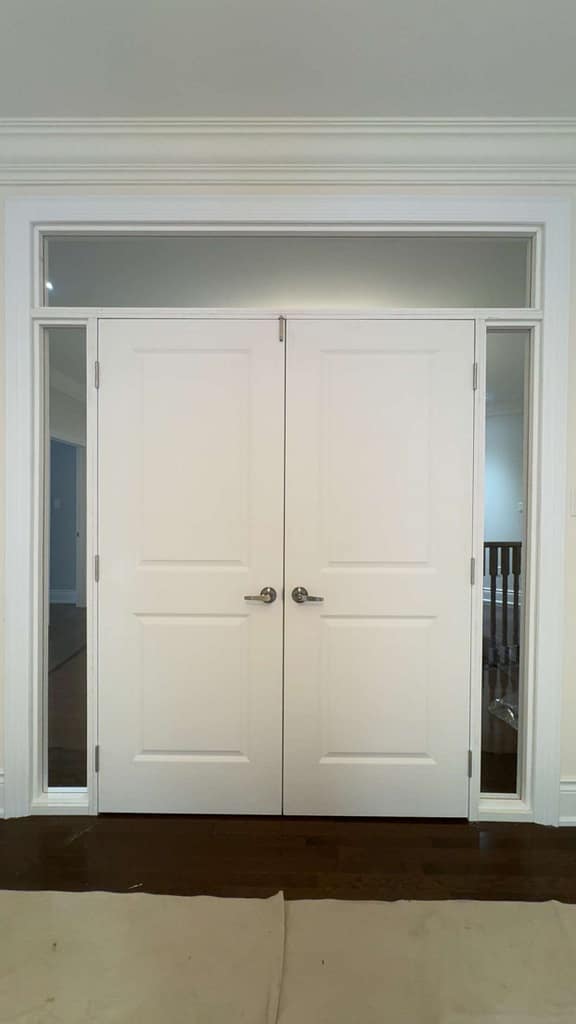
David’s Woodbridge project follows this kind of layout: double doors in the centre, sidelights on both sides, and a transom above. This type of system needs careful measuring because all glass lines, door gaps, casing, and reveals are visible.
Clear, Frosted or Acrylic Panels
Some homeowners want clear glass because they want maximum light and openness. Others may prefer frosted, reeded, etched, or privacy-style glass to reduce visibility while still allowing light through. Recent design guidance around glass doors often focuses on privacy without sacrificing natural light, using options like frosted, etched, reeded, reflective, or paneled solutions.
For some interior applications, acrylic panels can also be considered depending on the project, thickness, safety concerns, weight, and design goal.
For example, David’s Woodbridge project uses clear acrylic panels in a custom door and sidelight system. Acrylic can be a practical option when the design calls for a clear panel and the project conditions make it suitable.
Final material choice depends on the opening, design, safety considerations, client preference, and how the doors will be used.
Casing, Trim and Final Finish Details
The doors and glass are only part of the project.
The final result depends heavily on the finish carpentry around the opening:
- Casing
- Jambs
- Reveals
- Transom frame
- Sidelight frame
- Door stops
- Hardware alignment
- Baseboard transitions
- Paint-ready finishing
A custom glass door system should not look like it was forced into an old opening. It should look like the room was designed that way.
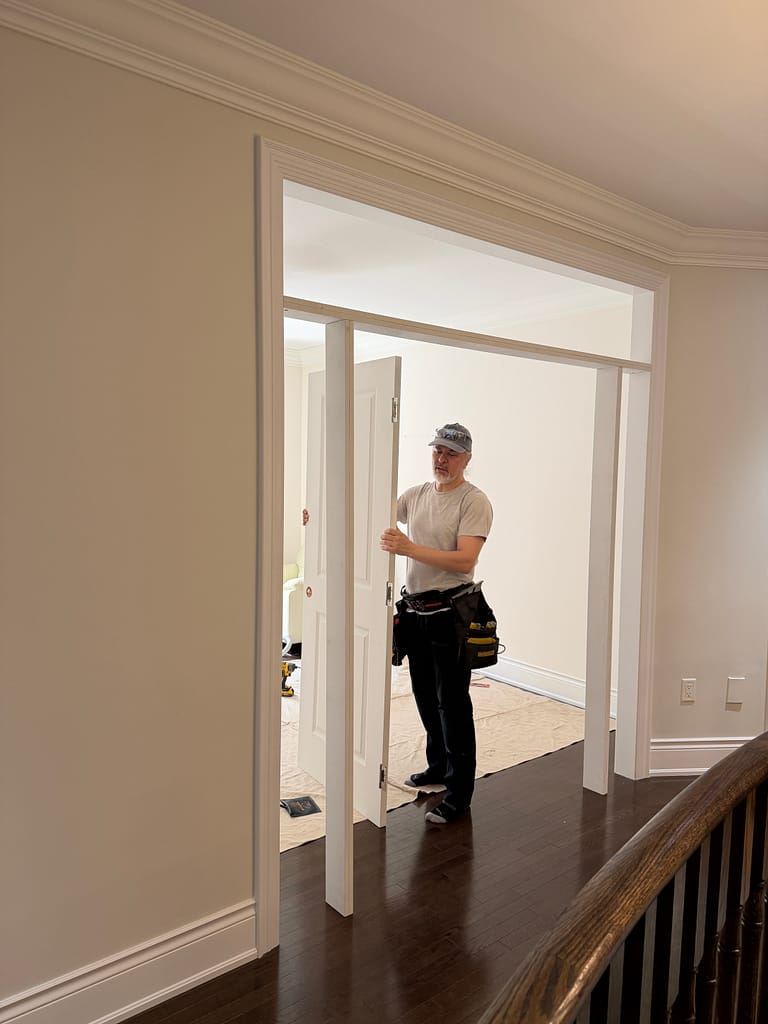
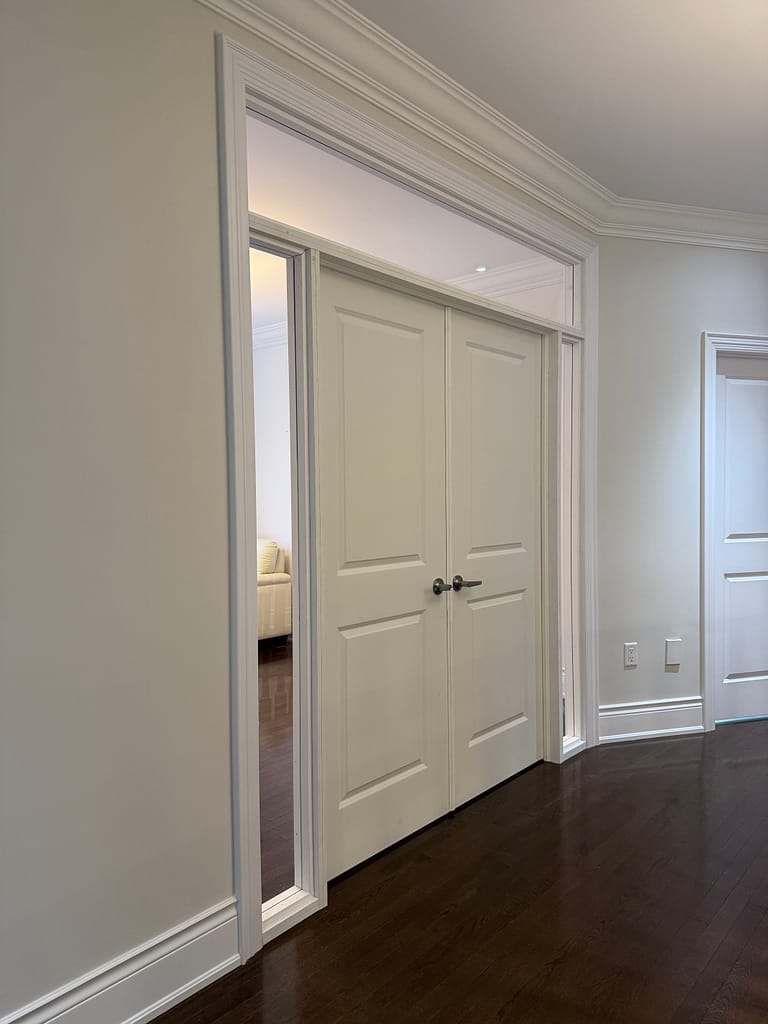
Real Project Example: Oakville French Doors With Transom
Ryan’s Oakville home office had a wide, open archway with no door.
The opening looked nice, but it did not provide the privacy or separation needed for a proper office. Installing regular full-height doors into the 8-foot opening would not have looked right. The proportions needed to be handled carefully.
After visiting the home, Wood Job Finish Carpentry suggested a more refined solution: build a fixed glass transom at the top and install two glass French doors underneath.
This allowed the office to gain privacy while keeping the room bright and visually connected to the rest of the home.
The project required custom sizing, careful layout, door fitting, side reveals, casing, hardware alignment, and trim details so the finished installation felt intentional.
Oakville French Doors and Transom Home Office Project
Vaughan Project: Double Doors With Transom and Sidelights
David’s Vaughan home office already had a wide interior archway opening. The goal was to create privacy and separation without making the room feel dark or disconnected from the rest of the home.
The final solution included double doors in the centre, fixed sidelights on the left and right, and a custom transom above. This helped the office feel private, bright, professional, and properly separated while keeping the openness of the original archway.
View the Vaughan double doors, transom and sidelights project
Design Considerations Before Building
A home office glass door system should be planned carefully before installation begins.
Opening Size and Proportion
The width and height of the opening determine whether the best solution is:
- Single glass door
- Double French doors
- French doors with transom
- Double doors with sidelights
- Double doors with transom and sidelights
A tall opening may look better with a transom. A wide opening may look better with sidelights. The goal is to make the proportions feel balanced.
Light and Privacy
Clear glass keeps the room visually connected and bright.
Frosted, reeded, etched, or textured glass can add privacy while still allowing light through.
Acrylic may be suitable for some interior panel systems depending on the project.
Before choosing the material, it is important to think about how the room will be used: work calls, meetings, children, pets, sound, privacy, and daily traffic.
Sound and Practical Privacy
Glass doors can help create separation, but they are not the same as a fully insulated wall.
They can reduce visual distraction and create a dedicated room, but sound control depends on the door type, gaps, seals, glass/panel material, wall construction, and hardware.
If sound control is a major concern, that should be discussed before choosing the door and glass system.
Hardware and Swing Direction
Hardware is not just a small detail.
The handle style, hinge colour, latch, door swing, clearance, and meeting point between double doors all affect the final result.
For double doors, alignment matters because the centre gap is very visible.
Matching the Home’s Existing Trim
A new glass door system should work with the rest of the home.
The casing, baseboard transition, jamb depth, paint finish, hardware colour, and door style should feel connected to the surrounding rooms.
This is where finish carpentry makes the difference.
What to Send for a Rough Estimate
For many home office glass door and transom projects, we can provide a rough starting range from photos and measurements.
Please send:
- Clear photo of the opening
- Straight-on photo from the front
- Opening width
- Opening height
- Wall thickness, if known
- Ceiling height
- Photos of nearby trim and baseboards
- Whether you want single doors, double doors, transom, sidelights, or a full system
- Glass preference: clear, frosted, reeded, privacy-style, or acrylic
- Inspiration photo, if available
- Project city
- Whether the home is occupied, under renovation, or before move-in
Photo-based estimates are approximate. Final pricing may change after confirming exact measurements, wall conditions, material choices, hardware, glass or acrylic selection, paint/finishing requirements, and installation details.
Related Services
Interior Door Installation
Glass French doors, double doors, custom door fitting, casing, hardware, reveal lines, and finish details for interior rooms, offices, dens, and flexible living spaces.
Finish Trim Carpentry
Casing, jambs, baseboards, door trim, window trim, reveals, transitions, and final finish details that help a custom door system look built into the home.
Finish Carpentry for Interior Designers
Designer-led home office doors, glass partitions, transoms, sidelights, fireplace features, wall details, and custom finish carpentry execution.
Finish Carpentry for Homeowners
New homeowners can complete doors, room separation, trim, baseboards, flooring details, and home office upgrades before furniture and daily life begin.
Custom Accent Walls and Shiplap
Wall features, panel details, shiplap, board and batten, and architectural details that help define rooms and add character to interior spaces.
Photo-Based Rough Estimate
Send opening photos, measurements, inspiration images, material preferences, and project location for a rough starting range before scheduling a walkthrough.
Service Areas
Wood Job Finish Carpentry builds custom home office glass doors, interior French doors, transoms, sidelights, and room separation details across Toronto, Mississauga, Oakville, Milton, Burlington, Woodbridge, Vaughan, Brampton, Cambridge, Guelph, Kitchener, Waterloo, Hamilton, and surrounding areas.
City pages:
Finish Carpenter in Mississauga
Finish Carpenter in Burlington
Home Office Glass Door Questions
Can you close off an open home office with glass French doors?
Yes. If the opening is suitable, we can install glass French doors, casing, trim, and related finish details to help create a more private home office while keeping the space bright.
Can you add a transom above interior French doors?
Yes. A transom can be added above interior doors when the opening is tall enough and the proportions make sense. This can help maintain light and make the full opening look more intentional.
Can you install sidelights beside double doors?
Yes. Sidelights can be used beside double doors when the opening is wider than the doors alone. They help fill the space, keep light moving, and create a more balanced interior opening.
Can clear glass or acrylic be used?
Yes, depending on the project. Some homeowners prefer clear glass or clear acrylic for maximum light and openness. Others may prefer frosted, reeded, or privacy-style panels. Material choice depends on the opening, design, safety considerations, and use of the room.
Will glass doors make the office soundproof?
Glass doors can help create separation and reduce visual distraction, but they are not the same as a fully soundproof wall. Sound control depends on the door system, gaps, seals, glass or panel material, and surrounding construction.
Do you work with existing archways or open room entrances?
Yes. Many of these projects start with an existing archway, wide opening, dining room entrance, living room opening, den, or home office opening that was not originally built for doors.
Can you provide a rough estimate from photos?
Yes. Send clear photos of the opening, width and height measurements, ceiling height, inspiration photos, and project location. We can review the details and let you know if a rough estimate is possible or if a walkthrough is needed.
Planning to Close Off a Home Office or Open Room?
A custom glass door, transom, and sidelight system can help turn an open space into a more private and useful room without losing the light and openness that made the space attractive.
If you have an open archway, home office, den, dining room, or interior opening that needs a clean separation solution, Wood Job Finish Carpentry can help design and install the right finish detail.




