
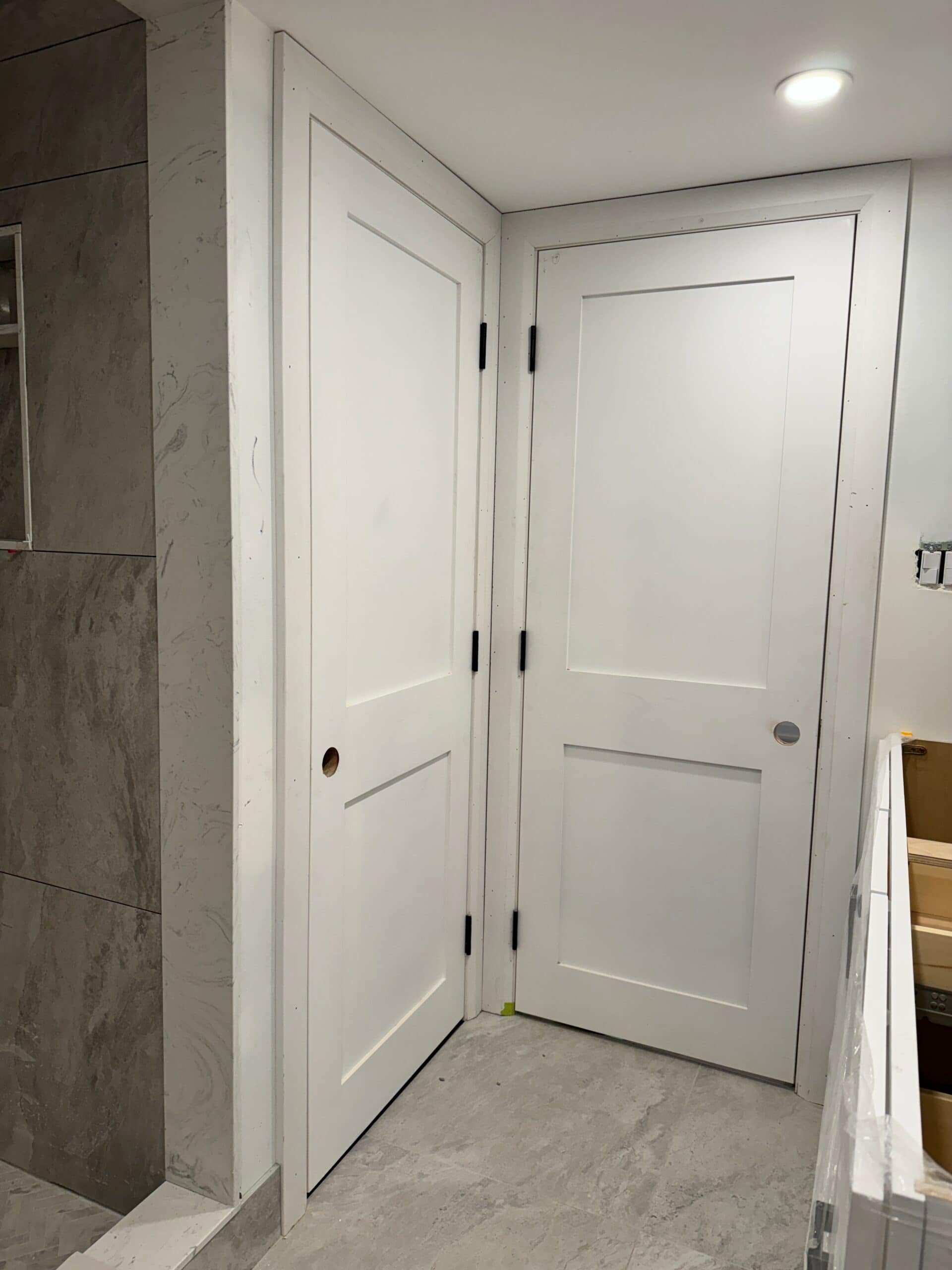
Interior doors in Hamilton homes do not all come with the same kind of opening.
A newer home may still have lightweight builder-grade hollow-core doors. An older lower-city home may have jambs that have moved, layers of paint around the hinges, uneven floors or casing installed over plaster walls. A Mountain bungalow may have doors affected by flooring changes or previous renovations. A condo may have non-standard closet openings where a standard retail door does not fit properly.
That is why interior door installation should start with the opening, not only the door style.
Wood Job Finish Carpentry provides owner-led interior door installation in Hamilton, including slab door replacement, prehung doors, solid-core doors, shaker doors, closet doors, custom jambs, casing, hinge preparation, latch alignment, hardware fitting and careful adjustments around existing openings.
The work is personally led by Jack Cenk Ozer, with attention to the parts that decide how the door will feel after installation: the jamb, hinges, latch, strike plate, floor clearance, reveal, casing and the real condition of the home.
★★★★★
77 Google Reviews.
Earned One Job at a Time.
Real projects. Real homes. Real customers.
Wood Job Finish Carpentry has earned trust through careful interior door installation, custom jamb work, casing, solid-core door replacement, closet doors, non-standard openings and detailed finish carpentry inside occupied homes.
Hamilton door projects can involve older frames, settled floors, previous renovation layers, condo access or openings that do not match standard product sizes. A good installation has to work with those real conditions instead of forcing the same solution into every home.
Many clients mention the same things: clean work, careful fitting, reliability, clear communication, practical problem-solving and respect for the home.
Interior Door Replacement for Hamilton Homes
Interior door replacement can be a focused upgrade or part of a larger renovation.
Some homeowners want to replace one bedroom door that no longer closes properly. Others want to replace a full set of old hollow-core or six-panel doors with cleaner shaker-style or solid-core doors. A condo owner may need custom closet doors. A rental or duplex renovation may need practical, durable doors and casing completed before the unit is ready.
The scope may be different, but the basic standard stays the same.
A properly installed interior door should:
- swing without rubbing the floor or jamb
- close without needing to be lifted, pushed or slammed
- latch cleanly into the strike plate
- sit with a balanced reveal around the slab
- feel properly supported at the hinges
- work naturally with the casing and surrounding trim
A new door should not fight the opening every day.
What We Check Before Installing an Interior Door
The condition of the existing opening often decides how much work is involved.
Before recommending a slab door, prehung door or custom jamb, Wood Job looks at the full opening.
That includes the existing jamb, hinge locations, latch position, strike plate, floor height, wall condition, casing, door swing and available clearance.
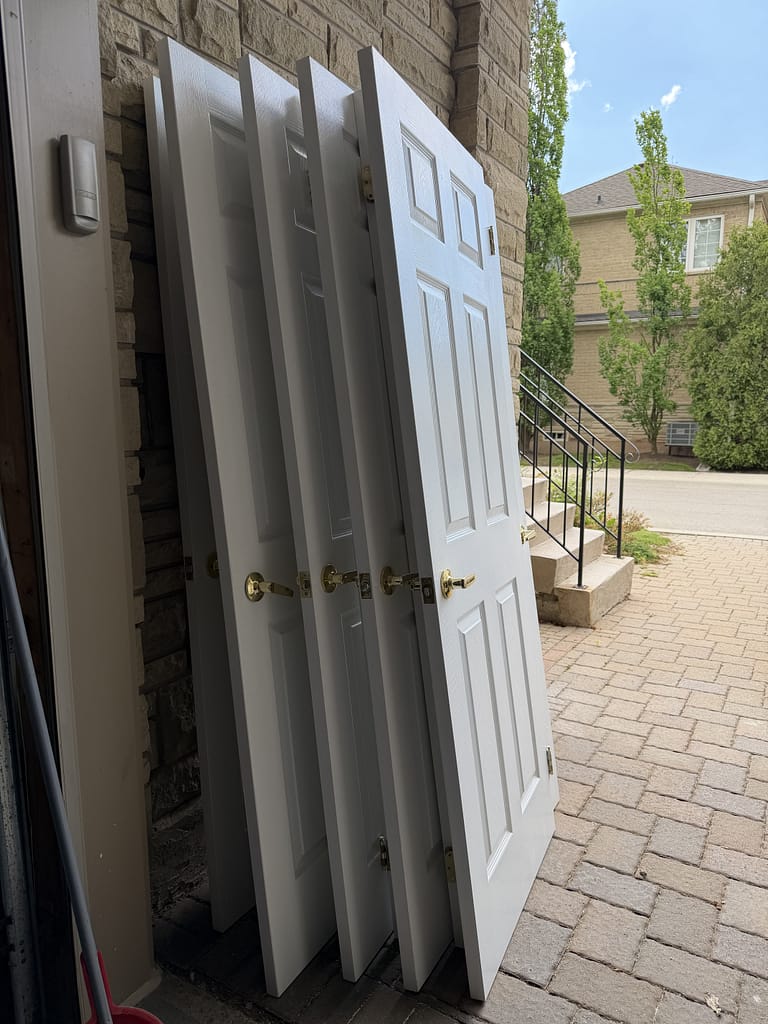
In older Hamilton homes, the jamb may no longer be square. A floor may slope slightly. Old paint can build up around the hinges and door stop. Plaster or uneven drywall may make the casing difficult to fit cleanly.
In renovated homes, new flooring may have reduced the clearance below the door. A previous installer may have adjusted one part of the opening without correcting the underlying problem. Old casing may be hiding rough drywall or framing.
These conditions do not automatically mean the entire frame must be removed.
They mean the opening should be understood before a new door is ordered, cut or installed.
Homeowners trying to decide whether the old frame can stay may find this guide useful: Can You Replace Interior Doors Without Replacing the Frame?
Slab Doors and Existing Frames
A slab door is only the door itself.
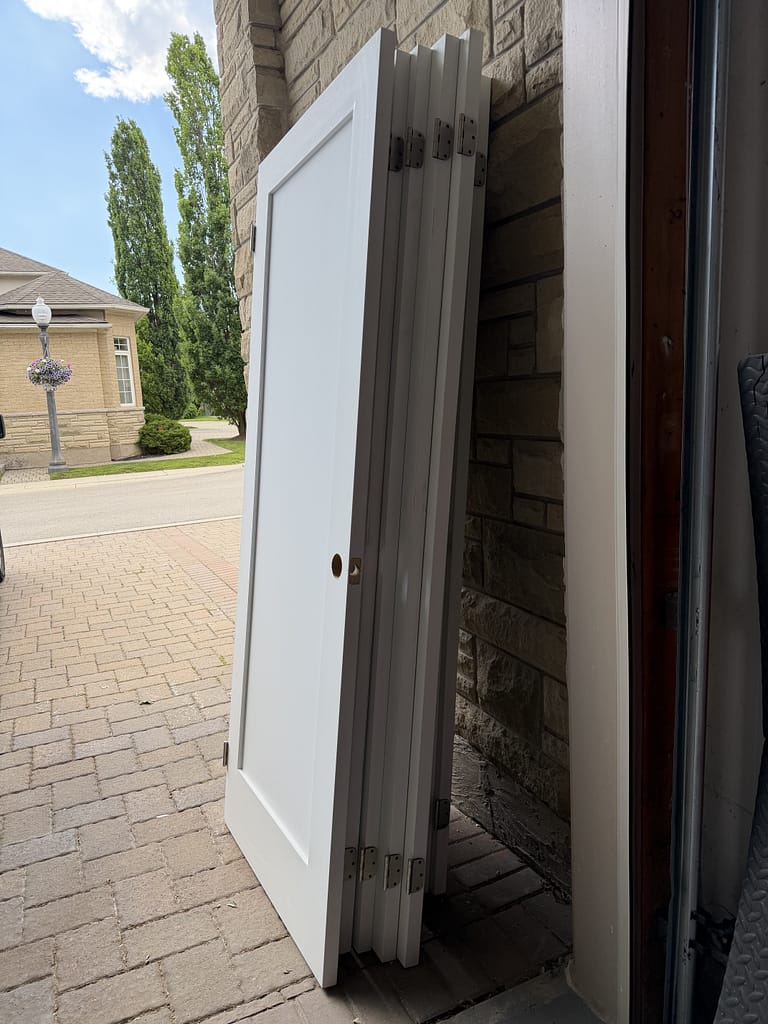
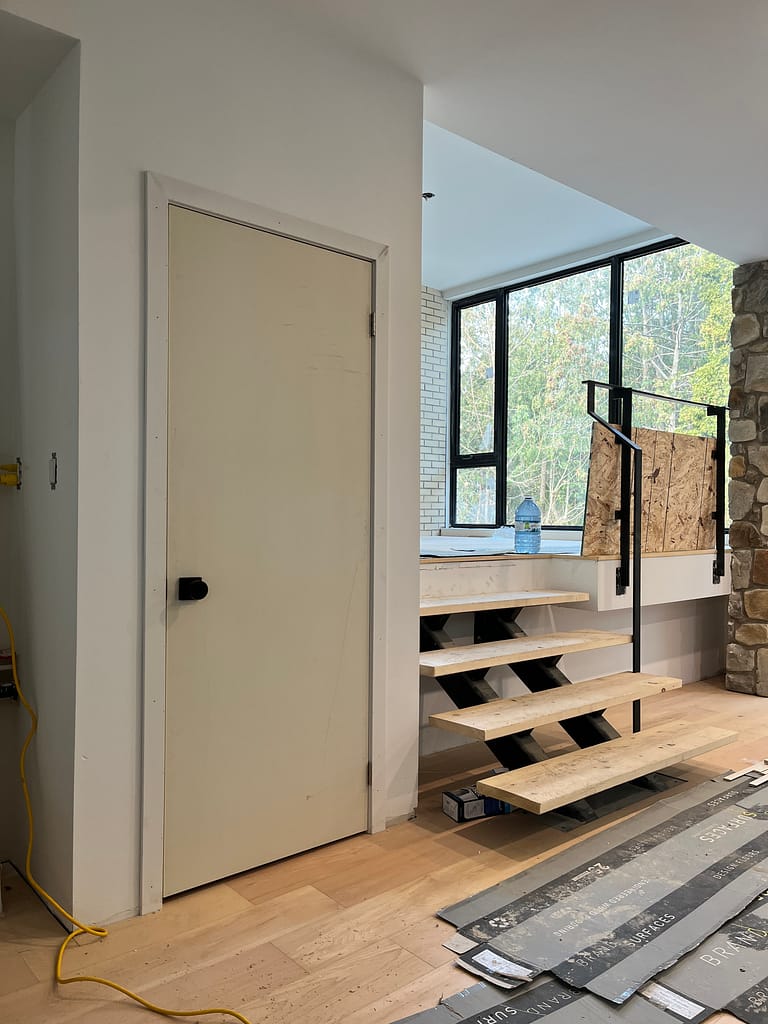
It does not come attached to a new jamb. The new slab has to be fitted to the existing opening, prepared for hinges and hardware, trimmed if necessary and adjusted to work with the old frame.
Slab replacement can be a clean option when the existing jamb is solid, straight and worth keeping. It can also reduce disturbance to the surrounding casing, walls and paint.
But fitting a slab door into an old opening is not always a simple swap.
The hinge mortises have to align properly. The latch needs to meet the strike plate. The slab may need resizing. The existing jamb may be slightly twisted or out of square. The old door may have been shaped over time to compensate for an uneven opening.
A new slab is straight.
The old opening may not be.
For a full comparison before buying doors, see Slab Door vs Pre-Hung Door: Which One Do You Need for Interior Door Replacement?
When a Prehung Door or New Jamb Makes More Sense
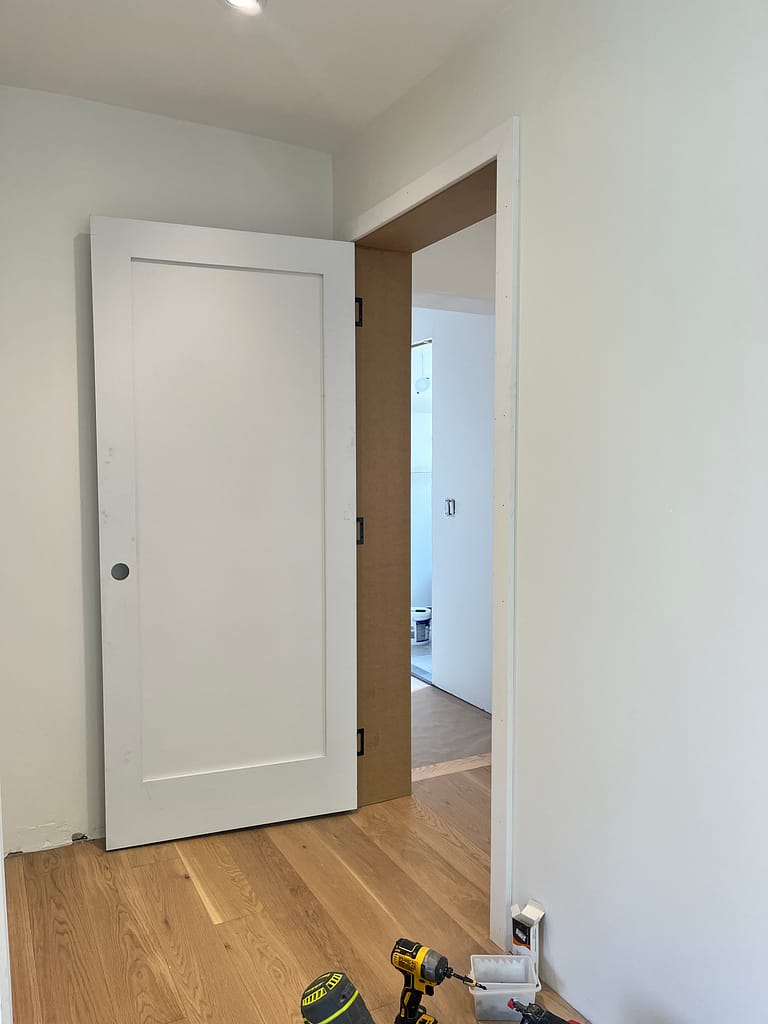
A prehung door comes attached to a new jamb with the hinges already installed.
This can make sense when the old jamb is damaged, loose, twisted, heavily painted or not worth saving. It may also be the better route when the homeowner wants new casing and a more complete opening replacement.
But prehung does not mean problem-free.
The rough opening still needs to be suitable. The unit has to be shimmed and fastened correctly. The jamb must sit plumb. The door needs a balanced reveal. The latch and strike plate still need adjustment. Casing has to be fitted to the actual wall.
In Hamilton homes with unusual wall thicknesses, older framing or non-standard openings, a standard prehung package may not fit properly without additional work.
Sometimes a custom jamb is the better solution.
The correct choice depends on what is already there and what the finished opening needs to become.
Solid-Core Door Upgrades in Hamilton
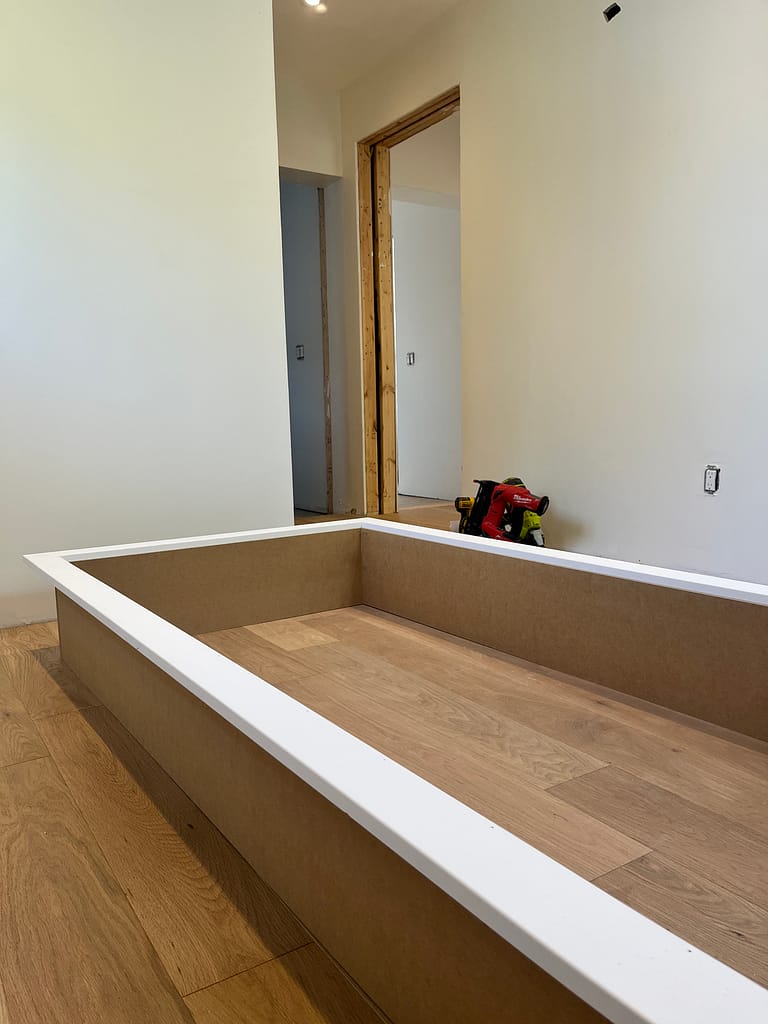
Many homeowners want to replace lightweight hollow-core doors with solid-core doors.
Solid-core doors can make bedrooms, bathrooms, offices, basements and main living areas feel more substantial. They usually close with a quieter, more controlled sound and can improve the feeling of privacy between rooms.
But the additional weight matters.
A heavier door needs proper hinge support. The jamb has to be secure enough to carry it. Poor alignment becomes more noticeable. A latch that was already slightly off may stop working properly. Loose hinge screws or a weak jamb can allow the door to drop over time.
Before installing solid-core doors, Wood Job checks whether the existing opening is strong and straight enough to reuse.
Some frames can stay.
Others need hinge reinforcement, jamb correction or replacement before the heavier door can work properly.
For a more detailed homeowner guide, see Should You Replace Hollow-Core Interior Doors With Solid-Core Doors?
Interior Doors for Older Hamilton Homes
Older homes often have more character, but they can also have openings that need more patience.
A door frame may have moved as the home settled. Floors may not be level. Walls may be plaster rather than modern drywall. The opening may have been altered during an earlier renovation. Several layers of paint may be covering the hinge mortises, jamb and door stop.
These conditions affect how a new door is fitted.
A standard-sized slab may still work, but it may need careful trimming and adjustment. The casing may need to be fitted against a wall that is not flat. A strike plate may need correction instead of simply being moved to hide a latch problem.
The aim is not to make an older home behave like a new showroom.
The aim is to make the door work cleanly within the real condition of the home.
If an existing door rubs, sticks, swings open or refuses to latch, the problem should be identified before deciding whether replacement is necessary. This guide explains the common causes: Why Your Interior Door Rubs, Sticks, Swings Open or Won’t Latch
Door Installation for Mountain Bungalows and Renovated Homes
Many Hamilton bungalows have been renovated in stages.
Flooring may have been replaced. Basements may have been finished. Door openings may have been changed. New casing and baseboards may need to connect with older jambs. A once-standard opening may no longer be standard after years of changes.
One common problem is floor clearance.
A new flooring layer can reduce the space below the door. A slab that worked before may begin rubbing. A replacement door may need careful resizing, but the panel layout and handle position still have to look right after the height changes.
Another issue is trim coordination.
A homeowner may replace the doors now but plan to replace casing or baseboards later. That can work, but the project should be planned with the next stage in mind so one installation does not create unnecessary work for the next.
Wood Job can handle focused door-only projects, door-and-casing packages or larger door and trim scopes depending on what the home needs.
For casing, baseboards and related trim work, see Finish Trim Carpentry.
Condo and Closet Door Replacement in Hamilton
Condo door projects have their own practical considerations.
Access, elevators, parking, working hours, limited cutting space and building rules can all affect how the installation is planned.
Closet openings can also be less standard than homeowners expect.
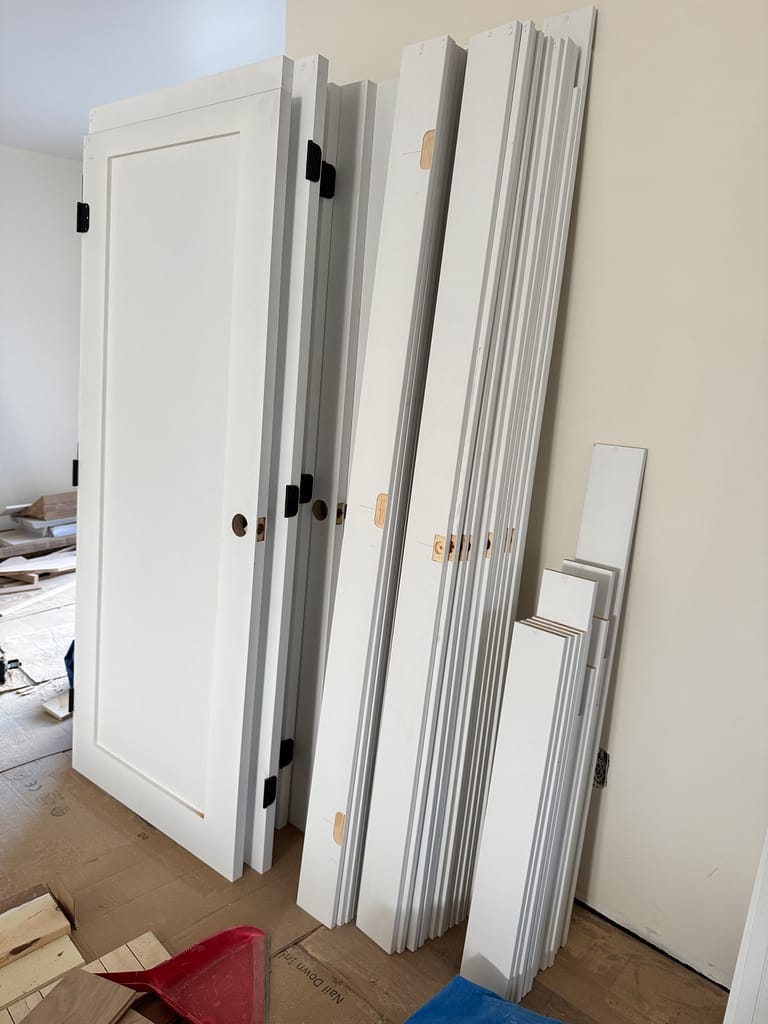
Old mirrored sliding doors may have been installed into a wide or low opening that does not match a current retail door package. Removing the old system does not automatically create a standard opening.
Sometimes the best solution is a custom-sized door or a new jamb and casing detail designed around the opening that already exists.
That is more reliable than buying a standard product first and trying to force it into the space afterward.
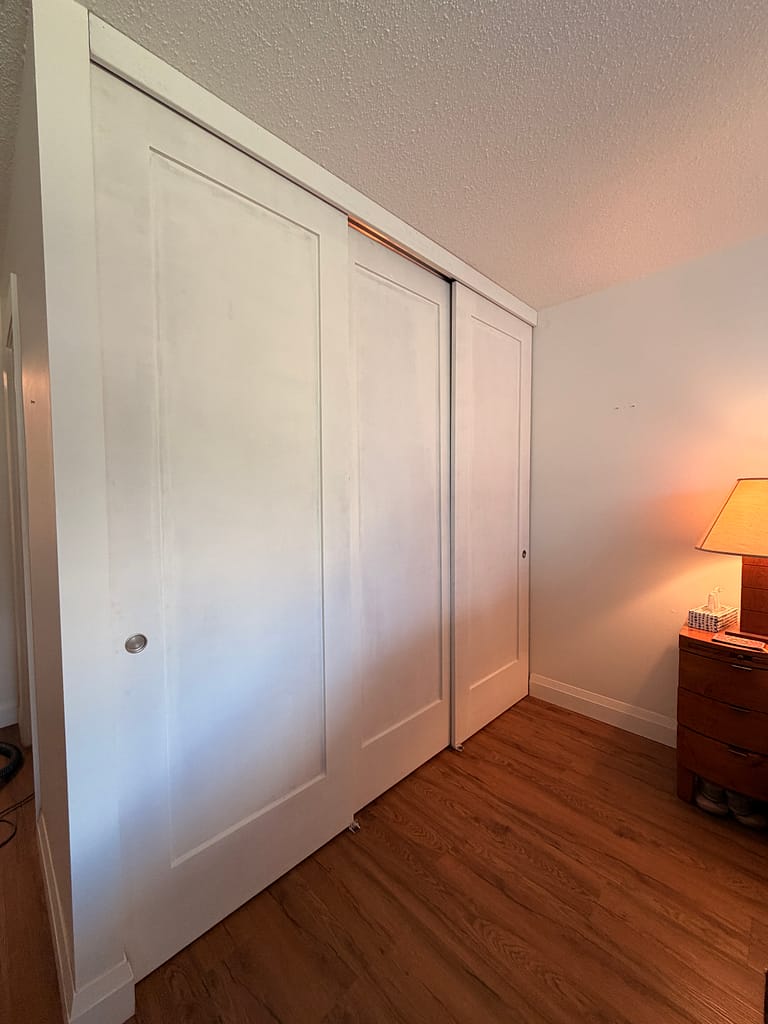
Real Hamilton Project: Custom Shaker Closet Doors for a Condo
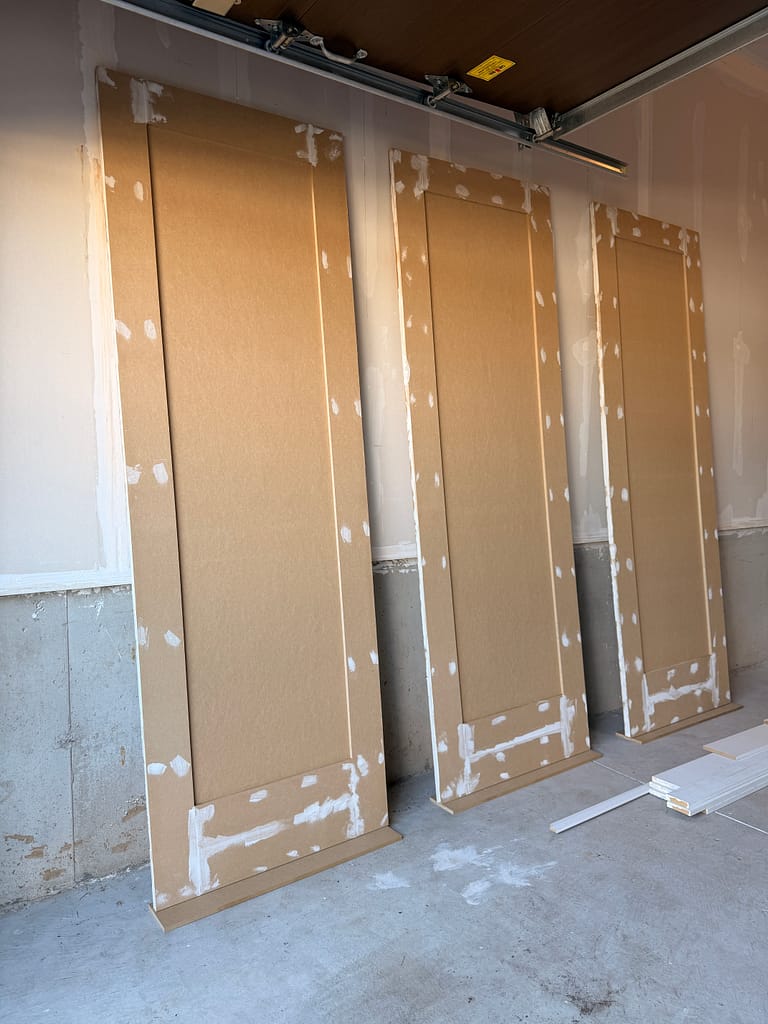
Susan and Brad wanted to replace the old mirrored sliding closet doors in their Hamilton condo.
They wanted a cleaner one-panel shaker style, but the existing closet openings did not match standard door sizes. An off-the-shelf replacement would not have fitted properly.
The solution was to build custom doors for the actual openings.
The doors were measured, prepared and adjusted to the required dimensions before installation. They were then primed and finished so they would work with the updated look of the condo.
This project is a useful example of why the opening should be checked before material is purchased.
The problem was not simply that the old mirrored doors looked dated.
The real problem was that a standard replacement product did not match the existing space.
You can see the full project here: Custom Shaker Closet Door Replacement in a Hamilton Condo
Bedroom, Bathroom and Home Office Doors
Different rooms place different demands on an interior door.
A bedroom door should feel private and close quietly.
A bathroom door needs clean clearance, reliable hardware and proper latch alignment.
A home office door may need to create privacy without making the main floor feel closed off.
A basement door may have limited height or an opening changed by framing, flooring or drywall.
A closet door may need a custom width, a different swing or a new approach altogether.
Wood Job installs and replaces:
- bedroom and bathroom doors
- solid-core and hollow-core doors
- shaker-style interior doors
- slab and prehung doors
- closet and storage doors
- basement doors
- double doors and French doors
- glass interior doors
- custom-sized doors
- new jambs and jamb extensions
- casing and related trim
- hinges, handles, latches and strike plates
The door type should follow the room, the opening and the way the homeowner uses the space.
Door Casing and Trim Around the Opening
A door can operate properly and still look unfinished if the casing does not sit cleanly.
Casing frames the opening and covers the transition between the jamb and the wall. It also connects visually with the baseboards and the other trim in the room.
Existing casing can sometimes stay if it is solid, clean and suitable for the new door.
In other cases, replacing it makes more sense.
Old casing may be damaged, narrow, heavily painted or poorly fitted. Plaster or uneven drywall may prevent it from sitting flat. New casing may also be needed when a jamb is replaced or when the homeowner wants the door opening to match a newer trim package.
Good casing should frame the opening without looking like it was used to hide a bad installation.
Interior Door Installation for Rentals and Duplexes
Hamilton has many rental properties, duplexes, basement units and investment renovations.
These projects often need a practical balance between appearance, durability, budget and timing.
The door still needs to work properly.
A rental-unit door should not rub, fail to latch or feel loose because the project was treated as temporary. At the same time, the material choice should make sense for the way the property will be used.
Wood Job can help with focused door replacement, damaged jambs, closet doors, casing, baseboards and unfinished door details after a renovation.
The goal is clean, durable work that does not create an avoidable callback.
Owner-Led Door Installation in Hamilton
Wood Job is intentionally small and owner-led.
The person reviewing the project stays close to the installation and the final result.
That matters with interior doors because small decisions often need to be made on site.
A hinge may need to be reset. A slab may need careful trimming. A strike plate may need realignment. A jamb may need correction before casing is installed. The floor may be slightly high on one side. The old trim may be hiding a condition that was not visible in the first photo.
These decisions should be made with the finished opening in mind.
At Wood Job, the name, the hands and the responsibility stay connected.
Interior Door Installation Cost in Hamilton
Interior door installation cost depends on what the opening actually needs.
A simple slab replacement in a good existing frame is different from fitting a solid-core door, correcting a twisted jamb, replacing casing, installing a prehung unit or building a custom jamb for a non-standard opening.
The main cost factors include:
- slab door or prehung door
- hollow-core or solid-core material
- condition of the existing jamb
- hinge and hardware preparation
- casing on one side or both sides
- resizing or trimming
- floor clearance
- old door removal
- number of doors
- painting or finishing expectations
- non-standard or custom openings
For current labour starting prices and a clearer explanation of what changes the scope, read How Much Does Interior Door Installation Cost in Ontario? 2026 Labour Prices.
Related Interior Door Advice
Can the Existing Frame Stay?
If you want to replace the door but avoid removing the jamb and casing, start here:
Slab Door or Prehung Door?
This guide explains which product makes sense when the old frame is good and when a full jamb replacement may be better:
Hollow-Core or Solid-Core?
For homeowners comparing weight, sound, privacy and hinge support:
Door Problems Before Replacement
A sticking or rubbing door does not always need full replacement:
Related Services for Hamilton Homeowners
Finish Carpenter in Hamilton
For baseboards, casing, crown moulding, wall paneling, fireplace details, flooring transitions and broader finish carpentry services:
Main Interior Door Installation Service
For Wood Job’s complete door installation and replacement service:
Finish Trim Carpentry
For casing, baseboards, window trim, jamb extensions and renovation finishing:
What to Send for a Door Installation Estimate
Clear photos are the best starting point.
Send photos of each door from both sides, together with close-up photos of the hinges, latch, strike plate, casing and bottom clearance.
It also helps to include:
- the number of doors
- approximate door sizes
- your Hamilton project location
- whether you want slab or prehung doors
- whether the doors are hollow-core or solid-core
- whether new casing is required
- whether hardware has already been purchased
- photos of any rubbing, damage or uneven gaps
- whether the home is occupied or under renovation
If a door does not work properly, a short video can also help.
Photos are often enough to start a rough conversation. If the jamb, wall condition or opening needs closer inspection, a walkthrough may be the better next step.
Interior Door Installation Questions
Can you replace hollow-core doors with solid-core doors in Hamilton?
Yes, in many homes. The existing jambs, hinges and fastening points should be checked first because solid-core doors are heavier. A heavier door needs proper hinge support, cleaner alignment and a secure jamb.
Can you install a new slab door in an old Hamilton door frame?
Sometimes. If the existing jamb is straight, solid and worth keeping, a new slab can often be fitted into it. If the jamb is damaged, twisted, loose, heavily painted or out of square, a prehung door, jamb repair or replacement may give a better result.
Do I need to replace the casing when replacing interior doors?
Not always. Existing casing can sometimes stay if it is clean, solid and suitable for the new door. If the casing is damaged, outdated, poorly fitted or must be removed to replace the jamb, new casing may make more sense.
Can you fix an interior door that rubs or will not latch?
Often, yes. The solution depends on the cause. Loose hinges, jamb movement, floor clearance, paint buildup, seasonal movement or poor strike-plate alignment can all create similar symptoms. The opening should be checked before deciding whether adjustment or replacement is needed.
Do you install custom closet doors in Hamilton condos?
Yes, where the project is a good fit. Non-standard closet openings may need custom-sized doors, jamb work, casing or a solution designed around the existing opening rather than a standard retail package.
Can you install doors in older Hamilton homes with plaster walls?
Often, yes. Older plaster walls and settled openings may require more careful fitting and casing work. The wall, jamb and opening should be reviewed so the new door and trim can be installed without assuming the home is perfectly square.
Do you install only one or two interior doors?
Focused door projects may be possible depending on the scope, location and scheduling. One difficult opening still deserves proper measuring, hinge preparation, latch alignment and clean fitting.
Can you provide a door installation estimate from photos?
Clear photos and basic measurements are often enough to begin with a rough estimate. Non-standard openings, damaged jambs, older plaster walls or full-home door packages may need a walkthrough before the final scope can be confirmed.
Do you only install interior doors in Hamilton?
No. Wood Job Finish Carpentry also provides owner-led interior door installation across Oakville, Milton, Burlington, Mississauga, Cambridge, Guelph, Kitchener, Vaughan, Toronto and surrounding areas.




