
An interior door should not fight you every day.
It should swing smoothly, sit with a clean reveal, and latch without being pushed, lifted, or slammed.
When a door rubs, sticks, swings open by itself, or will not latch, the door is usually telling you something about the opening.
Sometimes the fix is simple.
Sometimes the problem is deeper.
The hinge may be loose. The jamb may be out of plumb. The floor may have changed. The door may have swollen. The strike plate may not line up with the latch. The old frame may be twisted. The casing may be hiding a rough opening that was never properly corrected.
Before replacing the door, it helps to understand what is actually causing the problem.
For larger door projects, Wood Job explains the full service here: interior door installation and replacement.
Short Answer
If your interior door rubs, sticks, swings open, or will not latch, the problem may be caused by:
- Loose hinges
- Poor hinge alignment
- A twisted or out-of-plumb jamb
- A shifted frame
- Floor movement
- Paint buildup
- Door swelling
- Latch and strike plate misalignment
- A door slab that was not fitted properly
- An old frame that is no longer worth saving
Do not assume the door itself is always the problem.
In many homes, the opening is the real issue.
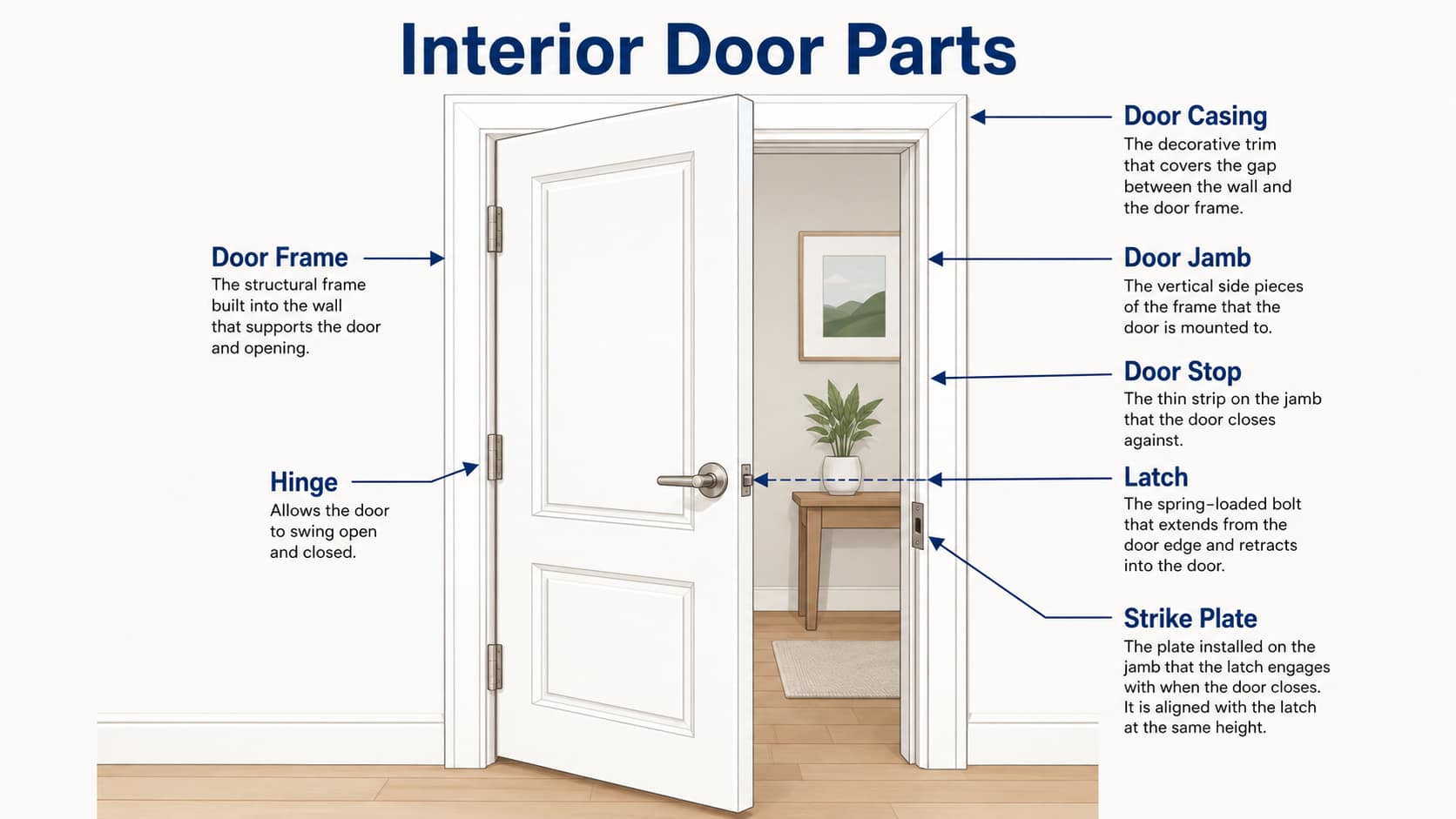
Why Interior Doors Start Rubbing
A rubbing door usually touches the jamb, header, or floor where it should have a small, clean gap.
This can happen for several reasons.
The door may have dropped slightly because the hinge screws are loose. The top hinge may not be holding properly. The jamb may have moved. The floor may not be level. The door may have been painted too many times without proper adjustment.
In older homes, a rubbing door can also be a sign that the opening is no longer square.
The important thing is to check where the door rubs.
If it rubs at the top corner, the hinge side may have shifted.
If it rubs along the latch side, the jamb may be out of alignment.
If it rubs at the floor, the flooring height or door clearance may be the issue.
A good fix starts with reading the contact point.
Why a Door Sticks
A sticking door is a little different from a rubbing door.
Sometimes the door does not move freely because the gap is too tight. Sometimes the paint is grabbing. Sometimes humidity makes the door swell. Sometimes the latch is catching. Sometimes the hinge mortises are not cut properly and the door sits too proud of the jamb.
Sticking can also happen after new flooring, painting, drywall repair, or seasonal movement.
A homeowner may think, “The door worked before. Why is it a problem now?”
That happens often.
A small change in flooring height, paint thickness, hinge tension, or moisture can be enough to make a door feel wrong.
Why a Door Swings Open by Itself
A door that swings open by itself usually points to an alignment problem.
The jamb may not be plumb.
The wall may lean slightly.
The hinge side may be installed out of line.
The door may be sitting in the frame at a small angle.
This is common in real homes, especially in basements, older houses, and renovated spaces where framing and drywall are not perfectly straight.
A door should stay where you leave it, unless it has a self-closing hinge or special hardware.
If it slowly opens or closes on its own, the door may be following gravity because the jamb is not installed plumb.
This is not always solved by replacing the door slab.
If the jamb is the problem, the opening needs to be checked.
Why a Door Will Not Latch
A door that will not latch is one of the most common door problems.
The latch has to meet the strike plate at the right height and depth.
If the latch is too high, too low, too far in, or too far out, the door may close but not catch.
Sometimes the fix is a strike plate adjustment.
Sometimes the latch hole needs clean correction.
Sometimes the hinges need adjustment.
Sometimes the door is sagging, and the latch no longer meets the strike plate properly.
Sometimes the jamb has moved enough that a small hardware adjustment will not solve the issue cleanly.
A good interior door should not need force to latch.
If you have to lift the handle, push the door hard, or slam it, something is not aligned properly.
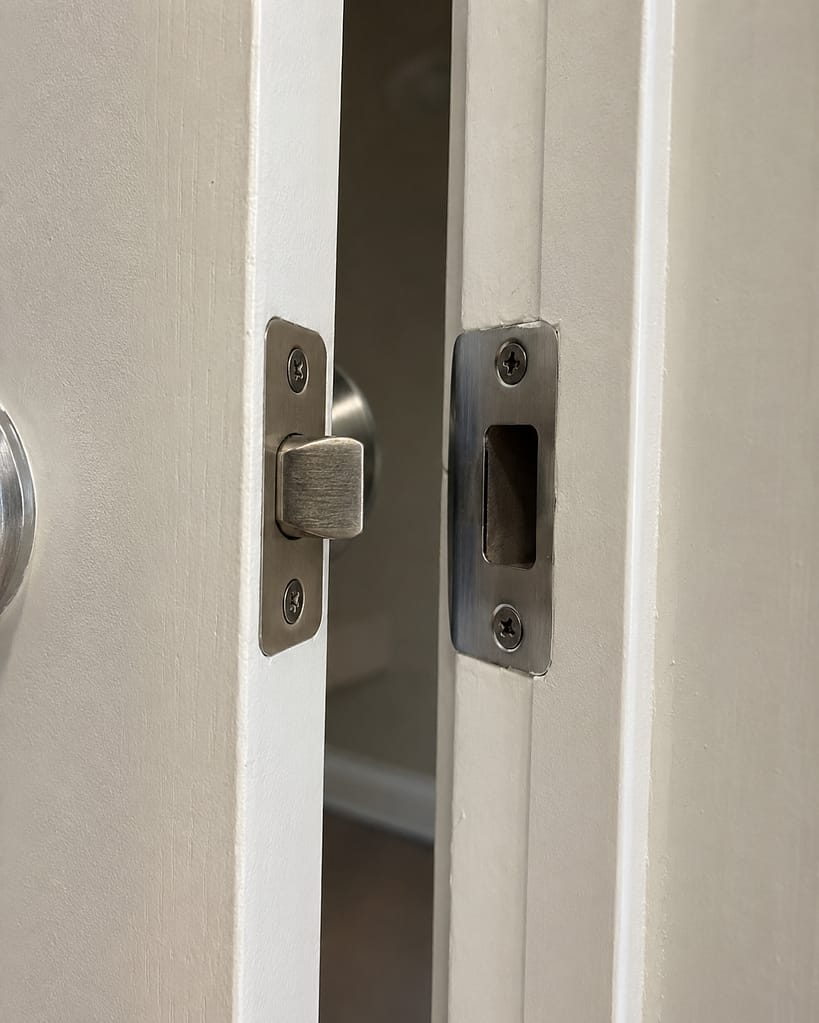
The Strike Plate Is Not Always the Main Problem
Many people try to fix a latching problem by moving the strike plate.
Sometimes that works.
But sometimes it only hides the real issue.
If the door has dropped because of hinge problems, moving the strike plate may help for a while, but the door may continue to sag.
If the jamb is twisted, the latch may still feel rough.
If the reveal is uneven, the door may close poorly even after the strike plate is moved.
The strike plate should line up with the latch, but it should not be used as the only solution when the whole door is out of alignment.
The goal is not only to make the latch catch.
The goal is to make the door sit properly in the opening.
Hinges Matter More Than Many Homeowners Think
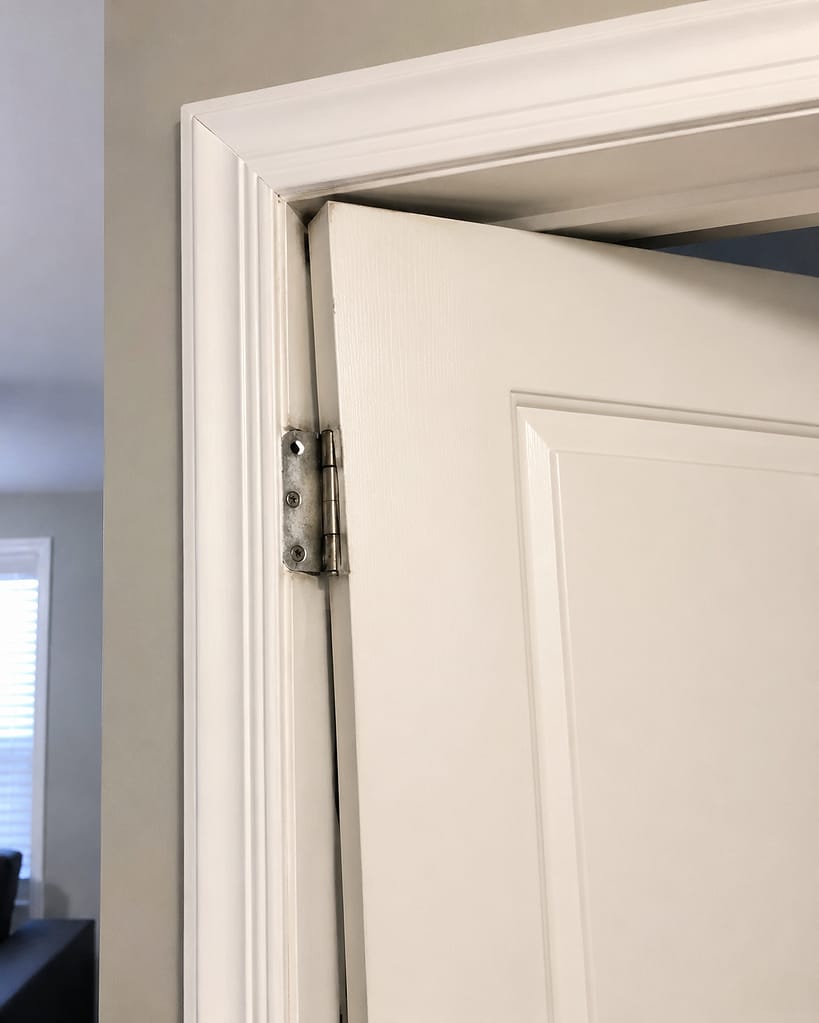
Hinges carry the door.
That sounds obvious, but it is often overlooked.
If the hinge screws are short, loose, stripped, or poorly placed, the door can sag. If the hinge mortises are too deep or too shallow, the door may not sit properly. If the hinges are not aligned with each other, the door may bind.
This becomes more important with solid-core doors.
This is one reason a solid-core upgrade should not be treated as a quick door swap. If the existing jamb or hinge side is weak, the heavier door can make rubbing, sagging, or latch problems more obvious. For homeowners comparing hollow-core and solid-core doors, Wood Job covers the upgrade decision here: Should You Replace Hollow-Core Interior Doors With Solid-Core Doors?
A lightweight hollow-core door may hide small hinge problems for years. A heavier solid-core door makes those problems more obvious.
If the door problem leads to replacement, the labor cost depends on whether the existing jamb can stay, whether the slab needs fitting, and whether the latch, strike plate, casing, or opening needs correction. You can compare the starting prices here: 2026 interior door installation labor cost in Ontario.

Old Jambs Can Cause New Door Problems
A new door slab can only work as well as the old jamb allows.
If the jamb is straight, solid, and properly installed, replacing only the slab may be a good option.
If the jamb is twisted, cracked, badly painted, loose, or out of plumb, the new door may still rub, stick, or refuse to latch.
This is why the frame should be checked before ordering doors.
Wood Job covered this decision in more detail here: Can You Replace Interior Doors Without Replacing the Frame?
The short version is simple:
Sometimes the frame can stay.
Sometimes the frame is the problem.
Slab Door or Pre-Hung Door?
If your existing door has problems, you may wonder whether to replace it with a slab door or a pre-hung door.
That depends on the condition of the existing jamb.
A slab door may make sense if the frame is good and only the door needs replacement.
A pre-hung door may make sense if the old jamb is damaged, twisted, or not worth saving.
But the wrong choice can create more work, especially in basements, older homes, and non-standard openings.
Wood Job explains that decision here: Slab Door vs Pre-Hung Door: Which One Do You Need for Interior Door Replacement?
The main point is this:
Do not choose the product before checking the opening.
Paint Buildup Can Make a Door Feel Wrong
Paint can cause more door problems than people expect.
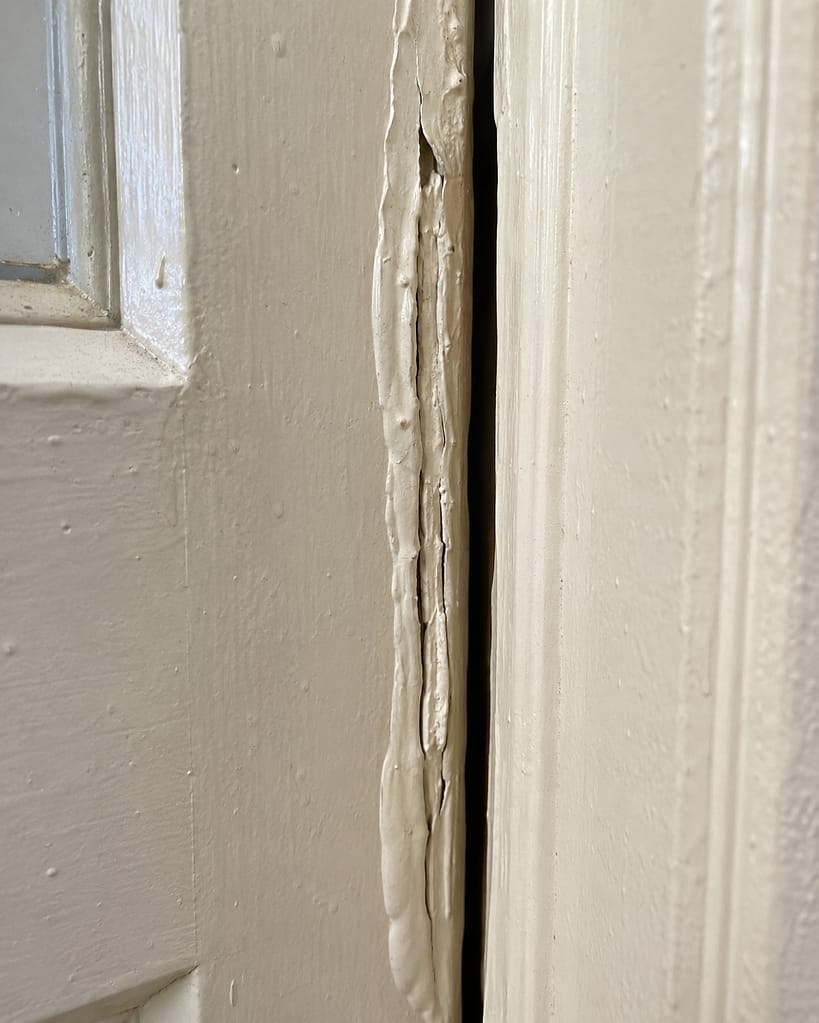
Older doors and jambs may have many layers of paint. Over time, paint builds up along the edge of the door, inside the jamb, around the hinges, and near the latch.
That buildup can make the door stick or stop it from closing cleanly.
Sometimes the problem is not the size of the door.
It is the extra thickness created over years of painting.
This is especially common in older homes where doors have been painted many times without removing hardware or cleaning up the edges properly.
A careful adjustment may help, but if the door and jamb are heavily built up with paint, the repair can become more detailed.
Flooring Changes Can Affect Door Clearance
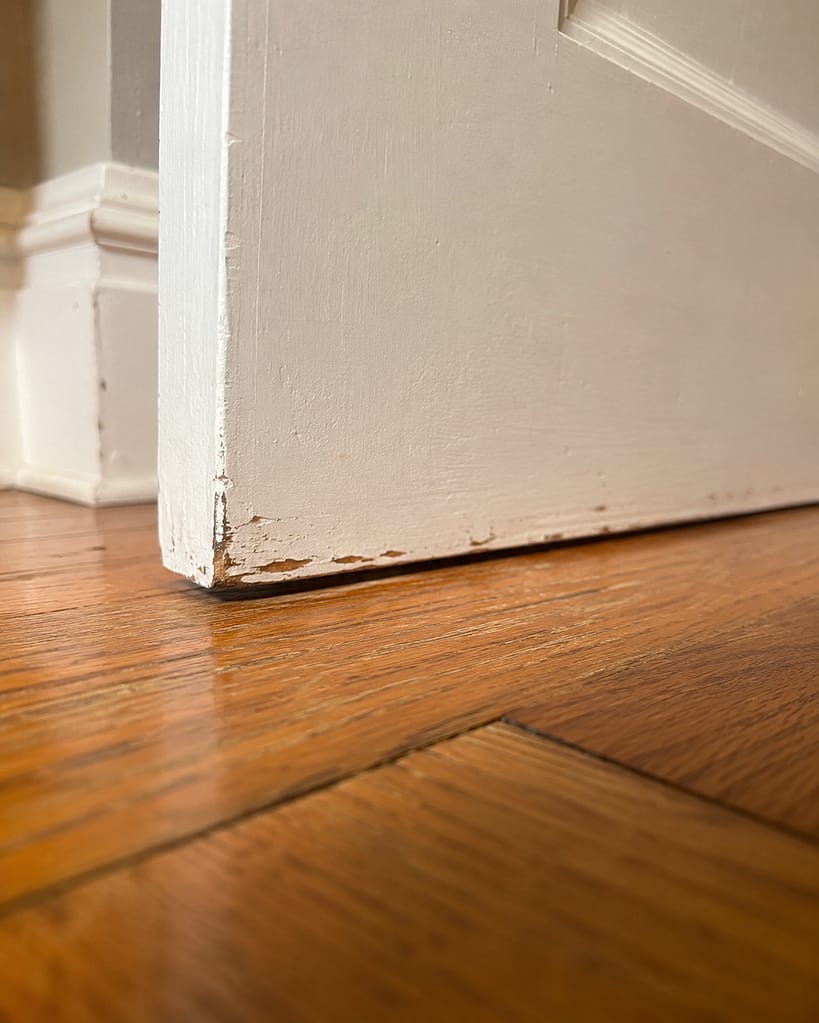
New flooring often changes door clearance.
Vinyl, laminate, hardwood, tile, underlayment, or transition strips can all affect how much space remains under the door.
If the door was installed before the new floor, it may start rubbing after the flooring is complete.
Sometimes the bottom of the door can be trimmed.
Sometimes the hinge side or latch side also needs adjustment.
Sometimes the casing and baseboard transitions need to be corrected so the opening looks finished after the flooring work.
This is why door work often connects with trim, casing, and baseboards.
A door problem is rarely only about the door.
Basement Doors Often Need Extra Care
Basement doors are especially sensitive to site conditions.
Basement openings may be shorter than standard. Bulkheads, ductwork, beams, low ceilings, uneven floors, and framing changes can all affect the door height and swing.
A standard door may not fit cleanly.
A pre-hung unit may not be the best choice.
A slab door may need custom fitting.
The jamb may need adjustment.
The casing may need to be planned around lower ceilings or awkward walls.
Wood Job has a related article on this specific issue here: Short Basement Doors: Why Custom Slabs Beat Pre-Hung Doors
This is one of the reasons basement door projects should be checked before materials are ordered.
When a Door Problem Is a Small Fix
Some door issues are small.
For example:
- A loose hinge screw
- A strike plate that needs minor adjustment
- A door edge that needs light trimming
- A latch that needs cleaner alignment
- A door bottom that needs slight clearance after flooring
- A hinge mortise that needs careful correction
These are focused jobs, but they still need care.
A small adjustment done badly can damage the jamb, casing, paint, or door edge.
Wood Job has a related guide here: Small Carpentry Jobs Still Deserve a Trusted Finish Carpenter
A door repair may be small in size, but it affects daily use.
When the Problem Needs More Than Adjustment
Some door problems are not small adjustments.
A bigger repair may be needed if:
- The jamb is badly out of plumb
- The frame is loose
- The casing is hiding damage
- The door slab is warped
- The hinge side is split or weak
- The latch area has been patched too many times
- The reveal is uneven all around the door
- The door was installed poorly from the beginning
- The opening is too far out of square
- Several doors in the same home have the same issue
In these cases, forcing a quick adjustment may not give a clean result.
Sometimes the better answer is jamb repair, casing replacement, door replacement, or a full door installation.
Wood Job has a page for these kinds of situations here: Finish Carpentry Problems We Fix
What Wood Job Checks Before Fixing or Replacing a Door
Before deciding on the fix, the opening needs to be checked carefully.
The important details include:
- Where the door is rubbing
- Whether the reveal is even
- Whether the hinges are loose or misaligned
- Whether the jamb is plumb
- Whether the latch lines up with the strike plate
- Whether the door is warped
- Whether paint buildup is causing friction
- Whether flooring changed the clearance
- Whether casing or trim needs to be removed
- Whether the existing frame is worth keeping
This is the difference between guessing and diagnosing.
A door can be trimmed, adjusted, rehung, or replaced.
But the right choice depends on what the opening is actually doing.
Should You Repair the Door or Replace It?
This is the decision point.
Repair may make sense if:
- The door slab is still good
- The jamb is solid
- The problem is limited to hinges or latch alignment
- The door only needs small trimming
- The casing and trim are in good condition
- The homeowner is happy with the existing style
Replacement may make sense if:
- The door is damaged or warped
- The old slab is hollow-core and the homeowner wants solid-core
- The jamb is damaged or twisted
- The door style is outdated
- Several doors are being updated together
- The casing and baseboards are also being replaced
- The opening needs a cleaner reset
A good carpenter should not automatically push replacement.
Sometimes adjustment is enough.
But if the old opening is the problem, repair can only go so far.
Owner-Led Door Adjustment and Replacement
Wood Job Finish Carpentry is owner-led and intentionally small.
That matters with door problems because small decisions happen on site.
A hinge adjustment, latch correction, jamb repair, door trimming, or casing detail can change how the door feels every day.
Jack Cenk Ozer looks at the real condition of the opening before recommending the next step. The goal is not to sell the biggest project. The goal is to understand what the door needs so it can work properly and look finished.
This is also why Wood Job’s approach to owner-led finish carpentry fits door work well.
The person responsible for the work should be close to the details.
Planning to Fix or Replace an Interior Door?
If your door rubs, sticks, swings open, or will not latch, send clear photos before buying materials.
Helpful photos include:
- The full door from both sides
- A close-up of the hinge side
- A close-up of the latch and strike plate
- The top reveal
- The latch-side reveal
- The bottom of the door near the floor
- Any damaged jamb or casing areas
- A wider photo showing the surrounding trim and baseboard
Also include:
- Your project city
- Number of doors with problems
- Whether the doors are hollow-core or solid-core
- Whether the doors are old or newly installed
- Whether flooring or painting was recently completed
- Whether you want repair, replacement, or advice before deciding
Wood Job can review the photos and let you know whether a rough estimate is possible or if a walkthrough would be better.
You can start here:
FAQ
Why does my interior door rub at the top?
A door that rubs at the top often has a hinge-side issue, a shifted jamb, or an uneven reveal. Sometimes the top hinge is loose. Sometimes the door has sagged. Sometimes the opening itself is out of square.
Why does my door rub on the floor?
A door may rub on the floor because the flooring height changed, the door dropped on the hinges, or the original clearance was too tight. New flooring is a common cause. The fix may involve trimming the door bottom, adjusting the hinges, or checking the whole opening.
Why does my door close but not latch?
The latch may not be lining up with the strike plate. This can happen because the door sagged, the jamb moved, the hinges are loose, or the strike plate was installed in the wrong position. Moving the strike plate may help, but the full alignment should be checked first.
Why does my door swing open by itself?
A door that swings open by itself usually means the jamb or hinge side is not plumb. The door is following gravity. This is common in older homes, basements, and openings where the framing or wall is not perfectly straight.
Can a sticking door be repaired without replacing it?
Sometimes, yes. If the door slab and jamb are still in good condition, adjustment may be enough. The fix may involve hinges, latch alignment, trimming, paint cleanup, or minor fitting. If the jamb is twisted or the slab is warped, replacement may be a better option.
Should I replace the door or the frame?
That depends on the frame condition. If the jamb is solid, straight, and properly installed, the door may be repaired or replaced as a slab. If the jamb is damaged, loose, twisted, or out of plumb, the frame may need repair or replacement too.
Can Wood Job fix one problem door?
Yes, depending on the location and scope. Some door issues are small but still need careful finish carpentry. Send photos, measurements, project city, and a short description so Wood Job can review the problem and explain the best next step.




