
Most homeowners think about the door style first.
One-panel shaker.
Two-panel.
Six-panel.
Plain slab.
Solid-core or hollow-core.
That makes sense. The door is what everyone sees.
But in basement door replacement, there is one detail many homeowners do not think about until the door is already cut:
Where will the handle land?
This matters more than it sounds.
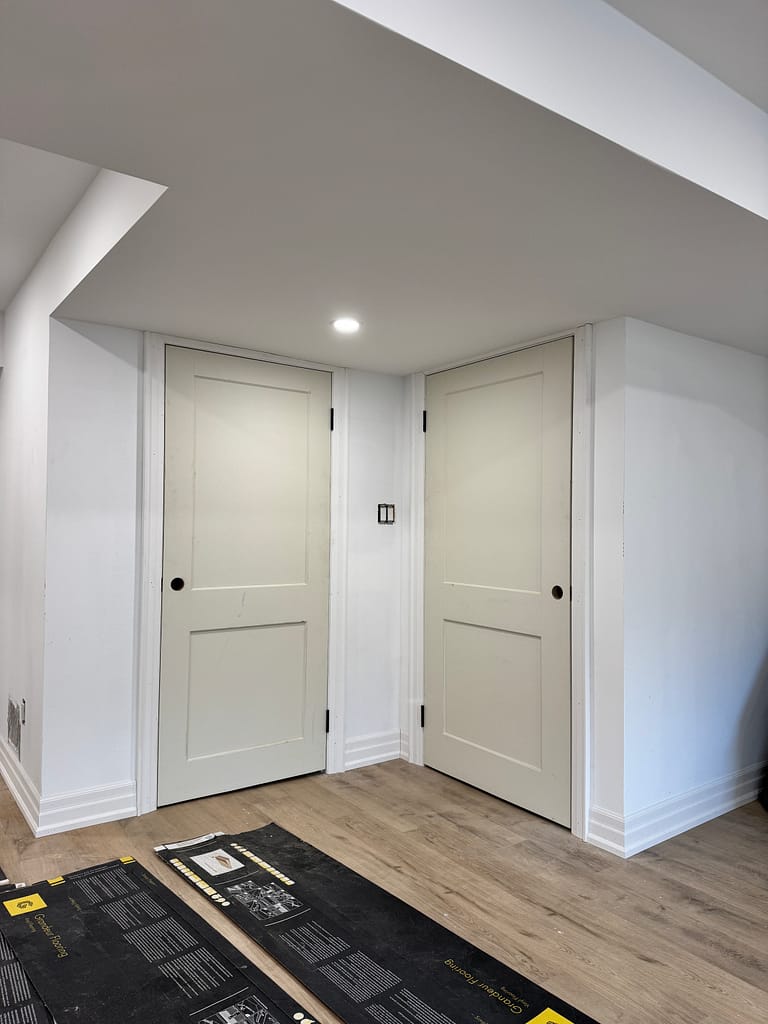
On many standard interior doors, the handle or lockset is usually placed around 36 inches from the bottom of the door to the center of the bore. Door manufacturers design many panel doors so the handle lands in a visually sensible area, often around the lock rail.
The lock rail is the horizontal rail across the door where the handle or knob is expected to sit.
On a standard-height door, that usually looks natural.
But basement doors are not always standard height.
If the door has to be cut down from the bottom, the panel layout does not move with the new bottom of the door. The door becomes shorter, but the molded rails and panels stay where they were originally built.
That can create an awkward handle placement problem.
For larger door replacement projects, Wood Job explains the full service here: interior door installation and replacement.
The Problem With Cutting Short Basement Doors
Basement openings are often lower than normal.
Sometimes there is a bulkhead above the door. Sometimes ductwork, beams, stair framing, or low ceilings reduce the opening height. Sometimes the basement was finished around existing conditions, and the door has to be adjusted to the space.
A standard 80-inch door may need to be cut down.
One inch or two inches may not cause much visual trouble.
But when a door needs 4, 5, or even 6 inches cut from the bottom, the proportions change.
Here is the problem:
If the handle is placed at the usual 36-inch height from the new bottom of the door, it may no longer line up with the lock rail.
It can move above the rail.
On a two-panel or six-panel door, that can look wrong.
The door may still work.
The latch may still catch.
The handle may still function.
But visually, something feels off.
The eye notices when the hardware is floating away from the part of the door where it was expected to land.
Why the Lock Rail Matters
On a panel door, the rails and stiles are part of the visual structure.
The stiles are the vertical parts.
The rails are the horizontal parts.
The lock rail is the horizontal area where the handle usually belongs.
That location is not random. On many interior panel doors, the lock rail gives the hardware a place to sit visually and physically.
When the door is standard height, this usually works without the homeowner ever thinking about it.
But once a basement door is shortened from the bottom, the relationship changes.
The lock rail may now sit lower in relation to the new bottom of the door.
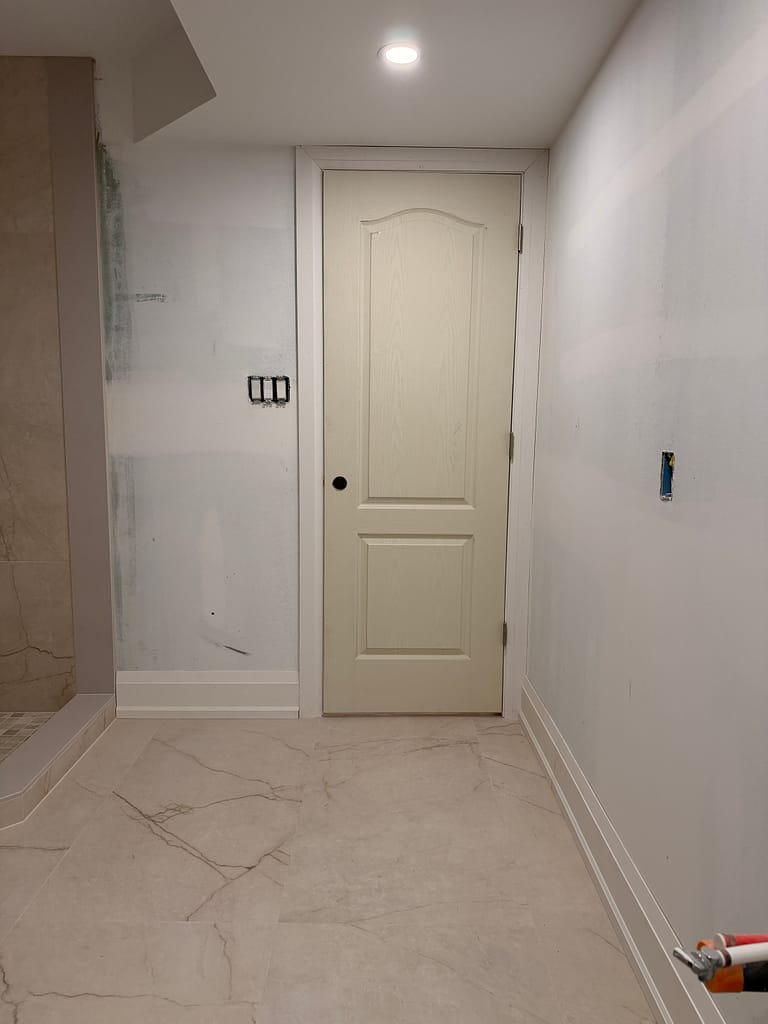
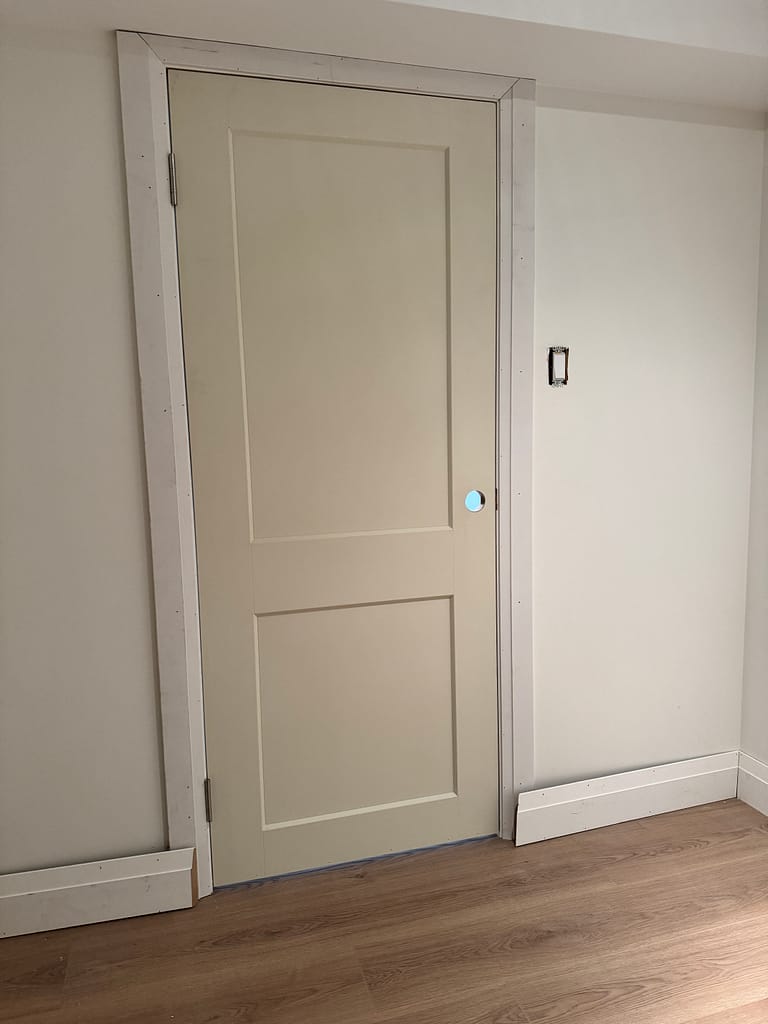
If the handle is still bored at 36 inches from the new bottom, it may land too high compared with the panel layout.
If the handle is lowered to match the lock rail, it may feel too low.
That is the decision.
And it should be made before the door is drilled.
When the Handle Can Be Adjusted
Sometimes the difference is small.
If the door has only been shortened a little, the handle can sometimes be moved slightly lower so it still feels connected to the lock rail.
This depends on:
- How much was cut from the door
- The panel style
- The lock rail position
- The door construction
- The latch height
- The strike plate location
- The homeowner’s preference
- Whether the door is hollow-core or solid-core
If the difference is one or two inches, it may be possible to explain the issue and choose the cleaner-looking position.
But if the door has been cut too much, lowering the handle enough to match the lock rail may make the handle look strangely low.
At that point, there may not be a perfect answer.
There may only be the best practical choice for that specific opening.
This is one reason short basement doors should be planned before the material is ordered. Wood Job has a related guide here: Short Basement Doors: Why Custom Slabs Beat Pre-Hung Doors.
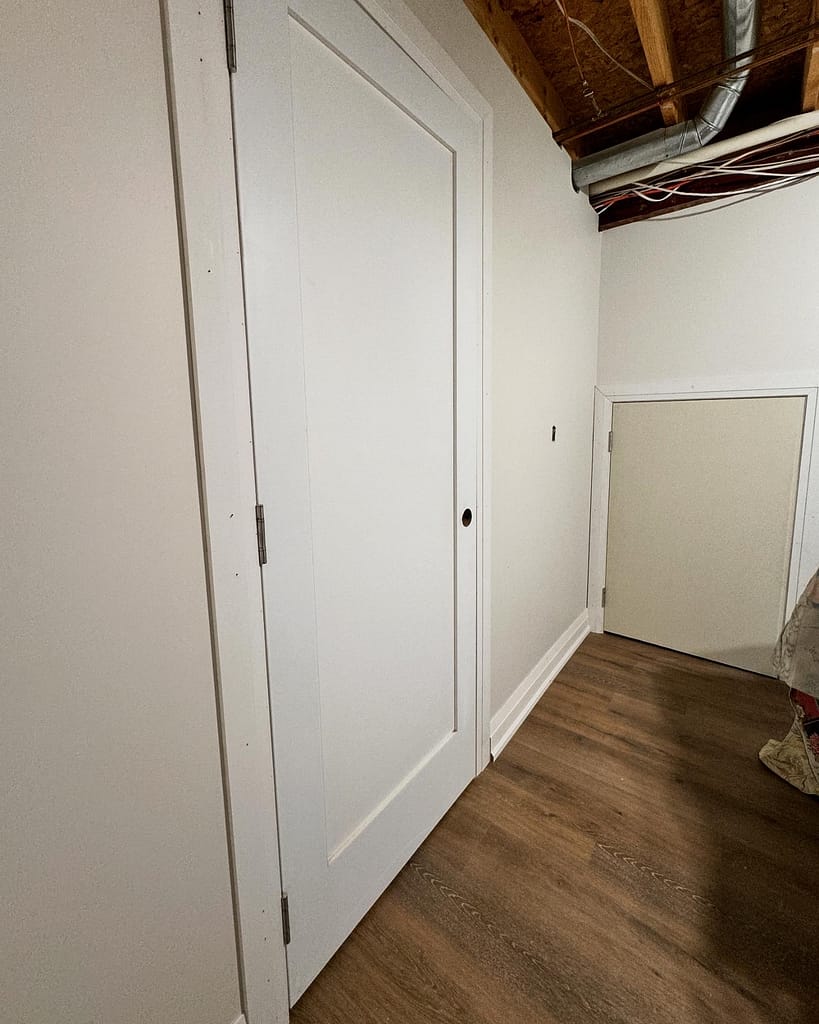
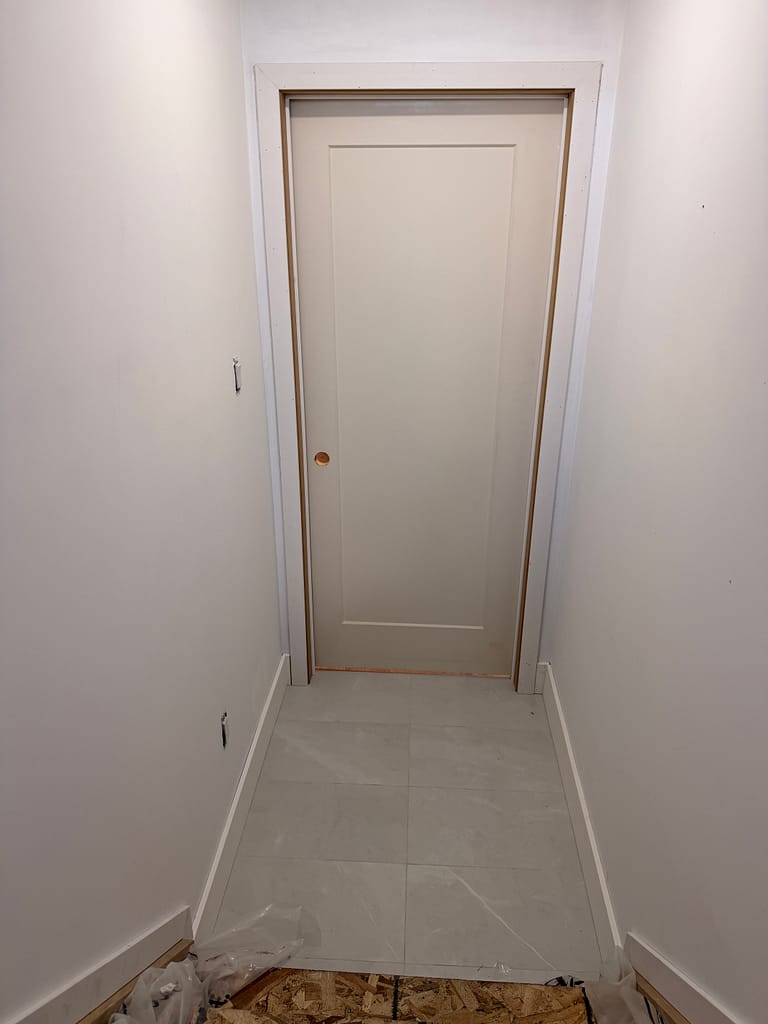
Why One-Panel Doors Often Work Better
One-panel doors are often easier to deal with in short basement openings.
They have a cleaner, simpler face.
There is less visual conflict around the handle location.
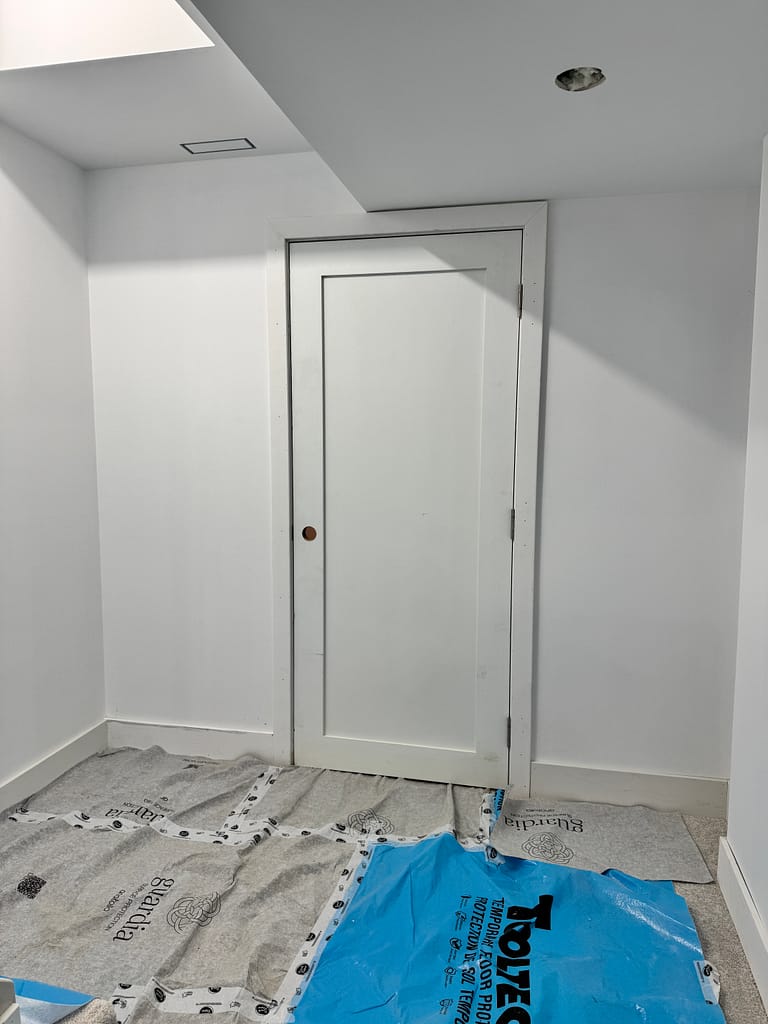
If the handle needs to sit at 36 inches from the bottom, it does not usually look as strange because there is no busy middle rail or six-panel pattern fighting the hardware.
This is why a one-panel shaker door, a plain slab, or a custom-fitted slab can sometimes be a better choice for low basement openings.
The door can be shortened, fitted, and drilled without the handle looking like it missed the right place.
That does not mean one-panel doors are always the answer.
It means they give more flexibility when the opening is not standard.
Wood Job also explains the slab vs pre-hung decision here: Slab Door vs Pre-Hung Door: Which One Do You Need for Interior Door Replacement?.
Why Two-Panel and Six-Panel Doors Need More Care
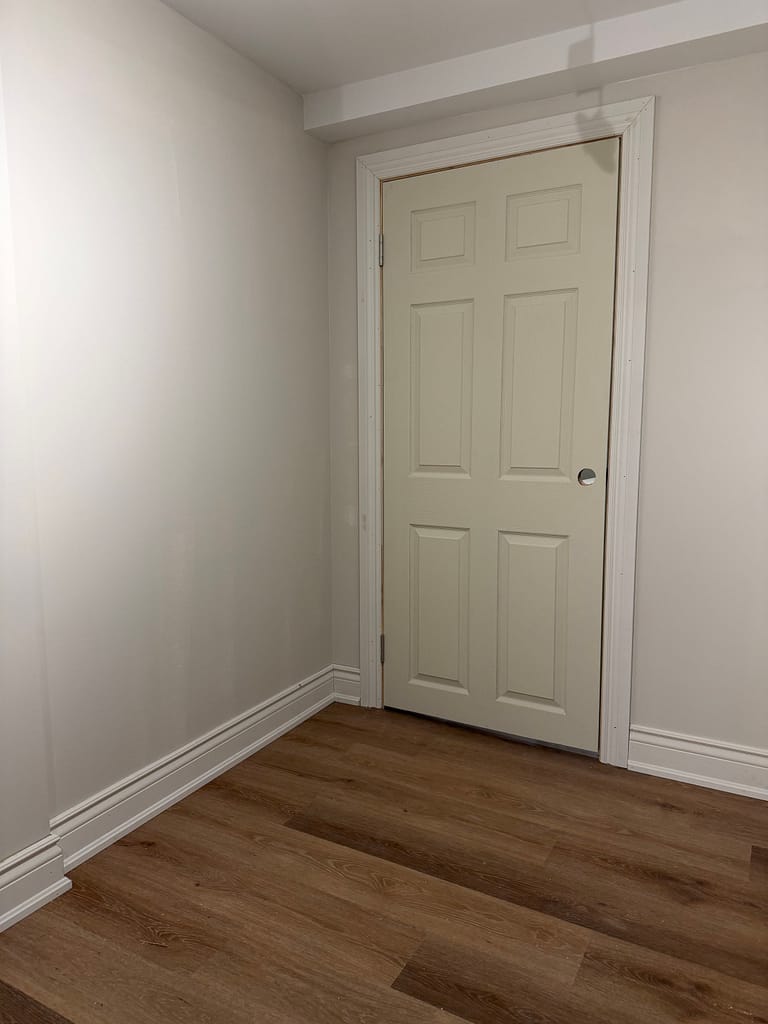
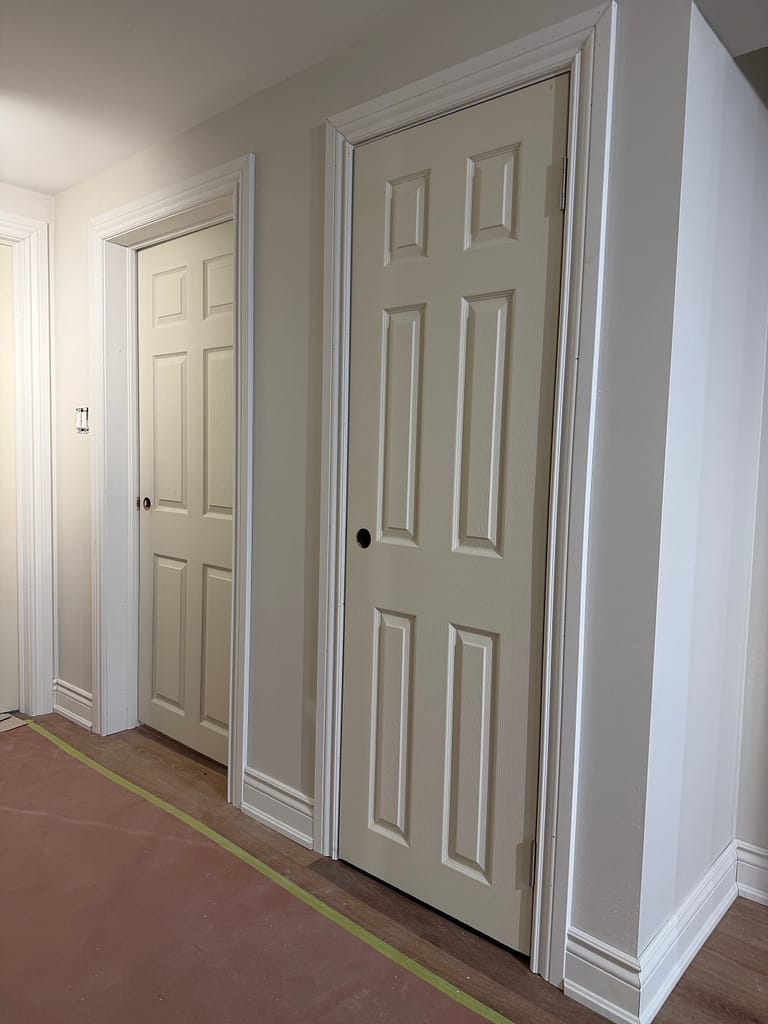
Two-panel and six-panel doors can look good in the right opening.
But they are less forgiving when they need to be shortened.
The panel layout has already been designed around a normal door height. If too much is cut from the bottom, the lower section can become visually compressed, and the handle may no longer sit where the door design expects it.
This can happen even when the installation itself is careful.
The carpenter can fit the door.
The reveal can be clean.
The latch can work.
The casing can be installed properly.
But the door face may still look unbalanced because the product was not the best match for the opening.
This is not only an installation issue.
It is a door selection issue.
Pre-Bored Doors Can Make the Problem Worse
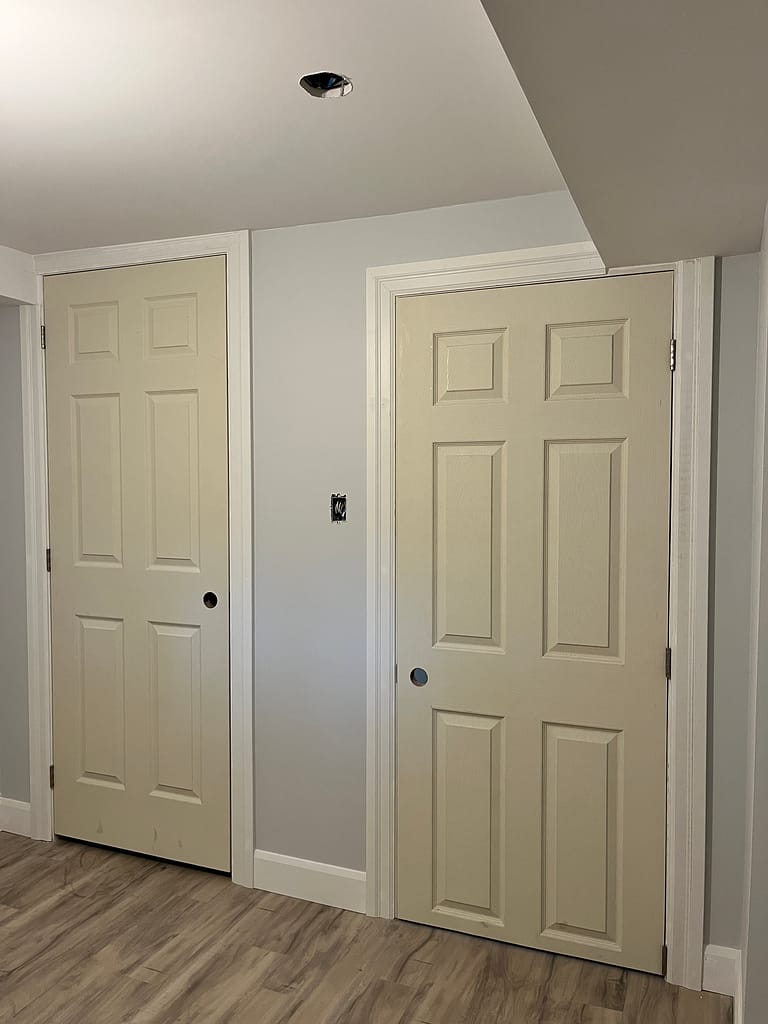
A pre-bored door already has the handle hole drilled.
That can be convenient for standard openings.
In low basement openings, it can be limiting.
If the door has already been drilled, there is less room to adjust the handle location after the door is shortened. You may end up with a handle height that works technically but does not look right with the panel design or the finished opening.
This is why buying the door too early can create problems.
Before ordering basement doors, it helps to check:
- Finished opening height
- How much must be cut from the door
- Whether the door is pre-bored
- Whether the panel style can handle shortening
- Where the lock rail will land
- Whether the handle can be moved cleanly
- Whether a one-panel or plain slab would be better
A door should be selected for the real opening, not only for the catalogue photo.
What Happens If the Door Is Already Bought?
Sometimes homeowners already have the doors on site.
That does not automatically mean the project is ruined.
But the options may be limited.
The carpenter may need to decide whether to:
- Keep the standard handle height
- Lower the handle slightly for better visual balance
- Explain the visual trade-off before drilling
- Use the door as-is if the homeowner accepts the look
- Change to a different slab if the result would be too awkward
- Build or modify a custom door for the opening
This is where honest advice matters.
It is better to explain the issue before drilling the handle hole than to let the homeowner notice it after the hardware is installed.
Once the hole is drilled, the decision is mostly permanent.
Basement Door Details Are Connected
Handle height is only one detail.
It connects to the rest of the opening.
A short basement door also affects:
- Hinge placement
- Bottom rail proportion
- Floor clearance
- Latch height
- Strike plate location
- Casing layout
- Baseboard transitions
- The way nearby doors look together
That is why basement doors should not be treated like simple product swaps.
A door can be technically installed and still look wrong if the style, height, hardware, and opening were not planned together.
Wood Job has also written about small basement storage doors and unusual openings here: Custom Basement Storage Doors for Under-Stair and Low Openings.
What Wood Job Checks Before Drilling the Handle
Before drilling hardware into a shortened basement door, Wood Job looks at the actual door and opening.
The important checks include:
- Door height after trimming
- Handle height from the finished floor
- Handle height from the door bottom
- Lock rail position
- Panel layout
- Hinge placement
- Latch and strike plate alignment
- Door swing
- Existing jamb condition
- Nearby doors in the same basement
- Whether the homeowner wants visual balance or standard handle height
Sometimes the best choice is obvious.
Sometimes it needs a short conversation with the homeowner.
That conversation matters.
A homeowner may not know the term “lock rail,” but they will notice if the handle looks strange after the job is done.
The Best Time to Think About Handle Height
The best time to think about handle height is before ordering the doors.
The second-best time is before cutting and drilling.
The worst time is after the handle hole is already made.
If your basement has low openings, angled ceilings, bulkheads, or short storage spaces, send photos and measurements before buying doors.
A few minutes of planning can prevent a door from looking awkward for years.
For door problems that show up after installation, this related guide may also help: Why Your Interior Door Rubs, Sticks, Swings Open or Won’t Latch.
Planning Short Basement Doors?
If you are planning basement door replacement, send clear photos before ordering materials.
Helpful photos include:
- Full photo of each door opening
- Opening height and width
- Ceiling or bulkhead above the door
- Existing door style nearby
- Door style you are considering
- Whether the slab is pre-bored or not
- Flooring condition
- Casing and baseboard details
- Project city
Wood Job can review the details and explain whether a standard door, one-panel slab, modified slab, pre-hung unit, or custom solution makes more sense.
You can start here:
FAQ
What is the normal door handle height for an interior door?
In many residential interior door projects, the handle or lockset is placed around 36 inches from the bottom of the door to the center of the bore. The exact situation can depend on the door type, hardware, accessibility requirements, and existing openings.
What is a lock rail on an interior door?
The lock rail is the horizontal rail area where the handle or knob usually belongs on a panel door. On many standard panel doors, the handle is designed to land in that area so the door looks balanced.
Why does handle placement look wrong on short basement doors?
If a standard door is cut down from the bottom, the panel layout stays in its original position. When the handle is drilled at the usual height from the new bottom of the door, it may no longer line up nicely with the lock rail.
Can the handle be moved lower?
Sometimes. If only a small amount was cut from the bottom of the door, the handle may be lowered slightly to look better with the panel layout. If too much was cut, lowering the handle enough may make it feel or look too low.
Are one-panel doors better for short basement openings?
Often, yes. One-panel doors usually give more flexibility because there is less visual conflict around the handle location. They can be a cleaner choice for low basement openings than two-panel or six-panel molded doors.
Should I buy pre-bored doors for a low basement opening?
Be careful. A pre-bored door already has the handle hole drilled, which limits adjustment. For non-standard basement openings, it is often better to check the opening first before ordering pre-bored slabs.
Can Wood Job help choose the right door style before ordering?
Yes. Send photos, measurements, the project city, and the door style you are considering. Wood Job can review the opening and explain whether the door choice makes sense before materials are ordered.




