A slab door and a pre-hung door are not the same kind of replacement.
A slab door is only the door itself. A pre-hung door comes already installed in a new jamb.
That sounds simple, but in a real home the decision is not only about the product. The old jamb, hinge locations, latch alignment, casing, floor level, wall condition, and paint stage all affect which option makes more sense.
If you are planning a larger door project, Wood Job also explains the full service here: interior door installation and replacement.
For interior door replacement, the better question is not only:
Which door should I buy?
The better question is:
Is the existing opening good enough to keep?
Short Answer
Choose a slab door if the existing jamb is solid, straight, and in good condition.
Choose a pre-hung door if the old jamb is damaged, twisted, badly painted, out of square, or not worth saving.
A new slab door can work very well in the right opening. But if the frame is the real problem, a new slab will not magically fix it.
If your main question is whether the old frame can stay, this related guide may help first: Can You Replace Interior Doors Without Replacing the Frame?
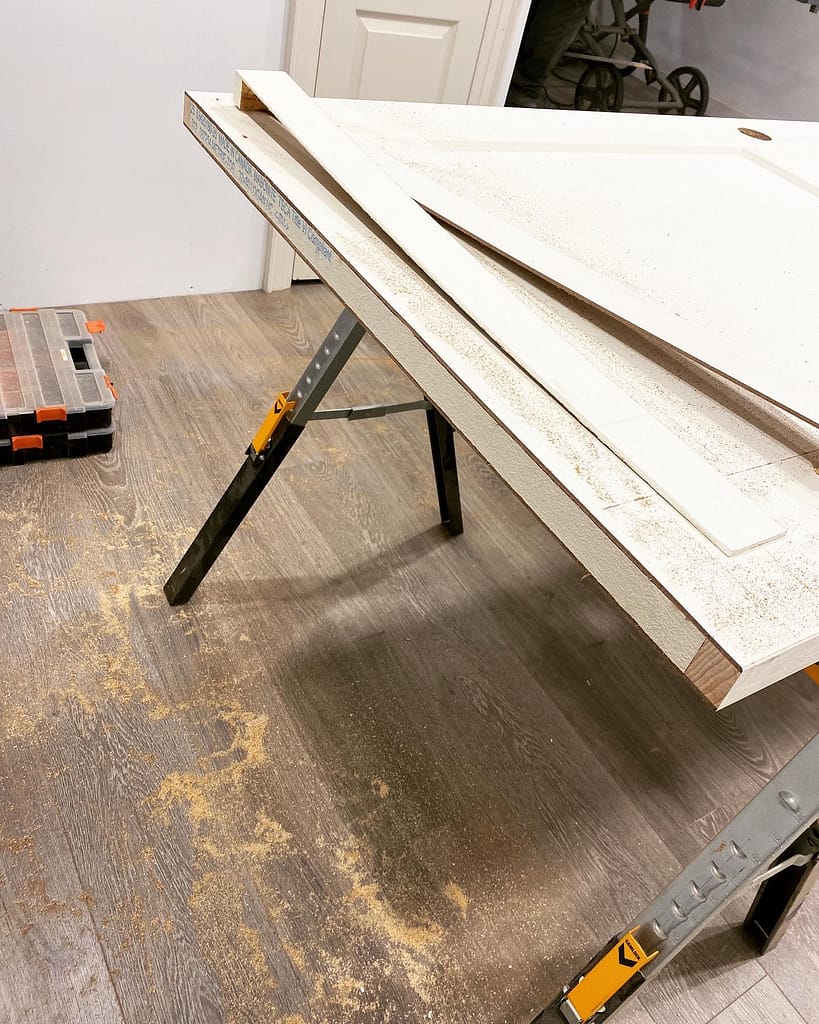
What Is a Slab Door?
A slab door is just the door panel.
It does not come with the frame around it. It does not include casing. It usually does not include hinges or hardware unless ordered that way.
A slab door may be:
- Hollow-core
- Solid-core
- One-panel shaker
- Two-panel shaker
- Flat panel
- Raised panel
- Paint-grade or stain-grade
With a slab door replacement, the existing jamb usually stays in place.
That means the new door has to be fitted to the old opening. The carpenter has to check the size, hinge locations, latch location, reveal, floor clearance, and how the door sits inside the frame.
This is where many homeowners get surprised.
A slab door may look like a simple swap, but it still needs careful fitting. A good door should swing smoothly, sit with a clean reveal, and latch without being pushed, lifted, or forced.
What Is a Pre-Hung Door?
A pre-hung door comes already mounted in a new jamb.
It usually includes:
- The door slab
- The jamb
- Hinges
- Door stop
- Latch prep
The casing is normally installed separately.
A pre-hung door is often a better choice when the existing jamb is not in good condition. If the old frame is cracked, twisted, damaged, badly patched, or covered with years of paint, replacing the whole unit may give the opening a cleaner reset.
But pre-hung does not mean automatic.
The new jamb still has to be installed properly. It needs to be set plumb, shimmed carefully, checked for reveal, and adjusted so the door swings and latches correctly.
A pre-hung door gives you a new frame. It does not remove the need for careful finish carpentry.
The Real Difference: Door Replacement or Opening Reset?
This is the practical difference.
A slab door replaces the door.
A pre-hung door replaces the door and the jamb.
That matters because many door problems are not caused by the door alone.
A door may rub because the jamb is out of plumb.
A door may not latch because the strike plate and latch are not aligned.
A door may look uneven because the old frame is twisted.
A solid-core door may reveal problems that a light hollow-core door used to hide.
So before choosing slab or pre-hung, the opening should be checked first.
The product matters. But the opening decides a lot of the work.
When a Slab Door Makes Sense
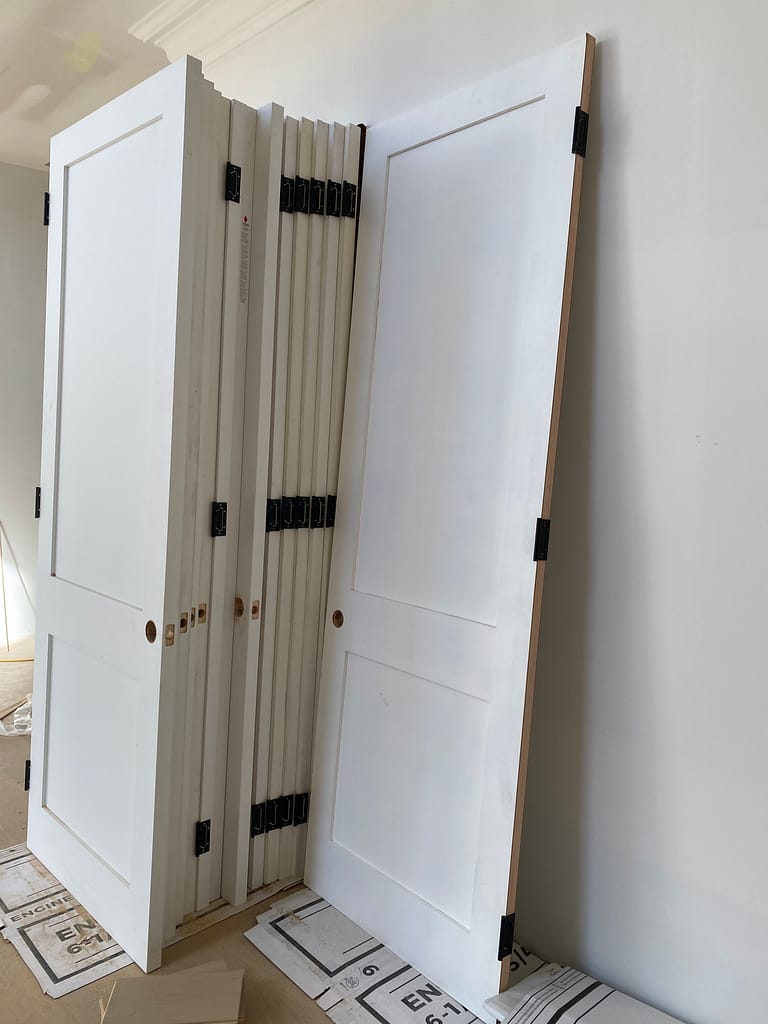
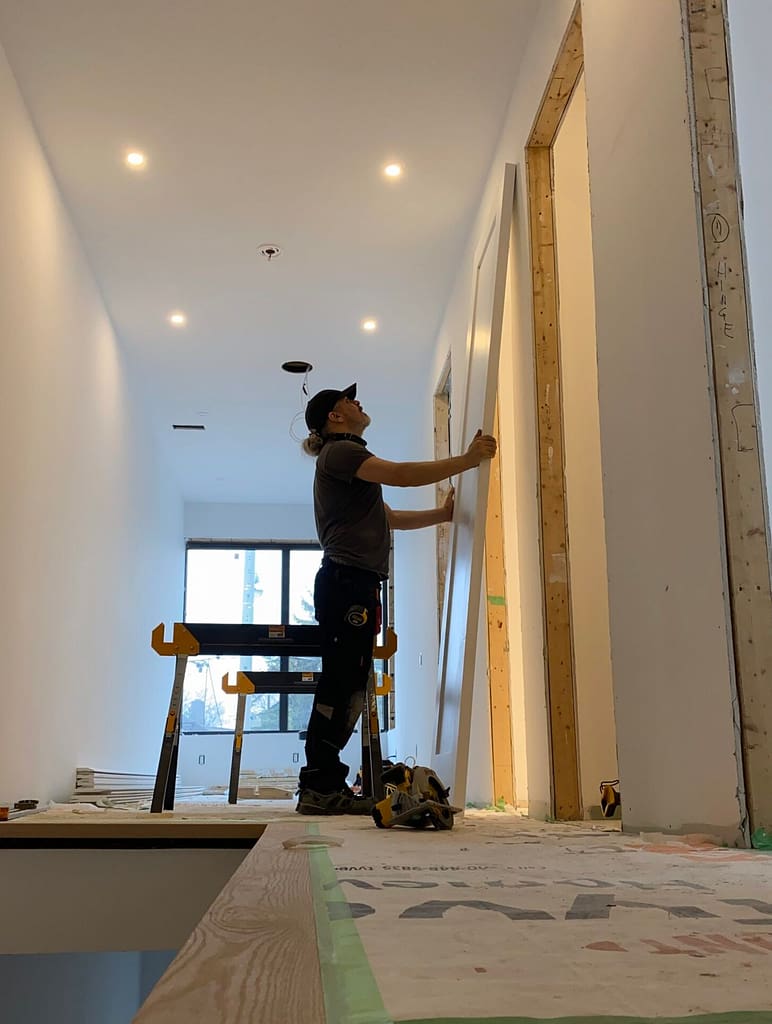
A slab door can be the right choice when the existing frame is still good.
It may make sense if:
- The jamb is solid and not damaged
- The old door was closing properly
- The opening is reasonably square
- The hinge side is strong
- The latch area is clean
- The casing does not need to be removed
- You want to keep the existing trim
- You are replacing several builder-grade doors with a similar style
Slab doors can be a good option for many interior door upgrades.
For example, if a homeowner wants to replace old flat or six-panel doors with modern shaker-style doors, slab replacement may work well if the existing jambs are clean, straight, and properly installed.
But there is one important warning.
A slab door is not a cover-up for a bad frame.
If the old jamb is twisted, the reveal is uneven, or the latch has always been a problem, the new door may still fight the opening.
When a Pre-Hung Door Makes Sense
A pre-hung door is usually the better choice when the old jamb is part of the problem.
It may make sense if:
- The existing jamb is damaged
- The frame is badly out of square
- The old hinge locations are weak or messy
- The latch area is damaged
- The casing is being replaced anyway
- The wall opening needs a cleaner reset
- You are changing the swing direction
- You are changing the door size
- The old frame has too much paint buildup
- The trim package is being updated
Pre-hung doors are also useful during larger renovation work, especially when the casing and baseboards are already being replaced.
In that situation, the final result can look more intentional because the door, jamb, casing, and baseboard transitions are handled together.
That is often the difference between “new door installed” and “the whole opening looks properly finished.”
You can see this kind of full opening upgrade in a real Oakville project here: interior door replacement in Oakville.
A Real Example: When a Pre-Hung Door Was the Wrong Choice
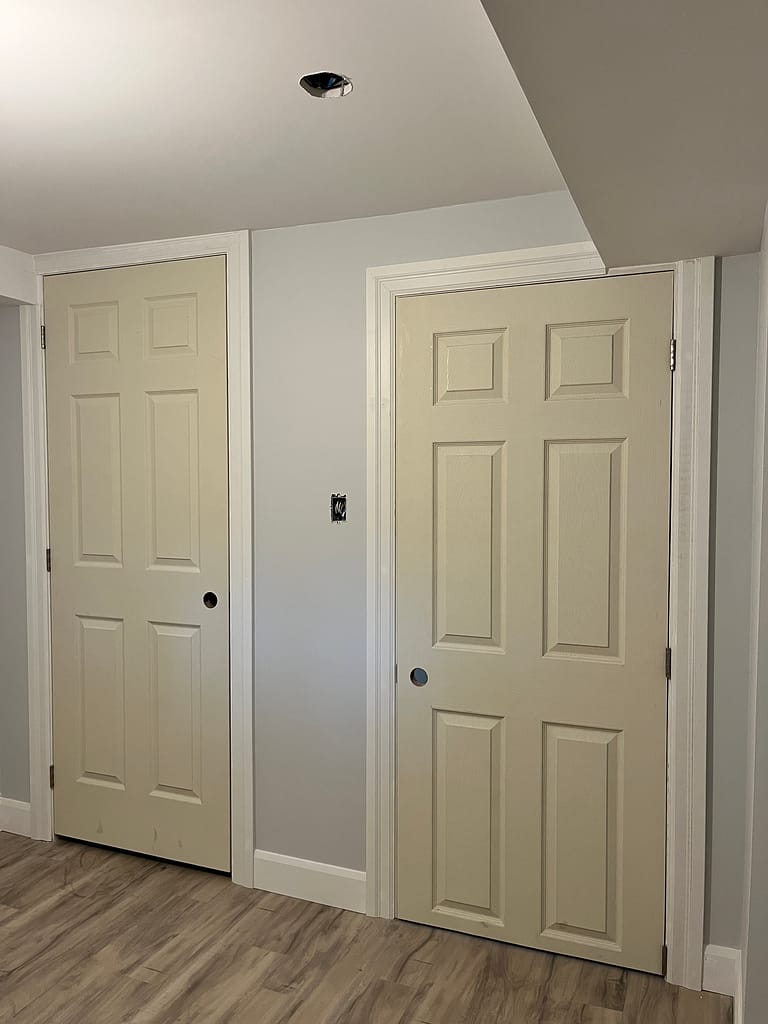
Basement door openings are often lower than standard interior door openings.
This is where the slab door vs pre-hung door decision becomes very practical.
In one basement project, the homeowner had already purchased pre-hung doors. The opening was too low, but the door came already assembled with its jamb, hinge layout, and stop. Because the homeowner did not want to return the doors, the door had to be cut heavily from the bottom.
The door worked, but the proportion was wrong.
The lower rail became too narrow. The bottom hinge ended up very close to the floor. The whole door started to look visually compressed at the bottom.
That was not really an installation problem.
It was a product choice problem.
A pre-hung door can be useful when the opening is standard and the old jamb needs to be replaced. But in a low basement opening, it can limit what the carpenter can do. Once the door, jamb, hinges, and stop are already assembled, changing the height properly may mean taking the whole unit apart, cutting the slab, adjusting the jamb, changing the hinge layout, and rebuilding the detail.
At that point, the advantage of buying a pre-hung door is mostly gone.
A better example is this Vaughan basement project.
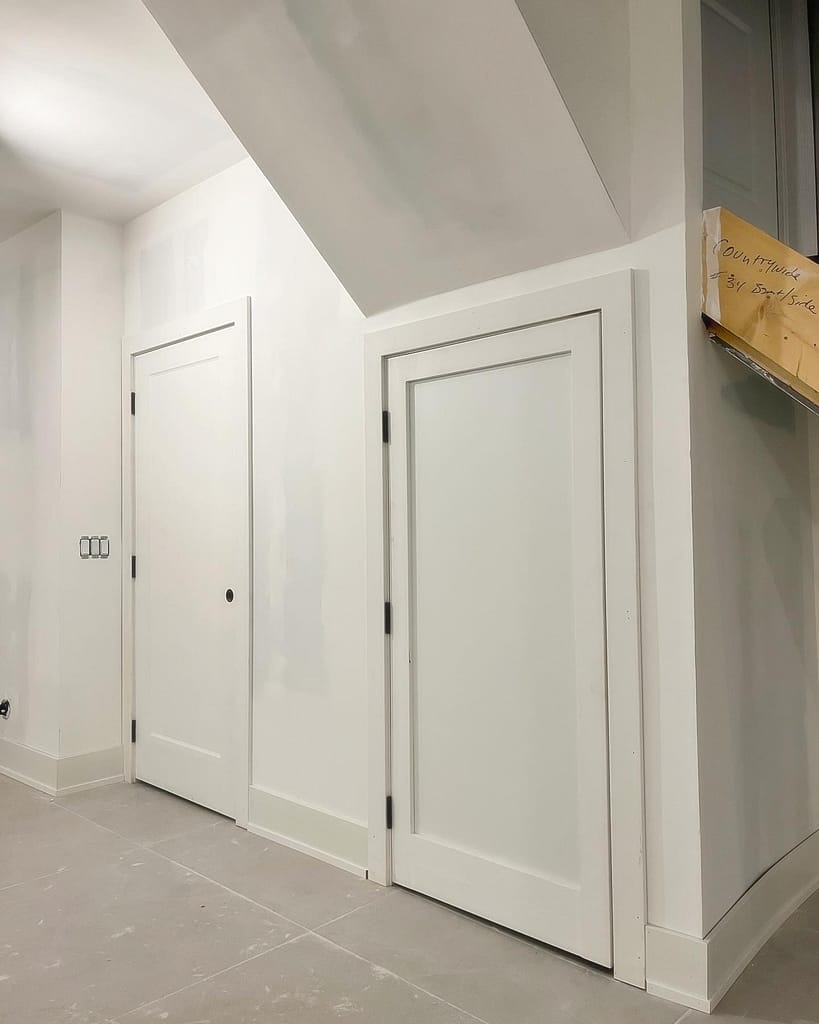
Before the material was ordered, Wood Job visited the jobsite and checked the openings. One of the basement openings was lower than the others. For that shorter opening, the right choice was not a standard pre-hung door. It was a plain slab door.
Because the slab had no panel profile already built into it, it could be cut to the correct height without destroying the door’s proportions. After the slab was fitted to the opening, Jack added custom MDF details to make it visually match the other one-panel doors in the basement.
That is the difference.
The door was not forced into the opening.
The door was built around the opening.
In short basement openings, a plain slab door can sometimes give the carpenter more control. The hinge locations can be planned properly. The bottom rail does not have to become awkwardly narrow. The final door can still look intentional beside the other doors in the home.
This is why Wood Job checks the opening before recommending slab or pre-hung.
The right door type should serve the opening.
Not the other way around.
For a deeper look at this exact issue, see Wood Job’s related Pro Advice article: Short Basement Doors: Why Custom Slabs Beat Pre-Hung Doors.
Old Homes Make the Decision More Complicated
Older homes do not always follow product catalog logic.
The opening may not be square. The floor may slope. The wall may be out of plumb. The old casing may be hiding rough framing, drywall damage, or previous repairs.
In older homes, a slab door can sometimes be fitted, but it may take more adjustment than expected.
A pre-hung door can also help, but it may require extra work around the casing, drywall, jamb extensions, or wall thickness.
This is why clear photos are useful before ordering doors.
Photos can show a lot, especially around the hinges, casing, latch area, and floor clearance. But some conditions only become obvious when the old trim or door is removed.
Wood Job has also handled projects where unfinished or poorly completed door and trim work had to be corrected after the fact. This Kitchener project shows why the opening, casing, and final details matter together: correcting unfinished door and trim work in Kitchener.
Solid-Core Doors Need Better Alignment
Many homeowners replace lightweight hollow-core doors with solid-core doors.
That can be a very good upgrade.
Solid-core doors feel better. They sound quieter. They give more privacy. They make the room feel more substantial.
But they are heavier.
A heavier door makes poor alignment more obvious. If the old jamb is weak, twisted, or poorly fastened, a solid-core slab may start to sag, rub, or fail to latch properly.
For solid-core door replacement, the frame condition matters more.
If the existing jamb is strong and straight, a slab door may work well. If the jamb is questionable, a pre-hung door or jamb replacement may be the better long-term choice.
If the main reason for replacing the doors is to move from hollow-core to solid-core, it is worth reading this first: Should You Replace Hollow-Core Interior Doors With Solid-Core Doors?. The door core affects more than the feel of the door. It can also affect hinge support, jamb condition, latch alignment, and whether a slab or pre-hung approach makes more sense.
What About the Casing?
Casing is the trim around the door.
It frames the opening and helps the door look finished in the room.
If you install slab doors and keep the old casing, the final look still depends on the existing trim. If the casing is narrow, damaged, outdated, or poorly installed, the new door may still sit inside an old-looking opening.
If you install pre-hung doors, the casing usually has to be removed and replaced or reinstalled.
That can be a good opportunity to update the whole opening.
This is especially true if the baseboards are also being replaced. The door, casing, and baseboard should meet in a way that feels intentional.
A new door can look unfinished if the casing and baseboard transitions are not handled well.
Which Option Costs Less?
A slab door often looks cheaper at first because the product itself is simpler.
But labour can change the final cost.
A slab door may need:
- Trimming
- Hinge mortising
- Handle boring
- Latch fitting
- Bevel adjustment
- Careful matching to the existing jamb
On a clean opening, this can be straightforward.
On a difficult opening, it can take more time than expected.
A pre-hung door usually costs more in material and involves removing the old jamb. But if the existing frame is too damaged to reuse, it may be the cleaner and more practical option.
The honest answer is simple:
The cheaper option is not always the better value.
If the old jamb is good, a slab door can make sense.
If the old jamb is bad, forcing a slab door into it can waste time and still leave you with a door that does not feel right.
What Wood Job Checks Before Recommending Slab or Pre-Hung
Before recommending slab or pre-hung doors, the opening should be looked at carefully.
The important checks include:
- Is the existing jamb straight and solid?
- Does the current door close properly?
- Is the reveal even around the door?
- Are the hinges sitting firmly?
- Does the latch meet the strike plate cleanly?
- Is the floor level under the door?
- Is the casing staying or being replaced?
- Are the baseboards changing?
- Is the new door hollow-core or solid-core?
- Are all doors the same size?
- Is the homeowner updating only the door, or the full opening?
These small checks prevent bigger problems later.
A good interior door should not need to be slammed, lifted, or adjusted every few weeks. It should simply work.

Slab Door vs Pre-Hung Door: Simple Comparison
Slab Door
Best when the existing jamb is good.
A slab door:
- Keeps the old frame
- Can be a good choice for style upgrades
- Works well when the old door already functioned properly
- Needs careful fitting to the existing opening
- May not fix reveal, latch, or frame problems
- Can be practical when casing and trim are staying
Pre-Hung Door
Best when the old jamb is damaged or unreliable.
A pre-hung door:
- Replaces the door and the jamb
- Gives the opening a cleaner reset
- Often works better when casing is also being replaced
- Can help with damaged hinge or latch areas
- Still needs careful shimming and alignment
- May involve more work around trim, drywall, and baseboards
Can You Use Both in the Same House?
Yes.
In a full interior door replacement project, some openings may be fine for slab doors while others may need pre-hung doors or jamb repair.
This is normal in real homes.
One bedroom door may have a clean frame and only need a new slab. A bathroom door may have a damaged jamb from moisture or old hardware. A basement door may be out of square because of framing or flooring changes.
The best choice is not always one product for the whole house.
The best choice is the right method for each opening.
For example, a modern shaker door replacement project may involve more than simply changing door slabs. The way the new doors sit inside the existing openings still matters. Here is one related project: modern shaker interior door replacement in Vaughan.
DIY or Hire a Finish Carpenter?
A simple slab door replacement may be possible as a DIY project if the existing jamb is square, the new slab is prepared correctly, and you are comfortable with hinge fitting, latch alignment, and trimming.
But door work becomes less forgiving when:
- The door is solid-core
- The jamb is old or twisted
- The hinges do not match
- The latch does not line up
- The casing needs to be removed
- Several doors must match visually
- The reveal needs to look clean up close
Pre-hung doors also need careful installation.
If the jamb is shimmed poorly, the door may look fine at first and then start rubbing, swinging open, or refusing to latch.
A door is one of those details you touch every day.
If it is wrong, you feel it every day.
Owner-Led Door Replacement by Wood Job Finish Carpentry
Wood Job Finish Carpentry is owner-led and intentionally small.
That matters with interior door replacement because many decisions happen on site.
A small adjustment to a hinge, reveal, latch, casing line, or floor clearance can decide whether the finished door feels right.
Jack Cenk Ozer works with the practical reality of the home, not just the product label.
Some homes need slab doors.
Some need pre-hung doors.
Some need jamb repair, casing replacement, or a more custom approach.
The right answer comes from looking at the actual opening.
This is also why Wood Job explains its approach to owner-led finish carpentry. For door work, the small decisions are not small for the homeowner who will use that door every day.
Planning an Interior Door Replacement Project?
If you are trying to decide between slab doors and pre-hung doors, send clear photos before ordering materials.
Helpful photos include:
- The full door from both sides
- Close-up photos of the hinges
- Close-up photos of the latch and strike plate
- The casing around the door
- The top and side reveals
- Any damaged jamb areas
- The bottom of the door near the floor
- Any baseboard or flooring transition near the opening
Also include:
- Your project city
- Number of doors
- Door style you are considering
- Hollow-core or solid-core preference
- Whether casing and baseboards are staying or being replaced
Wood Job can review the details and let you know whether a rough estimate is possible from photos or if a walkthrough would be better.
You can start here:
FAQ
Is a slab door cheaper than a pre-hung door?
The slab itself is usually cheaper, but the final cost depends on the opening. If the old jamb is straight and the new slab can be fitted cleanly, it may be the more practical option. If the jamb is damaged or out of square, the extra labour can make slab replacement less simple than it first looked.
Can I replace only the door and keep the old frame?
Yes, if the existing frame is in good condition. The old jamb needs to be solid, reasonably straight, and able to accept the new hinges and latch alignment. If the old frame is twisted or damaged, replacing only the slab may not solve the real problem.
Do pre-hung doors include casing?
Usually, no. A pre-hung door normally includes the door and jamb, but casing is installed separately. That is why pre-hung installation often becomes part of a larger finish carpentry detail, especially when baseboards and trim are also being updated.
Are solid-core doors better as slab or pre-hung?
They can work either way, but solid-core doors need better alignment. If the old jamb is strong and straight, a solid-core slab can be fitted. If the old jamb is weak, twisted, or poorly installed, a pre-hung door or jamb replacement may be the better choice.
Can old hinge locations be reused?
Sometimes. If the new slab matches the old door size and the hinge locations can be transferred cleanly, the old hinge locations may be reused. If the old hinge mortises are damaged, loose, or badly placed, the door may need more adjustment.
Should I replace casing when replacing interior doors?
Not always. If the casing is in good condition and you like the style, it can often stay with slab door replacement. If the casing is damaged, outdated, too narrow, or being removed for pre-hung installation, replacing it can help the whole opening look cleaner.
Can Wood Job help me decide before I buy the doors?
Yes. Send photos, measurements, project location, number of doors, and the door style you are considering. Wood Job can review the opening condition and explain whether slab doors, pre-hung doors, or another approach makes more sense.