
Some home projects are perfectly fine for DIY.
Painting a small room, changing a simple handle, assembling furniture, installing a basic shelf, or touching up a small area can be satisfying and practical if you have the time, patience, and tools.
But finish carpentry is different from many DIY projects.
Finish carpentry is the work you see every day. It is the door reveal, casing joint, baseboard line, crown corner, wall panel layout, closet opening, fireplace mantel, and final transition between materials.
Small mistakes are easy to see.
That does not mean homeowners should never do anything themselves. It means they should know where DIY makes sense and where hiring a finish carpenter can prevent frustration, wasted material, and a result that has to be corrected later.
At Wood Job Finish Carpentry, many projects start with a simple question:
“Is this something I can do myself, or should I hire someone?”
The honest answer depends on the job.
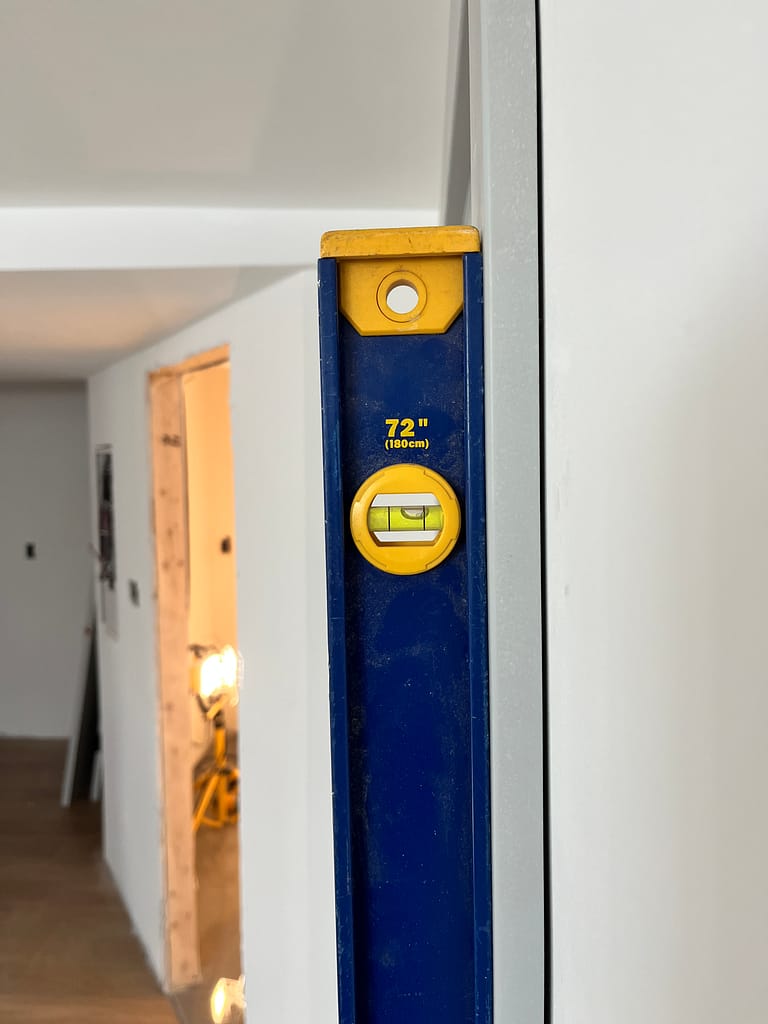
DIY Can Make Sense for Some Simple Projects
DIY can be a good option when the project is small, low-risk, and easy to correct.
For example, a homeowner with basic tools and patience may be able to handle simple paint touch-ups, minor caulking, small patching, basic hardware replacement, or a very simple trim repair in a less visible area.
DIY can also make sense when the goal is learning, not perfection.
If you are working in a garage, basement storage room, workshop, or a space where the final detail is not very visible, the risk is lower. A small mistake may not matter much.
The problem begins when the project is highly visible, connected to other finish details, or difficult to correct once the material is cut.
That is where finish carpentry becomes less forgiving.
Finish Carpentry Is Less Forgiving Than It Looks
Many finish carpentry jobs look simple from a distance.
A door is just a door.
A baseboard is just a board.
A casing is just trim around an opening.
An accent wall is just pieces attached to drywall.
But the final result depends on small details.
A door needs the right gap around it. The hinges need to sit properly. The latch needs to meet the strike plate. The casing has to sit cleanly on the wall. The baseboard has to deal with uneven floors. A crown moulding corner has to meet correctly. A wall panel layout has to look balanced before anything is nailed.
In real homes, walls are not always straight. Floors are not always level. Openings are not always square. Old paint buildup, drywall humps, previous renovations, and non-standard sizes can all affect the work.
A YouTube video may show the ideal version.
Your house may not give ideal conditions.
Interior Doors Are Usually Not the Best First DIY Project
Interior door installation is one of the most common places where homeowners underestimate the work.
Replacing a door slab sounds simple until the new door has to match the existing opening.
The hinge locations have to be right. The latch height has to work. The door may need trimming. The reveal has to be balanced. The door cannot rub the floor or jamb. It should not swing open by itself. It should close without being forced.
If the existing jamb is out of plumb, twisted, damaged, or poorly fastened, the problem becomes harder.
Solid-core doors add another layer because they are heavier than hollow-core doors. A heavier door needs proper hinge support and a strong enough jamb.
A simple door swap can quickly become a custom fitting job.
This is why interior door installation is often better handled by a finish carpenter, especially when there are multiple doors, existing frames, solid-core doors, custom jambs, or casing changes involved.
Baseboards and Casing Can Also Be Tricky
Baseboards and casing look simple until they meet real walls and floors.
Baseboards may need to follow floors that are slightly uneven. Casing may need to sit against drywall that is not perfectly flat. Corners may not be square. Old trim removal may damage paint or drywall. Shoe moulding may be needed. Long runs may need clean joints. Door casing and baseboards need to connect in a way that looks intentional.
DIY trim work can be reasonable in a small, simple room if the homeowner has time and accepts a learning curve.
But trim becomes harder when:
- the room is highly visible
- the walls are uneven
- the floors are not level
- the baseboard is tall
- the casing profile is detailed
- old trim has to be removed
- many rooms are involved
- the home is occupied
- the project needs to look consistent throughout the house
A small gap in a storage room may not matter.
The same gap in a main hallway, living room, bedroom, or renovated main floor will be seen every day.
Accent Walls and Wainscoting Need Layout Before Tools
Accent walls, board and batten, picture frame moulding, shiplap, and wainscoting are popular DIY ideas.
Some homeowners can do them well.
But the project should not start with cutting material. It should start with layout.
The wall width, ceiling height, outlet locations, switch plates, baseboard height, door casing, furniture placement, and panel spacing all affect the final look.
If the spacing is wrong, the wall will feel wrong even if every cut is clean.
This is where many DIY projects struggle. The individual pieces may be installed, but the design does not feel balanced.
A finish carpenter can help adjust the layout to the actual wall instead of copying an inspiration photo exactly.
Crown Moulding Is Usually a Professional Job
Crown moulding is one of the finish carpentry jobs most homeowners should think carefully about before doing themselves.
It involves ceiling lines, wall lines, inside corners, outside corners, spring angle, profile size, long runs, coping or mitre decisions, and finishing.
Even a small mistake can be visible because the eye follows crown moulding around the room.
The difficulty also depends on the house.
In a perfect square room with straight walls and a simple profile, crown moulding is more manageable. In a real renovation with uneven ceilings, out-of-square corners, or multiple transitions, it becomes more difficult.
If the room is important, the profile is large, or the result needs to look clean, hiring a finish carpenter usually makes more sense.
Coffered Ceilings and Fireplace Walls Should Be Planned Carefully
Some finish carpentry projects are not good DIY candidates unless the homeowner has real experience.
Coffered ceilings, waffle ceilings, fireplace walls, mantels, custom ceiling grids, and larger wall features need planning before installation.
These projects involve layout, proportion, secure fastening, room balance, lighting, vents, outlets, fireplace location, TV height, and surrounding trim details.
A mistake in these projects is not just a small gap.
It can affect the whole room.
For this kind of work, a finish carpenter should be involved early, before materials are ordered and before the layout is locked in.
When DIY Costs More Than Expected
Many homeowners choose DIY to save money.
Sometimes that works.
But DIY can become more expensive when the project needs to be redone, when material is wasted, when wrong products are purchased, or when a small mistake damages something around it.
The real cost of DIY may include:
- extra material
- wrong material
- tool purchases
- rental tools
- lost weekends
- paint or drywall repairs
- unfinished work
- rework by a professional later
The most frustrating version is when the homeowner pays once to attempt the project and then pays again to correct it.
That does not mean DIY is bad.
It means the decision should be realistic.
When You Should Probably Hire a Finish Carpenter
You should strongly consider hiring a finish carpenter when the project involves interior doors, custom jambs, casing, baseboards across multiple rooms, crown moulding, coffered ceilings, fireplace walls, wainscoting, or corrections to previous work.
You should also consider hiring a finish carpenter when the work is in a visible area of the home, when the project affects daily use, or when mistakes would be difficult to hide.
A door that does not latch properly is not just a cosmetic problem.
A bad casing joint is not just a small detail when it is beside a main doorway.
A poorly planned accent wall is not easy to ignore when it is the focal point of the room.
Finish carpentry is often the final stage of a renovation. By that point, the homeowner has already invested in flooring, drywall, paint, doors, hardware, lighting, or other materials.
The final details should not weaken the work that came before them.
When DIY May Still Be Worth Trying
DIY may still be worth trying when the project is small, the area is not highly visible, the material is inexpensive, and the homeowner is comfortable with a result that may not be perfect.
It can also make sense when the homeowner wants to learn and has time to practice.
A good DIY project has room for trial and error.
A risky DIY project has no room for mistakes.
Before deciding, ask yourself:
- Will I see this every day?
- Will this affect how the door or room functions?
- Can I fix a mistake without damaging other work?
- Do I have the right tools?
- Do I understand the layout?
- Am I comfortable cutting expensive material?
- Will this delay other trades or the rest of the renovation?
If the answer makes you hesitate, it may be better to ask for advice before starting.
Real Kitchener Example: When Finish Details Had to Be Corrected
Wood Job Finish Carpentry was contacted for a Kitchener project after previous door and trim work had been left unfinished.
The visible issues included jamb details, hinge mortises, casing, header transitions, and uneven door gaps.
This is the kind of situation where finish carpentry correction becomes more difficult than doing the work carefully from the beginning.
Correction work often means reviewing what was already installed, deciding what can be saved, removing what cannot be saved, and finding a practical way to make the final result look clean.
You can read the full project story here:
Real Hamilton Example: When Standard Products Did Not Fit
Another useful example is Wood Job’s Hamilton condo project.
The homeowner wanted to replace old mirrored sliding closet doors with cleaner one-panel shaker closet doors. But the existing closet openings did not match standard door sizes.
Instead of forcing an off-the-shelf product into the opening, the replacement doors were custom-built to fit the space properly.
This is a good example of when DIY or standard retail material may not solve the real problem.
Sometimes the issue is not only installation.
Sometimes the opening itself needs a custom solution.
You can read the full project story here:
A Good Rule for Homeowners
If the project is simple, hidden, forgiving, and easy to redo, DIY may be fine.
If the project is visible, connected to other finish details, expensive to correct, or used every day, hiring a finish carpenter is usually the safer choice.
Interior doors, casing, baseboards, crown moulding, wall paneling, fireplace details, and custom openings all affect how finished the home feels.
These details are not always loud.
But when they are wrong, they are hard to unsee.
What Should You Send Before Deciding?
If you are not sure whether your project needs a finish carpenter, send clear photos first.
Helpful photos include the full room, the specific opening or wall, close-ups of problem areas, hinges, jambs, casing, baseboards, corners, floor transitions, outlets, switches, and any existing trim.
Also include your project city, approximate measurements, and a short description of what you want done.
Photos can often show whether the project looks simple, whether there may be hidden complications, or whether a site visit would be better.
Owner-Led Finish Carpentry
Wood Job Finish Carpentry is owner-led by Jack Cenk Ozer.
That matters because finish carpentry depends on judgment, not only tools.
A real home may require small adjustments as the work progresses. An opening may not be square. A wall may not be flat. A door may need careful fitting. A casing piece may need to be scribed. A baseboard may need to follow a floor that is not perfectly level.
The goal is not to make every homeowner afraid of DIY.
The goal is to help you choose wisely before time, material, and money are wasted.
For a broader hiring checklist, read:
DIY and Finish Carpentry Questions
Can I install interior doors myself?
Some homeowners can install simple doors, but interior door installation is often less forgiving than it looks. Existing jambs, hinge locations, latch alignment, reveal, floor clearance, and casing all affect the result. If the door is solid-core, custom-sized, or going into an older opening, hiring a finish carpenter is usually safer.
Can I install baseboards myself?
A small simple room may be a reasonable DIY project. Larger areas, uneven floors, tall baseboards, outside corners, old trim removal, and visible main-floor spaces are more difficult. If the trim has to look consistent across the home, professional installation usually gives a cleaner result.
Is wainscoting or board and batten a good DIY project?
It can be, but layout matters. Outlets, switches, wall width, ceiling height, baseboard height, furniture placement, and panel spacing should all be planned before cutting material. If the wall is highly visible, hiring a finish carpenter may prevent awkward spacing.
Should I try crown moulding myself?
Crown moulding is one of the harder DIY trim projects. It involves ceiling lines, wall lines, profile angles, inside corners, outside corners, and finishing. For important rooms or uneven ceilings, professional installation usually makes more sense.
When should I not do finish carpentry myself?
Avoid DIY when the project is highly visible, expensive to correct, connected to other finished work, or used every day. Interior doors, custom jambs, crown moulding, coffered ceilings, fireplace walls, and correction work are usually better handled by a finish carpenter.
Can a finish carpenter fix a bad DIY or unfinished project?
In many cases, yes. A finish carpenter can review what was done, explain what can be saved, and correct doors, jambs, casing, baseboards, trim gaps, unfinished openings, and related finish details when possible.
What photos should I send before asking for help?
Send photos of the full room, the problem area, close-ups of joints or gaps, doors, hinges, jambs, casing, baseboards, corners, and any material already purchased. Include your project city, approximate measurements, and what you want the finished result to look like.




