
When homeowners start planning crown moulding, one of the first material questions is simple:
Should we use MDF or real wood?
The answer depends on the room, the finish, the budget, the profile, and how the crown moulding will be painted or stained.
For many modern Ontario homes, MDF crown moulding is a very practical choice for painted work. It is smooth, stable, usually more budget-friendly, and works well in many bedrooms, living rooms, hallways, dining rooms, basements, and renovation projects.
But MDF is not always the right answer.
Solid wood crown moulding still has an important place, especially when the homeowner wants a stained finish, a natural wood look, a specific profile, or a material that can handle certain conditions better than standard MDF.
The better question is not “Which material is better?”
The better question is:
Which material makes sense for this room, this finish, and this project?
At Wood Job Finish Carpentry, crown moulding is not treated as only a material choice. The final result depends on the room layout, ceiling line, wall condition, inside corners, outside corners, profile size, joint work, paint stage, and installation quality.
A good material can still look poor if the installation is rushed.
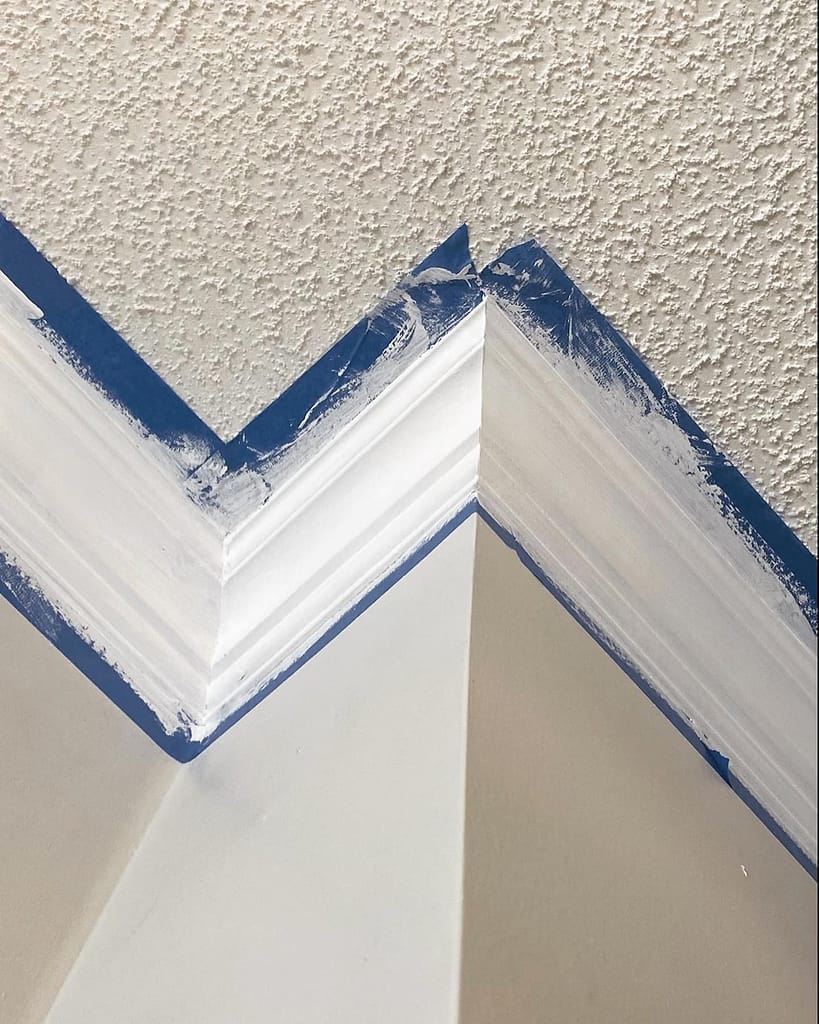
What Is MDF Crown Moulding?
MDF stands for medium-density fibreboard.
It is an engineered wood product made from wood fibres and resin, pressed into a dense and smooth material. In finish carpentry, MDF is often used for painted trim, baseboards, casing, wall panels, and crown moulding.
MDF crown moulding usually comes primed and ready for paint. It has no visible wood grain, no knots, and a very smooth surface.
That makes it a strong option when the finished look will be painted white or another solid colour.
MDF is common in modern renovation work because many homeowners want clean painted lines rather than stained natural wood.
When MDF Crown Moulding Makes Sense
MDF crown moulding often makes sense when the goal is a painted finish.
For paint-grade work, MDF can give a smooth and consistent look. Once it is installed, caulked, filled, sanded, and painted properly, MDF crown moulding can look clean and finished in many types of rooms.
MDF is often a good option for:
- painted crown moulding
- modern trim packages
- bedrooms
- hallways
- living rooms
- dining rooms
- basements
- renovated main floors
- rooms where a clean white trim detail is the goal
It can also be more budget-friendly than many solid wood options, especially when the project involves longer runs or multiple rooms.
For many homeowners, that balance matters.
The room gets a cleaner finished ceiling line without forcing the project into a more expensive material that may not add visible value once everything is painted.
Why MDF Works Well for Painted Crown Moulding
The biggest advantage of MDF is consistency.
Solid wood has grain, knots, and natural movement. MDF does not behave the same way because it is manufactured to be more uniform.
For painted crown moulding, that consistency can be helpful.
The surface is smooth. The profile is usually consistent. The painted result can look clean. For many standard residential rooms, MDF gives the homeowner the finished look they wanted without unnecessary material cost.
Another reason MDF is popular in Ontario homes is seasonal movement.
Ontario homes go through dry heated winters and humid summers. Interior trim can respond to those changes. No trim material is completely immune to movement, but MDF is often more stable than solid wood for painted interior trim in normal dry rooms.
That does not mean MDF never cracks, gaps, or moves. It means that for many painted crown moulding projects, it is a practical and predictable material when installed properly.
Where MDF Is Not the Right Choice
MDF has limits.
The biggest weakness is moisture.
MDF does not like direct water, leaks, or high-moisture conditions. If MDF absorbs water, it can swell, soften, or lose its clean edge. That is why material choice should consider the room and the risk.
Standard MDF may not be the best choice for areas with moisture concerns, roof leak risk, poorly controlled humidity, or locations where the trim could be exposed to water.
It is also not the right material if the homeowner wants a stained or natural wood finish.
MDF is a paint-grade material. It does not give the natural grain, depth, or character of real wood.
If the goal is stained oak, maple, pine, poplar, walnut, or another natural wood look, MDF is not the right answer.
What Is Solid Wood Crown Moulding?
Solid wood crown moulding is made from real wood.
Depending on the project, that may include poplar, pine, oak, maple, or other wood species. Some are better for painting. Some are better for staining. Some are chosen because of profile availability or the style of the home.
Solid wood has natural grain and character. It can be stained, clear-coated, or painted.
It can also be milled into specific profiles and may be the better choice for historic homes, traditional interiors, custom stained details, or projects where the homeowner wants the material itself to be part of the finished look.
Wood is not just a different price point.
It is a different material with a different behaviour.
When Solid Wood Crown Moulding Makes Sense
Solid wood crown moulding may be the better choice when:
- the homeowner wants a stained finish
- the wood grain should remain visible
- the home has historic or traditional trim details
- the crown profile needs to match existing woodwork
- the room already has natural wood casing, doors, beams, or built-ins
- the project calls for a specific profile not easily available in MDF
- the trim may need more durability in certain conditions
For example, if a room already has stained wood doors and casing, painted MDF crown moulding may not feel connected to the rest of the space.
In that case, real wood may be the right material because the trim is not only a shape. It is part of the room’s character.
Solid wood can also be the better option when the homeowner wants a higher level of material authenticity or a specific profile that cannot be matched properly in MDF.

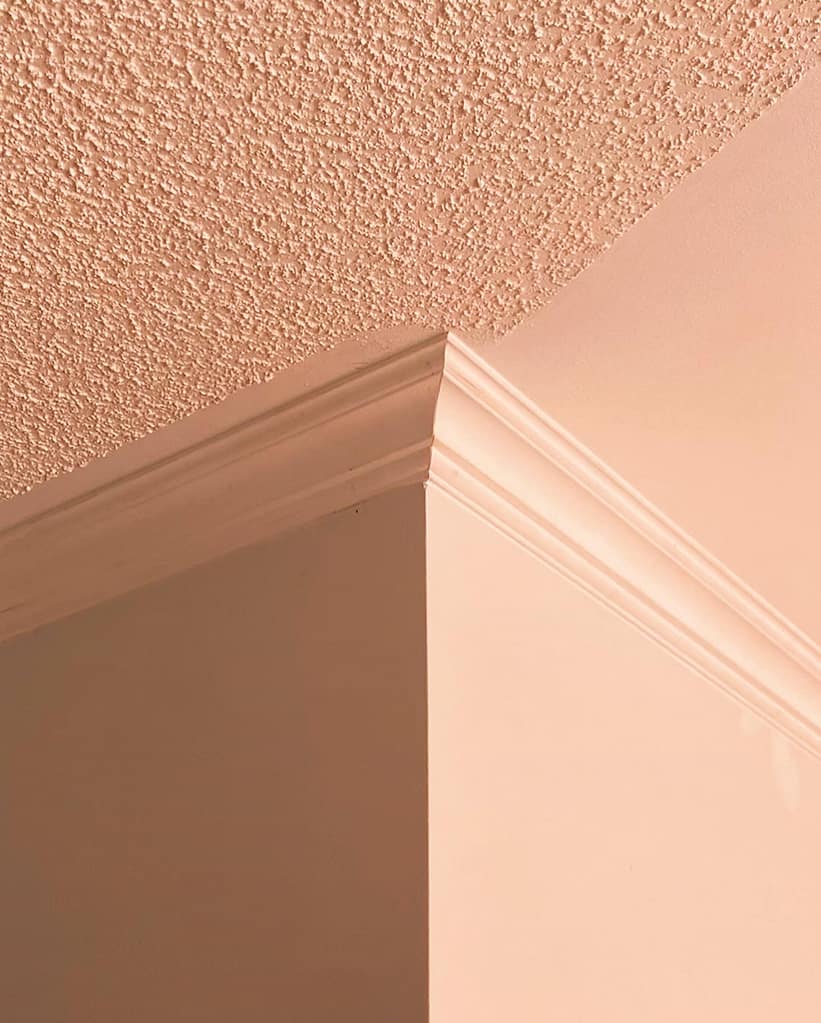
The Trade-Off With Solid Wood
Solid wood is beautiful, but it is not automatically easier.
Wood moves.
It expands and contracts with changes in moisture and temperature. In Ontario homes, seasonal changes can affect joints, caulking, and long trim runs over time.
This does not mean wood is bad. It means the material needs to be understood.
Wood crown moulding may require more careful material selection, acclimation, cutting, fitting, fastening, and finishing. It may also cost more than MDF, depending on the species, profile, supplier, and project size.
If the crown will be painted, some homeowners choose paint-grade poplar or another paint-grade wood. Others choose MDF because the finished painted look may be similar while the material cost may be lower.
The right answer depends on what the homeowner is trying to achieve.
MDF vs Wood for Painted Crown Moulding
For most painted crown moulding projects in modern Ontario homes, MDF is often the more practical choice.
It gives a smooth painted finish, works well in many dry interior rooms, and keeps the material cost more reasonable.
Solid wood may still be used for painted crown moulding when the profile, durability, tradition, or project preference calls for it. But if the trim will be fully painted white, the visual difference between properly painted MDF and properly painted paint-grade wood may not be obvious to most homeowners once the work is finished.
That is why the decision should not be based only on the idea that “wood is always better.”
Sometimes real wood is the better material.
Sometimes MDF is the smarter material.
The room decides.
MDF vs Wood for Stained Crown Moulding
If the crown moulding will be stained, wood is the correct choice.
MDF is not made for a natural stained finish. It has no real wood grain to show. It is designed for paint.
For stained crown moulding, the wood species matters. Oak, maple, pine, poplar, and other woods all take stain differently. The final appearance depends on the grain, colour, stain choice, finish coat, and how the trim connects with the rest of the room.
Stained crown moulding also needs to be planned with the existing interior.
If the doors, casing, baseboards, flooring, stair parts, beams, or built-ins already have a wood tone, the new crown should not fight with them.
This is where the material decision becomes a design decision.
Crown Moulding in Real Ontario Homes
In real homes, crown moulding is rarely installed into perfect conditions.
Ceilings may dip slightly. Walls may wave. Corners may not be square. Drywall compound can build up near ceiling lines. Renovations may leave uneven transitions. Older homes may have settled over time.
These conditions matter more than many homeowners expect.
Even the best material will not make the room look right if the layout, corners, joints, and long runs are not handled carefully.
Crown moulding depends on:
- room proportion
- ceiling height
- wall and ceiling condition
- profile size
- inside corners
- outside corners
- long runs
- paint stage
- caulking and filling
- where the crown starts and stops
- how the crown connects to other trim details
Material matters, but installation matters just as much.
Why the Installer Matters More Than the Material Alone
A homeowner can choose a good MDF profile or a good solid wood profile and still end up disappointed if the installation is rushed.
Crown moulding is judged by the lines.
The eye follows the trim all the way around the room. If corners open, joints are rough, long runs wave, or the profile feels too heavy for the ceiling height, the material choice will not save the result.
A good crown moulding installation needs careful measuring, fitting, cutting, fastening, filling, caulking, and finishing.
Inside corners, outside corners, returns, transitions, and ceiling irregularities all need attention.
This is why crown moulding should not be treated as decoration added at the end. It is a finish carpentry detail that has to work with the actual room.
What About Crown Moulding Cost?
Material affects cost, but it is only one part of the price.
Crown moulding cost can be affected by:
- the number of rooms
- linear footage
- ceiling height
- profile size
- MDF or solid wood material
- painted or stained finish
- inside and outside corners
- ceiling and wall conditions
- whether old trim must be removed
- whether the room is empty or occupied
- whether painting is included
- how difficult the layout is
A simple square room with painted MDF crown moulding is not the same as a room with high ceilings, multiple corners, old walls, custom profiles, or stained wood.
This is why photos and measurements are helpful before discussing a realistic estimate.
Should You Choose MDF or Wood?
For many painted crown moulding projects, MDF is a practical and good choice.
For stained, natural, historic, or custom wood details, solid wood may be the better choice.
A simple way to think about it is this:
If you want a clean painted finish in a normal dry interior room, MDF may make sense.
If you want real wood grain, a stained finish, a historic match, or a specific custom material, wood may make sense.
If you are unsure, do not choose the material first.
Start with the room.
Look at the ceiling height, wall condition, existing trim, door style, baseboards, flooring, paint plan, and the feeling you want the room to have. Then choose the material that supports that result.
Real Oakville Example: Door Replacement Followed by Crown Moulding
Wood Job Finish Carpentry completed an Oakville project for Jim that started with interior door replacement and later continued with crown moulding work.
After the first phase was completed, Jim invited Wood Job back for the second phase of the project. That repeat call matters because crown moulding often comes after homeowners see how much the visible finish details affect the feeling of the home.
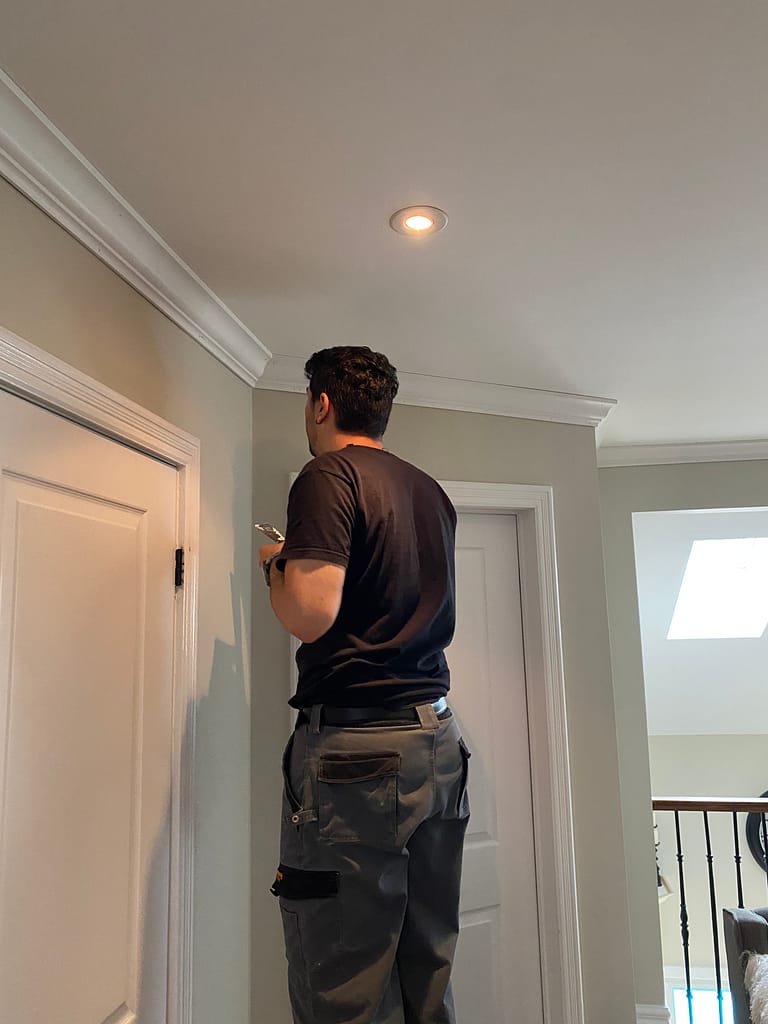
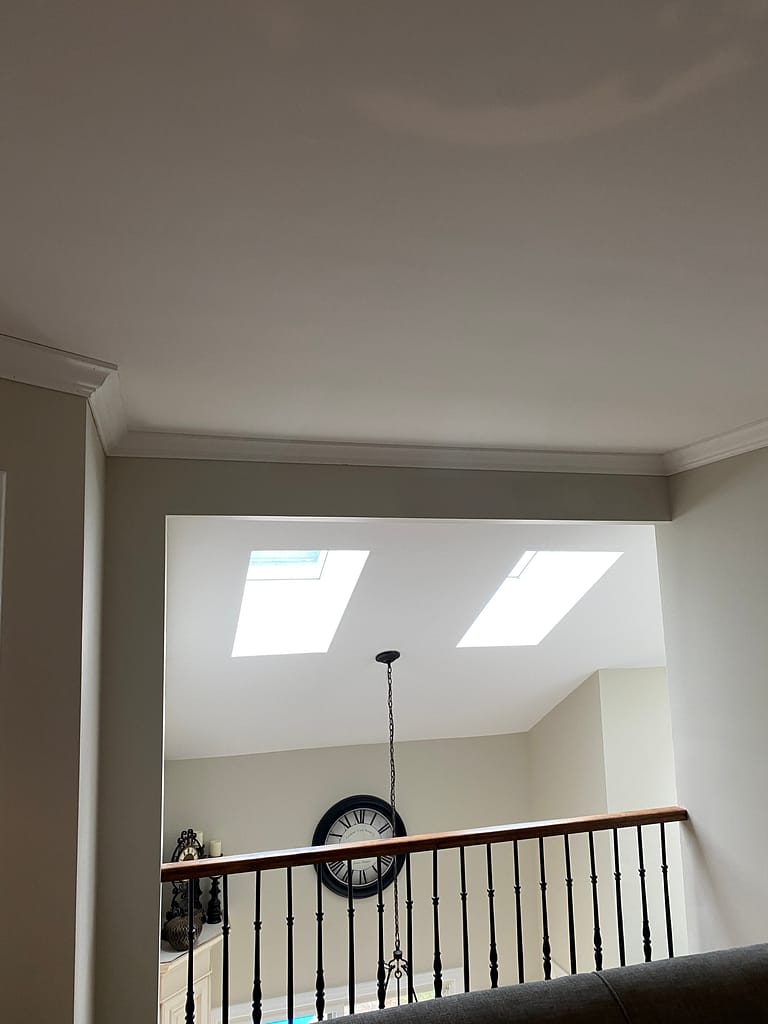
The second phase focused on crown moulding installation on the second floor.
This is a good example of how finish carpentry often happens in stages. A homeowner may start with doors, then casing, then crown moulding, then other details as the home becomes more refined room by room.
You can read the full project story here:
Planning Crown Moulding for Your Home
Before choosing MDF or wood crown moulding, it helps to look at the room carefully.
Useful questions include:
- Will the crown be painted or stained?
- Is the room dry and stable?
- How tall is the ceiling?
- Is the room modern, traditional, or transitional?
- Does the crown need to match existing trim?
- Are the walls and ceilings reasonably straight?
- Is the room empty, occupied, or under renovation?
- Will painting be handled before or after installation?
These questions help avoid choosing a material that looks good in theory but does not fit the real project.
What Should You Send for an Estimate?
If you are planning crown moulding installation, clear photos are the best starting point.
Send photos of the full room, ceiling lines, corners, existing trim, doors, windows, and any areas where the wall or ceiling looks uneven.
Approximate room dimensions are also helpful.
If you already have a profile in mind, send a photo or supplier link. If you are not sure whether MDF or wood makes sense, Wood Job can review the room and explain which option may be more practical.
Please include your project city and a short description of what you want done.
Owner-Led Crown Moulding and Fine Trim Installation
Wood Job Finish Carpentry is owner-led by Jack Cenk Ozer.
That matters with crown moulding because small decisions affect the finished look. The profile, corners, wall lines, ceiling conditions, joints, nail placement, caulking, and paint stage all have to be handled carefully.
The goal is not to make the room look overdone.
The goal is to make the room feel more complete.
For more information about this service, visit our Crown Molding & Fine Trim page.
MDF and Wood Crown Moulding Questions
Is MDF or wood better for crown moulding?
It depends on the room and the finish. MDF is often a practical choice for painted crown moulding in normal dry interior rooms. Wood is usually better when the homeowner wants a stained finish, natural grain, historic matching, or a specific wood profile.
Is MDF crown moulding good for Ontario homes?
Yes, MDF can be a good option for many Ontario homes, especially for painted interior crown moulding. It is smooth, consistent, and practical in dry rooms. It should not be used where direct moisture or water exposure is a concern.
Can MDF crown moulding be stained?
No. MDF is not a good choice for stained trim because it does not have natural wood grain. MDF is normally used for painted trim.
Is wood crown moulding worth the extra cost?
It can be worth it when the project needs real wood grain, a stained finish, a historic match, a custom profile, or a specific material quality. For many painted rooms, MDF may give the desired look at a more practical material cost.
Does MDF crown moulding crack less than wood?
MDF is often more stable than solid wood for painted interior trim, but no material can guarantee that joints will never crack or move. Installation quality, room conditions, humidity, caulking, painting, and seasonal movement all affect the final result.
Can crown moulding be installed on uneven ceilings?
Often, yes, but uneven ceilings make the installation more difficult. The crown profile, layout, corners, caulking, and finishing need to be handled carefully so the final result looks clean without exaggerating the uneven ceiling line.
Should I choose the crown moulding material before getting an estimate?
Not necessarily. It is better to start with photos, room dimensions, ceiling height, finish goal, and existing trim style. From there, the right material can be discussed based on the actual room.




