
Is wood always better than MDF for interior trim?
Not necessarily.
Poplar is stronger and easier to repair. Finger-jointed pine is lighter and more resistant to everyday impact than MDF. MDF provides a smooth paint surface and consistent moulding profiles at a lower cost.
Each material also has weaknesses.
MDF does not handle water or damaged edges well. Finger-jointed pine can vary considerably in straightness and manufacturing quality. Poplar costs more and, like any natural wood, responds to changes in moisture.
The right material depends on where the trim will be installed, how it will be finished and what it will be expected to withstand.
As a finish carpenter, I also look beyond how the material appears in a showroom. I have to consider how straight it is, how it cuts, how the mitres come together, how much dust it creates, what happens near water and whether the trim can be repaired several years later.
Those practical differences matter more than the simple label of “real wood” or “engineered wood.”
★★★★★
76 Google Reviews.
Earned One Job at a Time.
Real projects. Real homes. Real customers.
Wood Job Finish Carpentry is trusted by homeowners, contractors, designers, and realtors who care about clean work, careful details, direct communication and finish carpentry that is handled with personal responsibility.
The Three Common Paint-Grade Trim Materials
For painted baseboards, door casing and interior window trim, homeowners will commonly encounter three options:
- Primed MDF
- Primed finger-jointed pine
- Solid poplar
Finger-jointed pine and poplar are both wood products, but they should not be treated as equivalent materials.
Finger-jointed pine is manufactured by joining shorter pieces of pine to create longer trim boards. The process removes many large knots and makes efficient use of the lumber. Quality can vary, however, depending on the lumber, the finger joints and the manufacturing process.
Poplar is a solid hardwood widely used for paint-grade millwork. It is stronger and more repairable than MDF, but it is generally the most expensive of the three.
MDF is made from wood fibres combined with resin under heat and pressure. It has no natural grain, knots or finger joints. That gives it a uniform surface and consistent profile, but it also creates different limitations around water, impact and dust.
Where MDF Performs Well
MDF has legitimate advantages for painted decorative trim in normal, dry interior rooms.
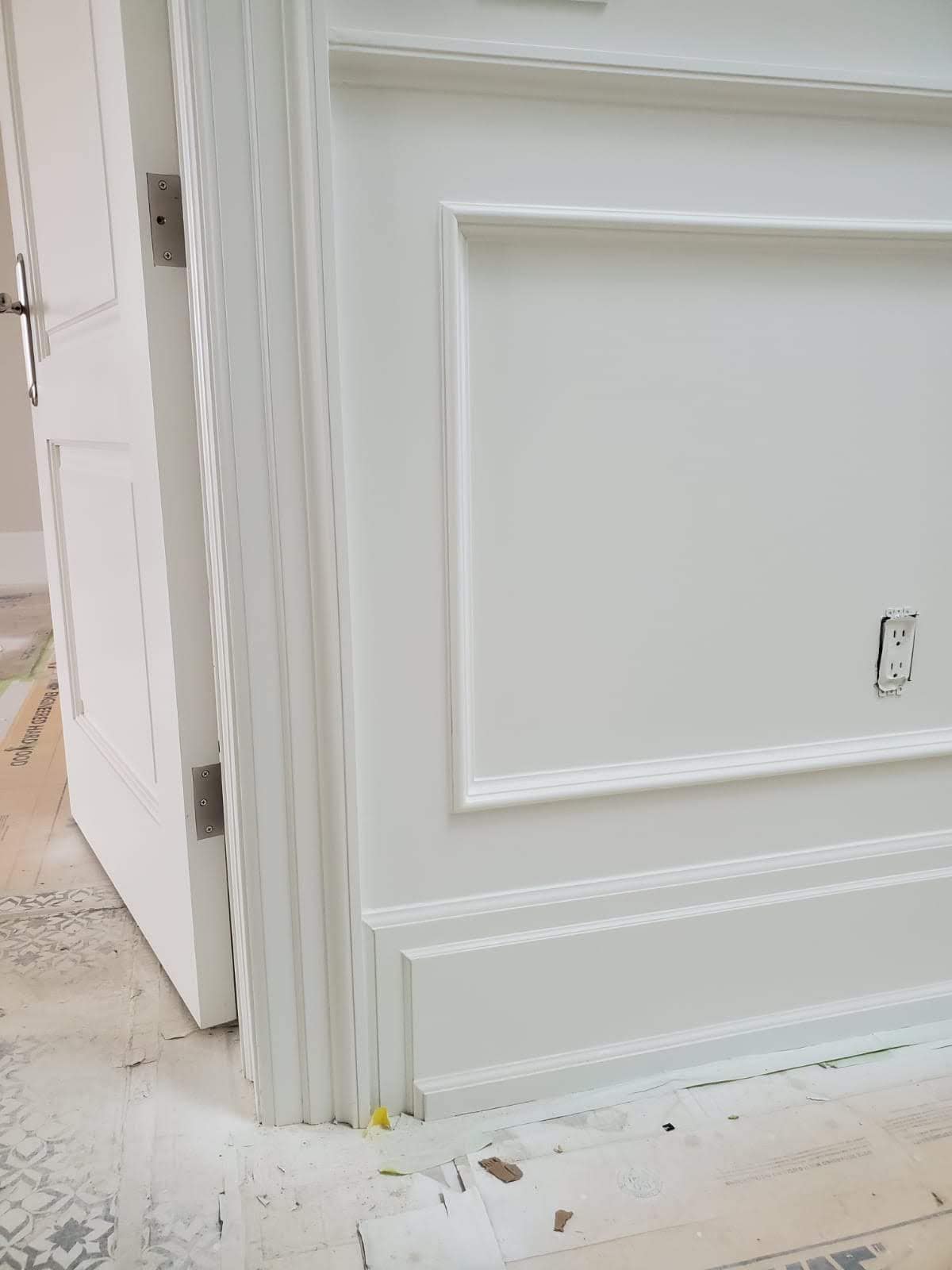
Its smooth surface takes paint well. Profiles are generally consistent from one length to the next, and there are no knots or changes in grain density. This can help when several doors and windows need the same casing detail or when a more elaborate moulding profile must remain visually consistent throughout the house.
MDF is also usually less expensive than poplar. On a whole-home trim package, that difference can be substantial.
For these reasons, MDF can be a reasonable choice for:
- Bedroom and hallway baseboards
- Door casing in dry interior rooms
- Wall-mounted window casing
- Applied wall moulding
- Wainscoting and decorative panel details
- Paint-grade trim packages where consistency and budget are priorities
MDF should not be dismissed simply because it is engineered. In the right environment, it can produce clean and consistent painted trim.
However, those advantages do not make it suitable for every part of the home.
The Main Weaknesses of MDF
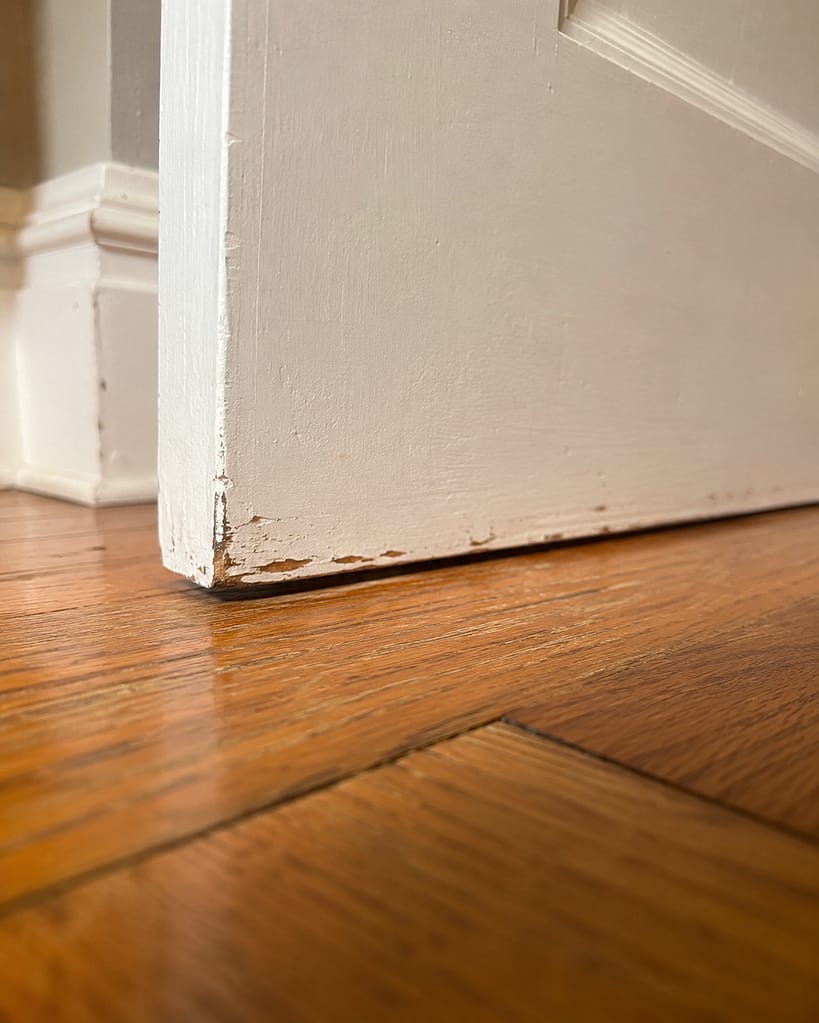
MDF’s biggest practical weaknesses are moisture, edge damage, repairability and the dust produced during machining.
If water reaches an unsealed cut edge or damaged section, the fibres can swell. Once that happens, the material may not return to its original shape after it dries. The bottom of an MDF baseboard can become raised or distorted, and a damaged corner can be difficult to rebuild cleanly.
MDF is also relatively dense but brittle. It does not tolerate sharp impacts in the same way that solid wood does. Outside corners, exposed casing edges and baseboards in busy circulation areas can chip or crush.
Small nail holes are easy to fill, but a badly damaged MDF profile is often harder to repair than wood. In some cases, replacing the affected length is the cleaner solution.
I would therefore be cautious about using standard MDF in:
- Bathrooms where the floor regularly becomes wet
- Laundry rooms with a meaningful water risk
- Damp or unfinished basements
- Garages or uncontrolled interior environments
- Window stools that may receive condensation or plant water
- Trim immediately beside tubs or showers
- Exterior door areas where water can reach the bottom of the casing
- Exposed outside corners likely to receive repeated impact
Moisture-resistant MDF products do exist, but “moisture-resistant” does not mean waterproof. The exact product and installation location still matter.
Window Casing and Window Stools Are Different Decisions
The term “window trim” can hide an important distinction.
Casing installed vertically on the wall around an interior window may remain completely dry. In that position, MDF can work well as a paint-grade material.
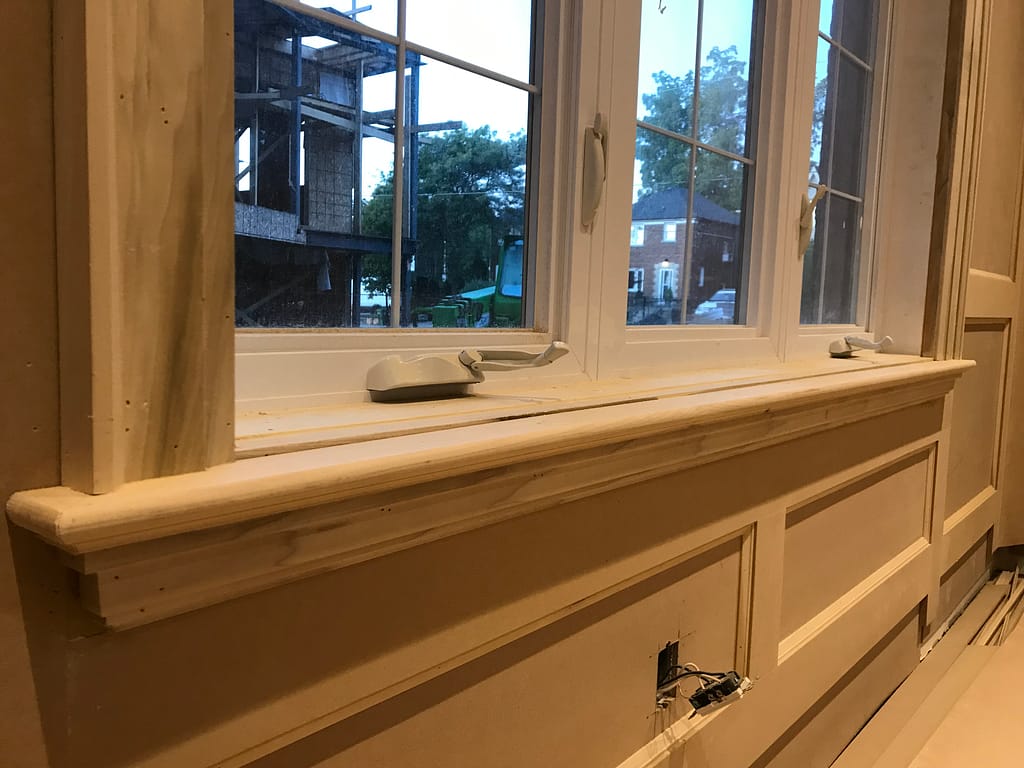
The stool or sill at the bottom of the window faces different conditions. It may collect condensation, water from plants or moisture from cleaning. It can also be touched, leaned on and damaged more easily.
For that reason, I am more comfortable using poplar or another appropriate moisture-tolerant product for a window stool, even when the surrounding casing is MDF.
Material choice is not always one decision for the entire opening. Different parts can require different materials.
The width and profile also need to suit the available wall space. My guide to choosing the width of door and window casing explains how ceiling height, baseboards, wall panels and basement conditions affect that decision.
Where Finger-Jointed Pine Makes Sense
Finger-jointed pine provides some of the mechanical advantages of wood without the full cost of clear poplar.
It is generally lighter than MDF, easier to carry and more tolerant of moderate impact. Nails and screws hold in real wood fibres, and small dents or damaged edges can often be sanded, filled or repaired more successfully than MDF.
It can be a practical choice for:
- Baseboards in active family spaces
- Door and window casing
- Trim near moderately exposed areas
- Long lengths that need to remain manageable on site
- Paint-grade projects where wood is preferred but poplar is outside the budget
The limitation is consistency.
One piece may be straight and clean while the next has a slight bow or twist. Density can change across the individual sections used to manufacture the board. Finger joints may occasionally show through the paint or become more visible with time.
A mitre that lands directly on or very close to a finger joint can also be weaker or more prone to breaking during cutting.
A good finger-jointed pine product can perform very well. A poor one can create more fitting and finishing problems than a consistent MDF profile. The quality of the actual material should be inspected rather than assumed from the product name.
Where Poplar Is the Strongest Choice
Among these three options, poplar is generally the strongest and most repairable paint-grade material.
It handles fasteners well, tolerates impact better than MDF and can be sanded or repaired if it is damaged. It is also well suited to custom millwork because it can be shaped, routed, scribed and joined using traditional woodworking methods.
Poplar is particularly useful for:
- Window stools and sills
- Door and window casing exposed to impact
- Outside corners
- Custom jamb extensions
- Custom millwork and built-up trim details
- Scribed pieces
- Thin or delicate profiles
- Areas where future repairability matters
- Trim that may receive occasional moisture
Its disadvantages are cost and natural wood movement.
Poplar exchanges moisture with the surrounding air. If it is installed before it has adjusted to the home—or while construction humidity is unusually high—it may shrink, bow or move after installation.
The USDA’s Wood Handbook guidance on moisture and dimensional movement explains why wood changes dimension as its moisture content changes. Paint slows this exchange but does not stop it completely.
For important poplar trim work, board selection, acclimatization and installation technique are part of the material decision.
What About Door Jambs?
Decorative casing and a working door jamb do not perform the same job.
A jamb holds hinges, strike plates and fasteners. With a solid-core door, the hinge side repeatedly carries significant weight and leverage. The bottom of the jamb may also be exposed to cleaning water or moisture from the floor.
Although manufactured composite jamb systems are available, I would not treat a standard MDF moulding board as interchangeable with a quality wood jamb.
For door jambs and other parts that must hold hardware, poplar or a suitable finger-jointed wood product is generally the more defensible choice.
MDF can frame the opening as casing. That does not automatically make it the right material to carry the door.
Homeowners planning a broader trim project can see how jambs, casing, baseboards and window details relate on Wood Job’s baseboard, casing and interior trim service page.
Which Material Produces Better Mitres?
No material guarantees a permanently closed mitre.
MDF’s uniform density and profile can make it predictable to cut and align. It does not have grain direction or finger joints, and carefully cut surfaces usually meet consistently.
Wood mitres can be extremely strong, but they demand more from the material selection and installation process. The boards should be straight, acclimatized and similar in thickness. The actual corner angle must be checked instead of assuming every corner is exactly 90 degrees.
For poplar or finger-jointed pine, I prefer quality wood glue as the main long-term bond. CA glue can help hold the pieces quickly while the assembly is positioned, but I would not rely on a brittle instant adhesive as the only long-term connection in a solid-wood mitre.
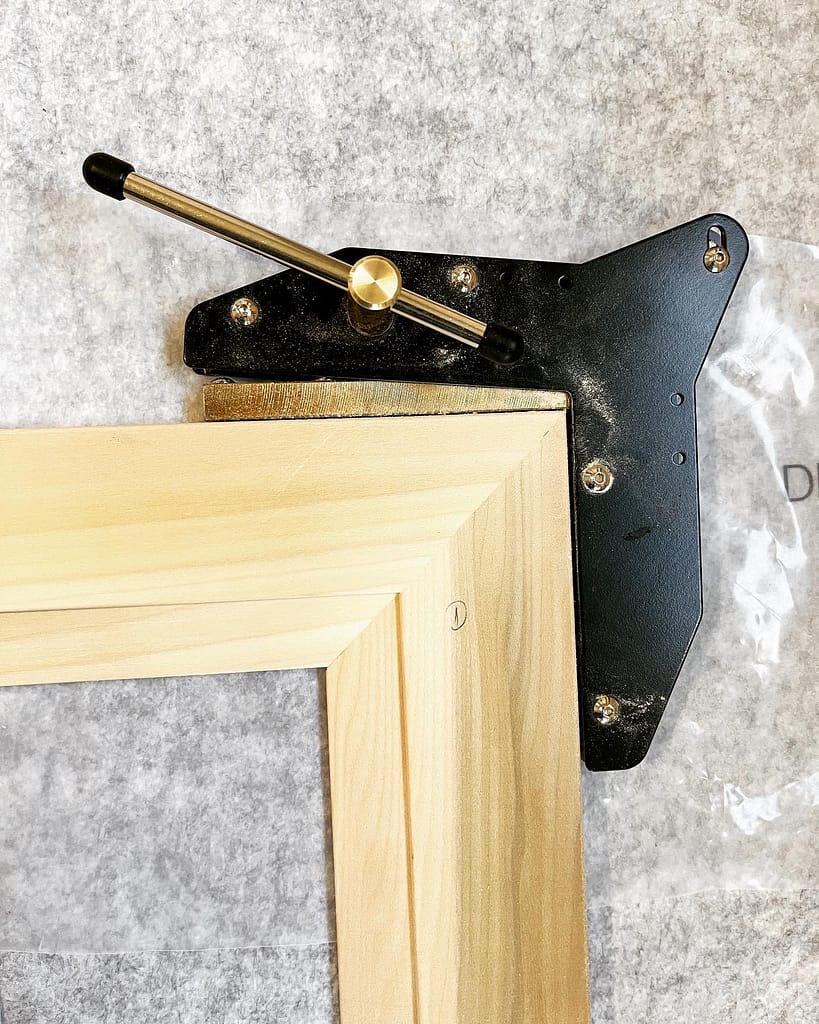
Where possible, door and window casing can be assembled before installation so the mitres are glued, aligned and held flat. The assembly must then fit the opening without the wall or jamb forcing the joint apart.
Baseboard inside corners are another matter. Profiled wood baseboard is often more reliable when one piece is coped over the other rather than joining two 45-degree mitres. Outside corners still require an accurately measured, glued and fitted mitre.
Even the best material will not compensate for an incorrect angle, an uneven wall or a casing assembly forced into a twisted opening.
Is MDF Unsafe to Have in a Home?
This question needs a measured answer.
Some MDF products use resins that can release formaldehyde. Canada’s Formaldehyde Emissions from Composite Wood Products Regulations establish testing, certification and emission requirements for MDF and other regulated composite wood products sold or imported in Canada.
That regulation does not mean MDF is chemical-free. It means compliant products must remain within established emission limits.
There is also an important difference between living with finished, painted trim and being the carpenter who cuts, routes and sands MDF repeatedly.
Machining MDF creates a large amount of fine dust. Wood dust exposure is associated with irritation of the eyes, nose and throat, dermatitis and respiratory effects. The Canadian Centre for Occupational Health and Safety provides a useful overview of these risks.
From the installer’s perspective, dust is not a minor footnote.
Effective extraction at the saw, a properly selected respirator, eye protection, ventilation and cleaning methods that do not throw settled dust back into the air all matter. Skin irritation or recurring respiratory symptoms should not simply be accepted as part of the trade.
For a homeowner, the practical questions are:
- Is the product compliant with Canadian requirements?
- Will most cutting be controlled or completed outside the living area?
- Will cut edges be properly sealed and painted?
- Will the home be ventilated during installation and painting?
- Is a low-emitting or no-added-formaldehyde product available?
Health and worksite exposure can reasonably influence the material choice even when MDF would otherwise be suitable for the finished application.
MDF, Finger-Jointed Pine or Poplar: Which Should You Choose?
There is no single material that wins every category.
Choose MDF when:
- The space is dry and climate-controlled.
- The trim will be painted.
- Consistent profiles and a smooth finish are priorities.
- The trim is mainly decorative.
- Budget matters across a large trim package.
- Water and repeated impact are unlikely.
Choose finger-jointed pine when:
- You want a paint-grade wood product at a moderate price.
- Greater impact resistance and repairability are useful.
- The available boards are straight and well manufactured.
- The trim may need stronger nail or screw holding than MDF.
- You are prepared to inspect individual pieces and finger joints.
Choose poplar when:
- Strength and repairability matter.
- The trim may receive impact or occasional moisture.
- The work includes window stools, custom millwork or scribed components.
- Fasteners must hold securely in the material.
- The budget allows for better paint-grade wood.
- Proper acclimatization and board selection can be managed.
A home does not necessarily need one material everywhere.
MDF casing may be suitable in bedrooms while poplar is used for window stools. Finger-jointed pine baseboard may make sense in a busy hallway. Wood jambs can carry the doors even when decorative MDF casing surrounds the openings.
The best trim package often comes from choosing each material according to its actual job.
My Approach as a Finish Carpenter
I do not think homeowners should pay more for wood simply because it sounds more valuable. I also do not think MDF should be selected automatically because it is straight, smooth and economical.
I look at the room first.
Is there a water risk? Will the trim receive impact? Is the profile detailed or simple? Does the material need to hold hardware? Are the available wood boards straight? How will the mitres be assembled? What will happen at the window stool, floor and door jamb?
These questions usually lead to a more reliable decision than choosing one material for the entire house.
Wood Job handles one-room trim updates and complete door, casing, baseboard and window-trim packages. Real projects also reveal conditions that product samples cannot show: uneven plaster, drywall humps, unlevel floors and openings that require jamb extensions or careful fitting. The article on installing doors and trim on uneven plaster walls shows why the condition behind the trim can matter as much as the material itself.
If you are planning new baseboards, casing or window trim, photos of the rooms, openings and existing conditions are usually enough to begin discussing suitable materials and the likely scope of the installation.
Frequently Asked Questions
Is poplar better than MDF for baseboards?
Poplar is stronger, more impact-resistant and easier to repair. MDF is smoother, more consistent and usually less expensive. Poplar may be the better choice in active or moisture-prone areas, while MDF can remain practical in dry rooms where the baseboard will be painted.
Does MDF baseboard swell if it gets wet?
Standard MDF can absorb water through cut edges, nail holes or damaged surfaces. The fibres may swell and may not return completely to their original shape after drying. Sealing and painting help, but they do not make standard MDF waterproof.
Is finger-jointed pine better than MDF?
It depends on the product and location. Finger-jointed pine generally handles impact and fasteners better than MDF, but its straightness and joint quality can vary. MDF offers more consistent profiles and a smoother paint surface but is weaker around water and damaged edges.
What is the best material for a window stool?
Poplar or another suitable moisture-tolerant material is generally safer than standard MDF. Window stools can receive condensation, plant water and physical contact even when the casing around the rest of the window remains dry.
Can MDF be used for door casing?
Yes. MDF can work well for painted door casing in dry interior rooms. The casing is decorative and covers the transition between the jamb and wall. The jamb itself performs a different mechanical job and is generally better made from a suitable wood product.
Will wood mitres open over time?
They can if the wood was installed at the wrong moisture content, the boards were not acclimatized, the joint was poorly fitted or the surrounding wall forces the assembly out of alignment. Accurate angles, full surface contact, proper wood glue and careful fastening improve long-term performance.
Is MDF dust more important than formaldehyde in finished trim?
For the carpenter cutting and sanding MDF, airborne dust is a major occupational concern. For the homeowner, finished and painted trim represents a different exposure condition. Both product emissions and installation dust deserve attention, but they should not be treated as the same situation.
Can different trim materials be used in the same house?
Yes. Material can be selected by location. A project might use MDF casing in dry bedrooms, finger-jointed pine baseboards in active spaces, poplar window stools and wood door jambs. Consistent profiles and proper paint preparation can help the finished trim still look unified.




