Stepping into a newly constructed custom estate or a master-planned subdivision home across Southern Ontario is initially a pristine visual experience. The walls are freshly painted, the floors are immaculate, and everything appears structurally perfect.
Yet, within twelve to twenty-four months of taking possession, subtle but deeply frustrating mechanical and visual failures begin to manifest throughout the interior architecture. You notice a heavy bedroom door that suddenly requires a firm push to latch, an upstairs bathroom door that scrapes against its frame, or wide, dark gaps opening up at the mitered corners of your baseboards and window casings.
These defects are rarely a random stroke of bad luck. Instead, they are the predictable, compounding outcome of two powerful forces: natural structural timber settlement and the rushed, high-volume operational tactics deployed by mass-production trim crews.

The Structural Science of the New Home Settlement Cycle
To understand why your interior finishes are failing, you must first understand the intense physical changes occurring behind your freshly finished drywall. When a new home is framed, thousands of board feet of dimensional lumber are exposed to the unpredictable Canadian elements, absorbing heavy atmospheric moisture during construction.
Once the structural shell is enclosed, insulated, and hooked up to modern HVAC systems, that framing timber begins an aggressive structural drying sequence. As the internal moisture content of the wood drops over the first few heating seasons, the entire wood skeleton of the house naturally shrinks, shifts, and compresses under its own immense weight.
According to structural timber installation metrics established by The National Wood Flooring Association (NWFA), natural timber volumetric shrinkage is completely inevitable as building materials acclimate to a home’s permanent microclimate. As your floor joists, wall studs, and header timbers compress, the rough geometric openings holding your interior doors and finish trim are squeezed and twisted out of their original alignment.
How Mass-Production Trim Crews Program Failures Into Your Woodwork
Natural structural settlement is a tough hurdle on its own, but it becomes a disaster when combined with the cutting of corners by high-volume subdivision subcontractors. In modern subdivision construction, piece-rate trim installers are paid by the volume of units they complete in a single day, forcing them to prioritize speed over long-term structural integrity.
[ Rushed Framing ] ➔ Timber retains high moisture and warps during drying.
│
▼
[ Production Trim ] ➔ Cheap hollow doors hung with short, weak fasteners.
│
▼
[ Standard Settlement ] ➔ Frame shifts, weak hinges sag, and door binds.
This breakneck pace forces production crews to rely on three specific, low-cost shortcuts that actively doom your finish woodwork:
1. The Critical Hinge Fastener Shortage
Standard pre-hung interior door kits are delivered to job sites with short, half-inch screws securing the hinges to the soft pine or MDF jamb material. High-volume installers carry these assemblies straight to the wall openings, shoot pneumatic finishing nails through the casing to anchor the frame, and move on.
Because they omit the mandatory step of running long, heavy-duty structural screws completely through the top hinge into the solid double-stud framing behind the drywall, there is absolutely no resistance against leverage. When the framing shifts even a single millimeter during settlement, gravity acts on the unanchored frame, causing the entire door assembly to sag forward and bind against the strike side of the jamb.
2. Omission of Non-Compressible Shims
To true up an interior door jamb properly, a professional craftsman must place dense, flat, non-compressible timber shims directly behind every single hinge and latch point, filling the void between the finished frame and the raw structural studs. Production crews frequently bypass this time-consuming balancing act entirely.
Instead of building a solid structural foundation with shims, they simply rely on the shear strength of thin, un-shimmed 18-gauge finishing nails shot blindly through the wood. When seasonal humidity fluctuations stretch the timber, these tiny wire pins effortlessly bend and pull loose, allowing the door frames to twist permanently out of square.
3. Surface-Nailed Miter Joints
If you look closely at a cracking, separating miter joint on a modern bevel-step or classic casing, you are looking at a joint that was nailed piece-by-piece directly to the wall. Drywall is inherently wavy, and studs are rarely flat.
When an installer nails individual trim segments to a distorted wall surface, they are forcing the wood fibers to bend and twist. As the ambient house air dries during the winter, the tension causes the un-glued, surface-nailed miter joints to snap apart under structural stress, leaving ugly gaps that caulk cannot permanently seal.
The Wood Job Method: Correcting Builder Failures Permanently
At Wood Job Finish Carpentry, led by hands-on master craftsman Cenk Jack Ozer, we refuse to execute temporary cosmetics or cover up serious alignment issues with thick beads of painter’s caulk. True finish carpentry is an architectural discipline deeply rooted in absolute precision, requiring advanced engineering practices to overcome the realities of new home settlement.
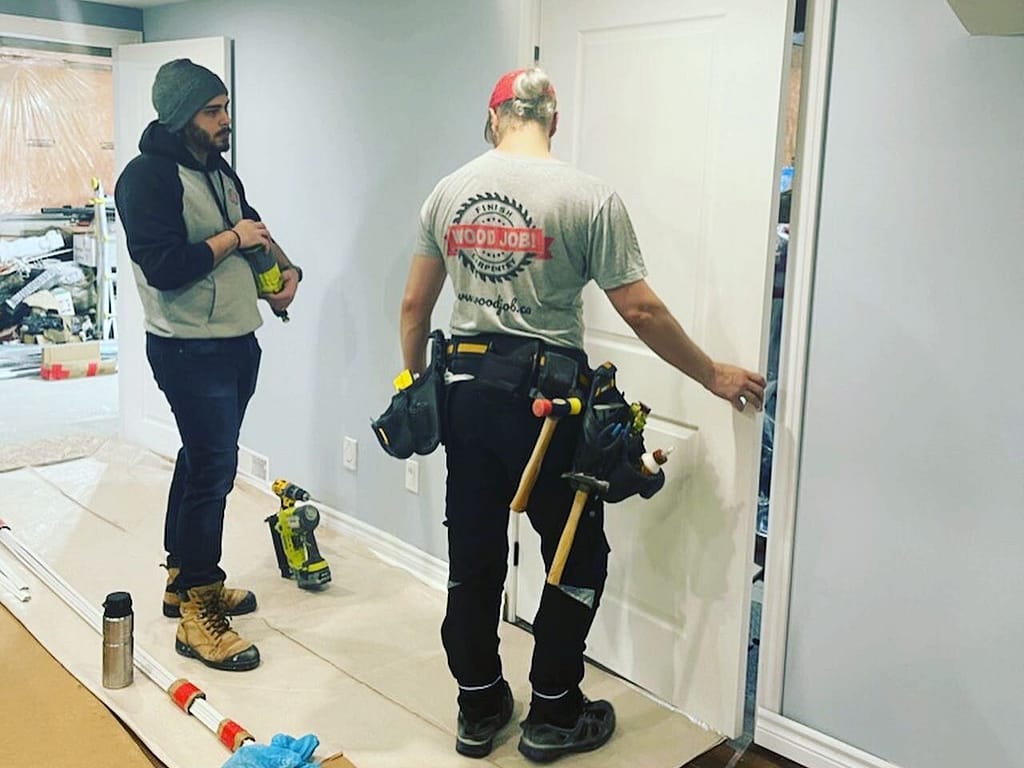
When called to rectify finish carpentry problems we fix across Southern Ontario, we deploy high-precision cross-line laser levels to accurately chart the real-world vertical and horizontal plumb lines of your shifted openings. We carefully extract the failing builder fasteners and dismantle the distorted casings without damaging your existing drywall.
We rebuild the structural integrity of your doors and trim using a strict three-phase restoration layout:
- Deep Structural Anchoring: We install heavy-duty structural screws hidden directly behind the hinge plates, anchoring the weight of the slab directly into the core framing of the house.
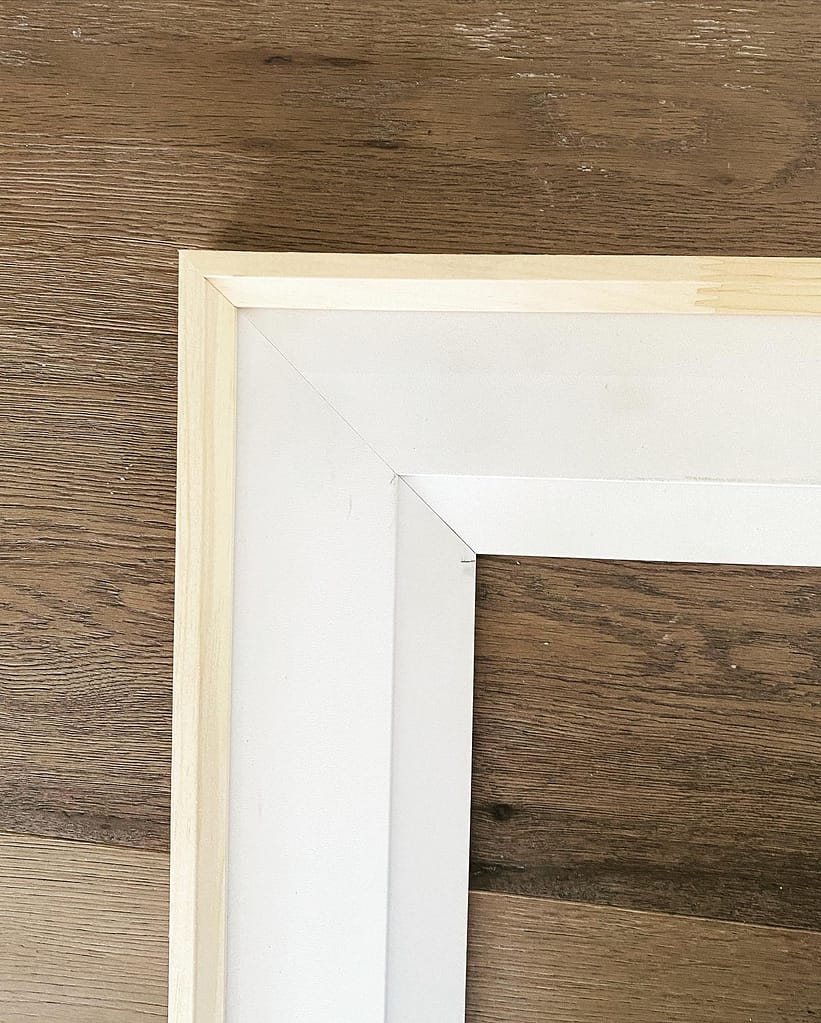
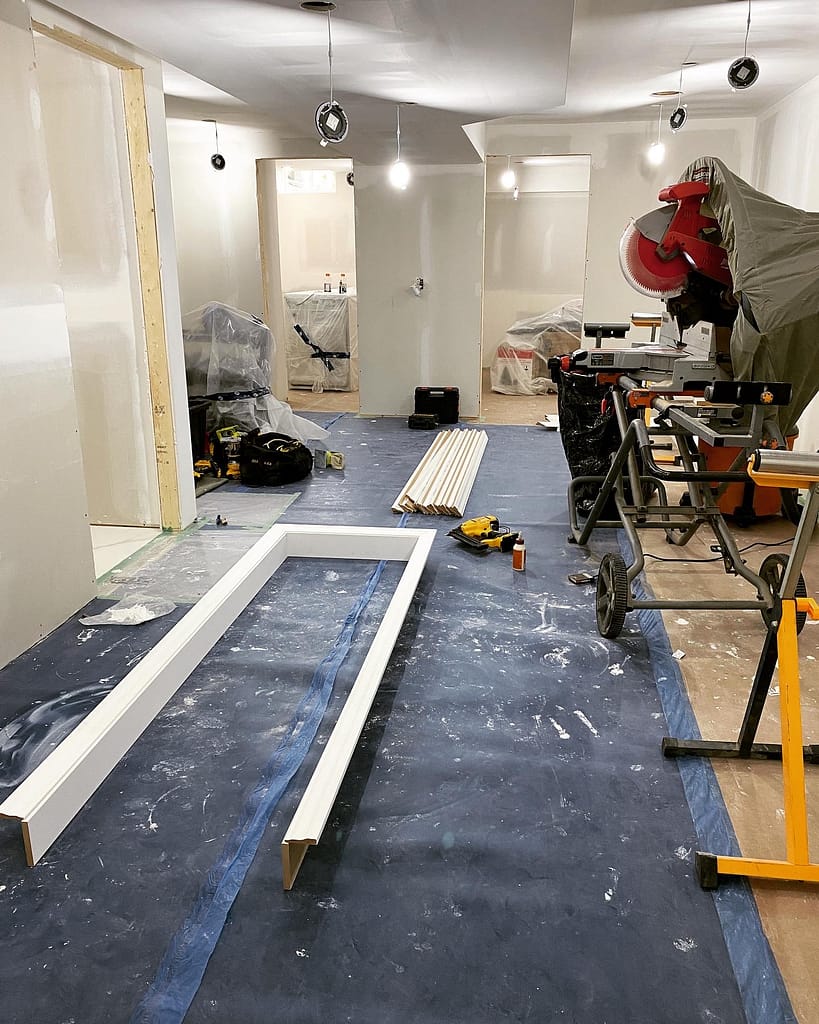
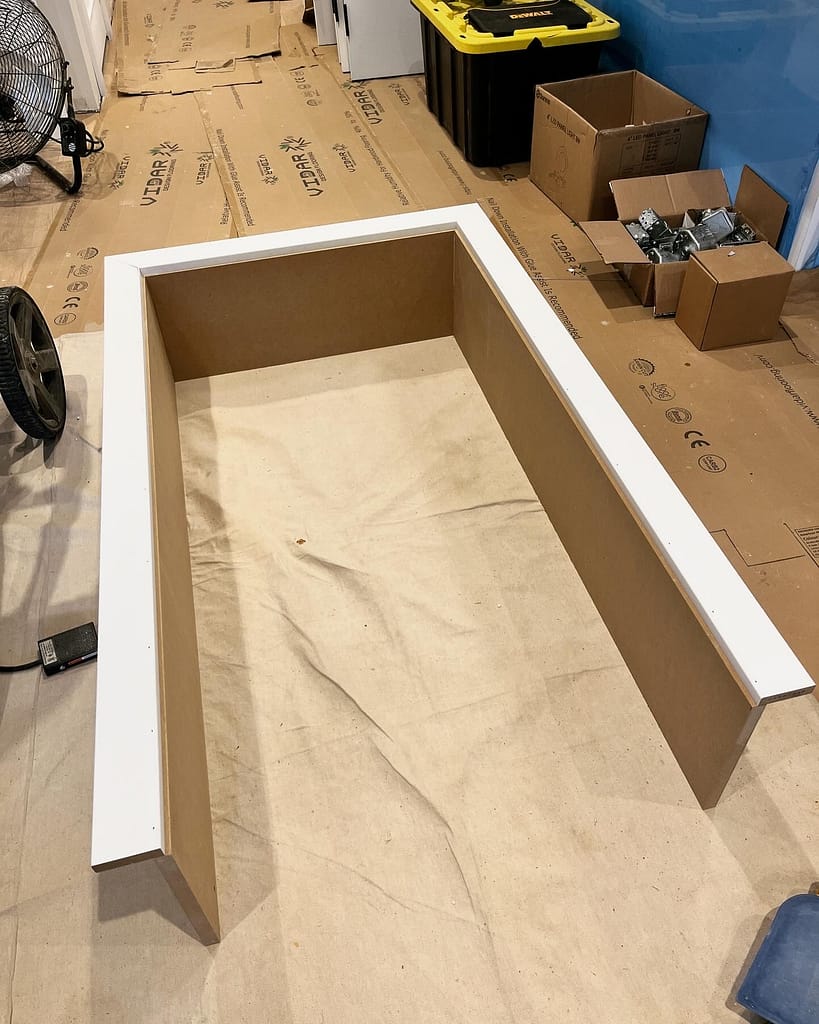
- Pre-Assembled Joint Engineering: To guarantee that your modern geometric profiles maintain micro-tight wood-to-wood contact through intense humidity shifts, we pre-assemble our casings down on a perfectly flat floor plane using structural biscuits and specialized micro-pins before they ever touch the wall.
- Scribed Trim Integration: Where walls have bowed or concrete floor slabs have sloped during settlement, we hand-scribe and shave the back profile of the timber to trace the real-world curves of your home, ensuring completely consistent shadow lines across your space.

Elevating Your Asset Value with Premium Interventions
Rectifying structural errors is also the ultimate opportunity to upgrade the material substance of your daily living environment. Replacing flimsy, hollow-core builder doors with substantial, heavy solid-core shaker options completely alters the acoustic landscape and privacy of your home.
Whether you are looking to fix a few frustrating rooms or execute a complete, seamless move-in ready finish carpentry upgrade, our focus remains fixed on pristine craftsmanship and absolute job site cleanliness. We hook up high-performance mobile dust extractors directly to our shaping machinery, capturing fine wood dust right at the cutting source and leaving your living spaces immaculate.
We have built our reputation on providing a boutique, owner-led alternative to rushed production work. For architectural reference on stable material choices like premium MDF and poplar profiles designed to resist seasonal movement, you can consult design metrics published by industry leaders like Metrie.
“Jack installed 5 doors for me. It was a great experience from the very first contact. We spent time discussing and he explained well the process. During the installation, we ran into a door that was wrongly delivered to us and Jack provided some options as solutions. He is well equipped with the right tools for the job. The workmanship was superb. At end of the job, he cleaned up the space before he left. He’s organized, focussed and on time. He knows his trade and takes pride in his work. He will be an asset to your job.” — Verified Project Client, Southern Ontario Residential Restoration
Do not allow rushed subdivision shortcuts to permanently diminish the beauty, acoustic quiet, and value of your major property investment. Let’s correct the underlying geometric flaws and restore true, uncompromised structural balance to your home’s trim and doors.
👉 Request a Fixed-Rate, Itemized Restoration Estimate
Frequently Asked Questions
Can a sticky interior door frame simply be planed down without removing it?
Planing or shaving the top edge of a sticky door slab is a temporary band-aid that handymen use, but it does not fix the root structural cause. If the underlying frame is sagging because it lacks structural shims or proper anchoring, the frame will continue to drop over time, causing the door to stick again. We fix the core issue by removing the trim reveals, re-shimming the frame to a true vertical line, and anchoring it with extended structural screws.
- Review our core installation steps on our dedicated Interior Door Installation Focus Page.
Why are my baseboards pulling away from the drywall and leaving a wide gap at the top?
When a home undergoes its natural structural drying cycle, the timber studs inside the wall can twist slightly as they shrink, while the floor joists may settle downwards. If the baseboard was only pinned superficially into the soft drywall rather than into the structural floor plate and wall studs, it will separate from the wall face. We remedy this by using deep, targeted structural fasteners driven into laser-verified framing centers.
How long does it take for a new construction home to finish its primary settling cycle?
The most intense structural settling and drying typically occurs during the first two full heating cycles (roughly 18 to 24 months after the climate control systems are turned on). This is when wood moisture levels undergo their most radical shifts. If your home is past this window and displaying sticking doors or splitting trim joints, the framework has stabilized into its shifted position, making it the perfect time to execute permanent alignment corrections.
Explore all structural finish options at our Finish Trim & Moulding Hub.
Related Wood Job Pages
Why Owner-Led Finish Carpentry Matters
Before hiring a carpenter, it helps to know who will actually show up, take responsibility and handle the details inside your home.
Meet Jack Cenk Ozer
Learn more about the hands-on finish carpenter behind Wood Job Finish Carpentry and the personal craftsmanship behind the business.
Interior Door Installation
Interior doors, door replacement, hardware, hinge alignment, latch fitting, casing and clean door installation.
Finish Trim Carpentry
Door casing, window casing, baseboards, shoe moulding, trim repairs, custom jamb details and renovation finishing.
Photo-Based Rough Estimate
Send photos, measurements, project location and a short description of your small carpentry job.