
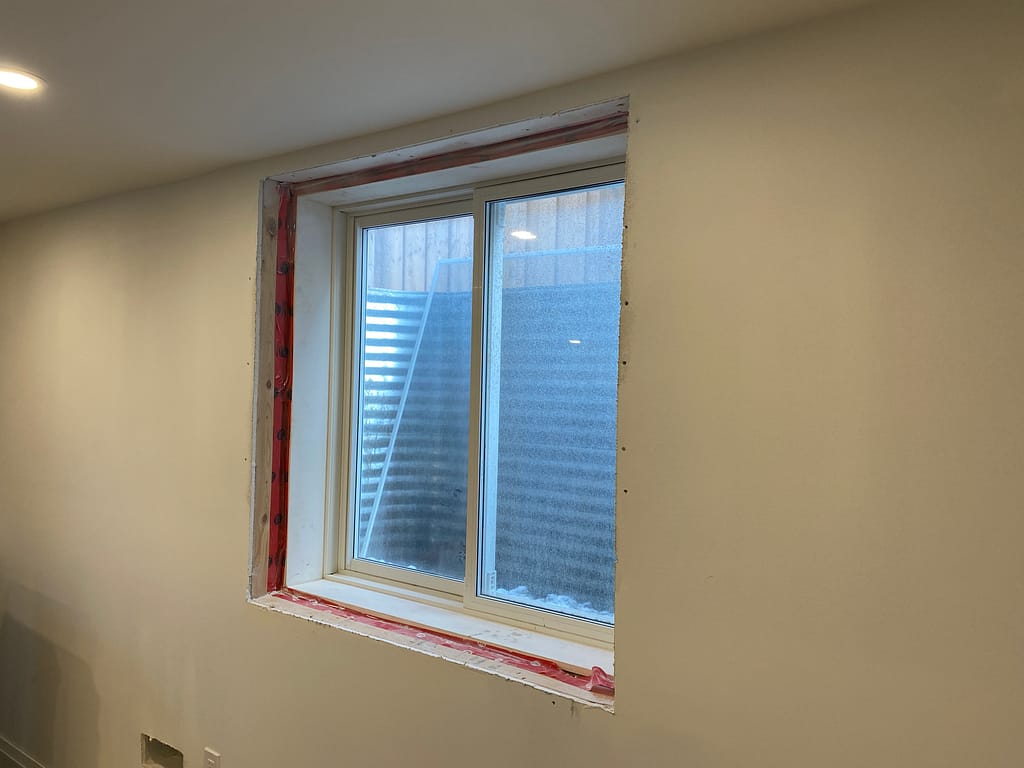
When homeowners execute a high-end basement renovation across Southern Ontario, they frequently encounter When tackling a high-end basement renovation in Southern Ontario, homeowners always run into a specific structural issue where the new drywall meets the deep exterior foundation. Upper-floor partition walls sit on uniform 2×4 or 2×6 wood framing plates, but basement window openings are cut directly through poured concrete walls that measure anywhere from eight to twelve inches thick. This structural setup leaves a deep, raw opening between the inner face of the window frame and the newly installed drywall line. Trying to bridge this deep opening with thin, off-the-shelf retail trim extensions simply does not work because the depth of the rough concrete opening changes at almost every point along the wall.
Getting a clean, flush transition requires building custom, deep-set basement window jamb extensions right on the job site to bridge that raw foundation void. For property owners investing in a premium lower-level living space, working with a specialized finish carpenter in Halton is the only reliable way to guarantee these wide wood jambs stay perfectly flat and stable over time. By skipping the fast, high-volume shortcuts typical of production crews, we make sure your lower-level window trim looks as substantial, square, and permanent as the architectural trim on your main floor.
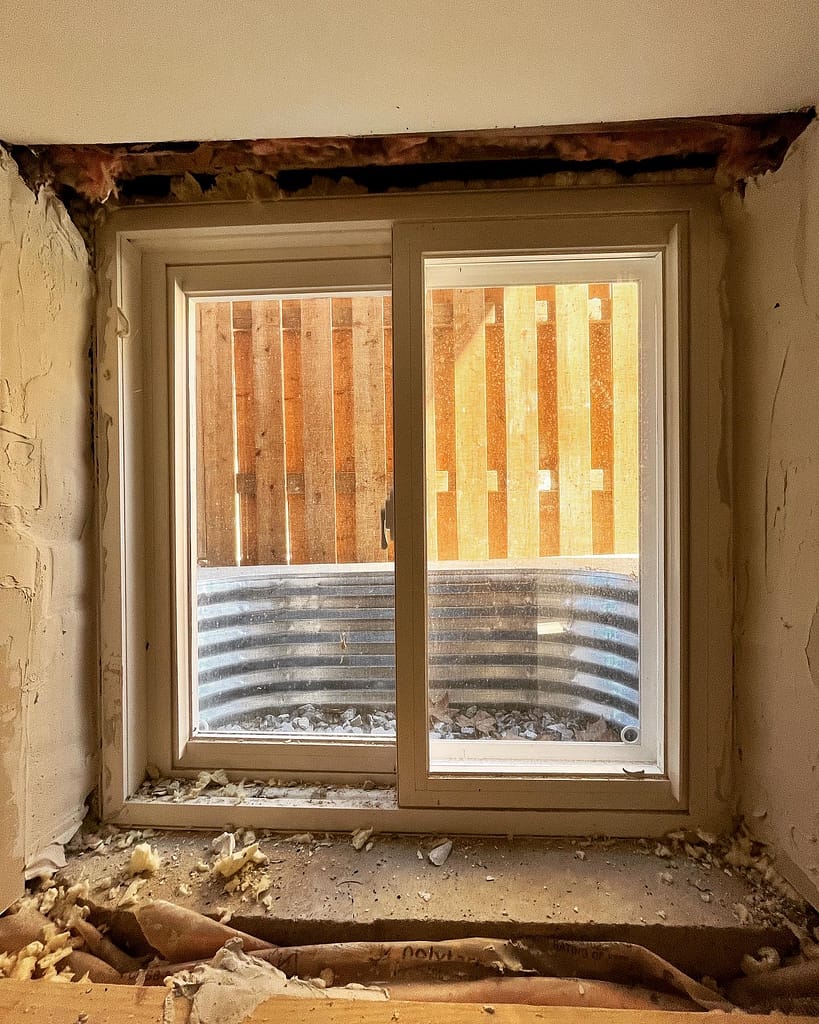
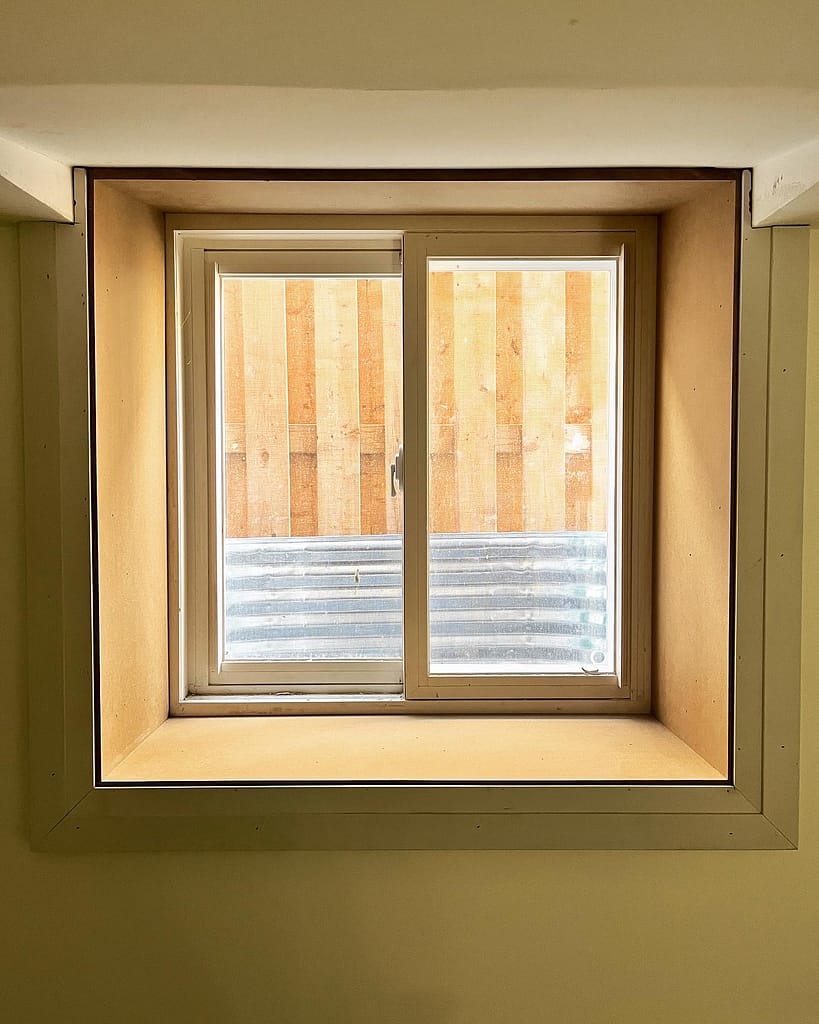
The Mechanical Failure of Short-Cut Window Trim and Tacked-On Butt Joints
Many production trim crews and high-volume general contractors cut corners on basement windows by patching narrow strips of wood together with standard brad nails. A common shortcut is simply cutting a narrow strip of wood and pinning it flat against the raw edge of the window’s manufactured vinyl or wood frame with a basic butt joint. This is a severe finish carpentry error because a flush butt joint has zero mechanical strength to resist the structural tension that occurs as a house settles over time. When the unconditioned foundation wall cools down during its first Ontario winter freeze, the movement of the framing will tear that weak joint wide open, leaving a permanent, fractured crack right through your finished paint.
Concrete foundations are highly reactive environments that absorb cold exterior temperatures and retain high levels of subsurface moisture. When generic, mass-produced wood extensions absorb this moisture, the internal stress of the wood fibers causes the material to twist, cup, and split apart at the un-reinforced seams. Within one or two seasonal cycles, a simple glued butt joint will fail completely, exposing ugly gaps and out-of-square lines right at eye level. To prevent these chronic issues, a master craftsman ignores generic extension kits and fabricates a single-piece, continuous structural extension box tailored exactly to the unique shape of that specific opening.
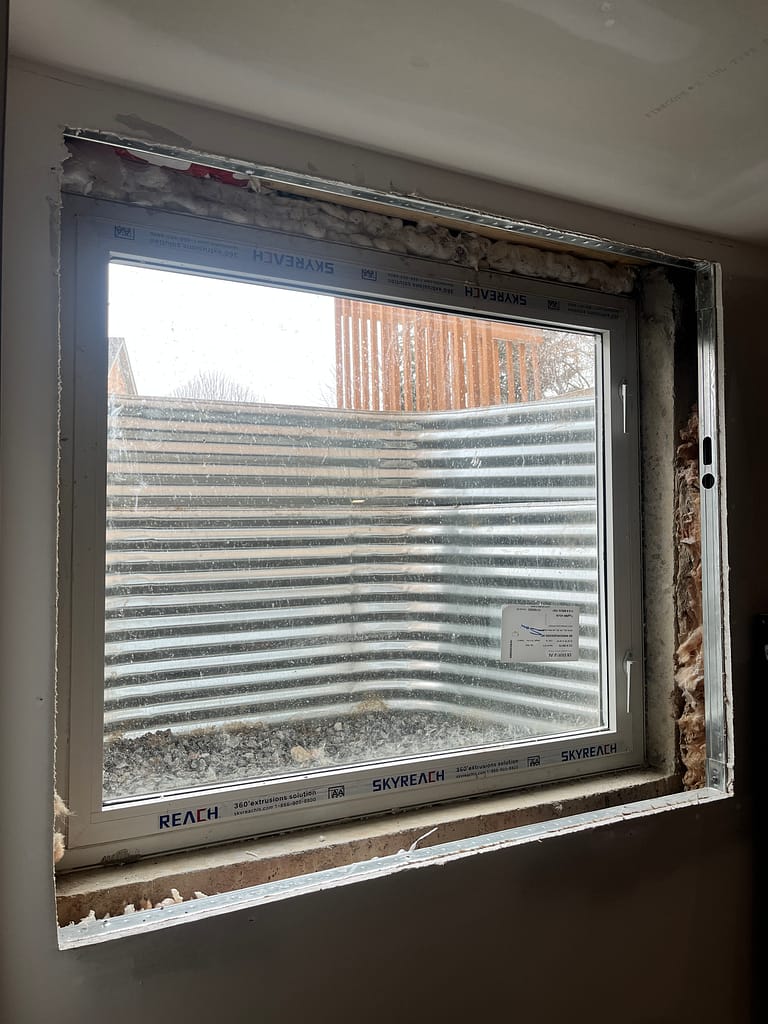
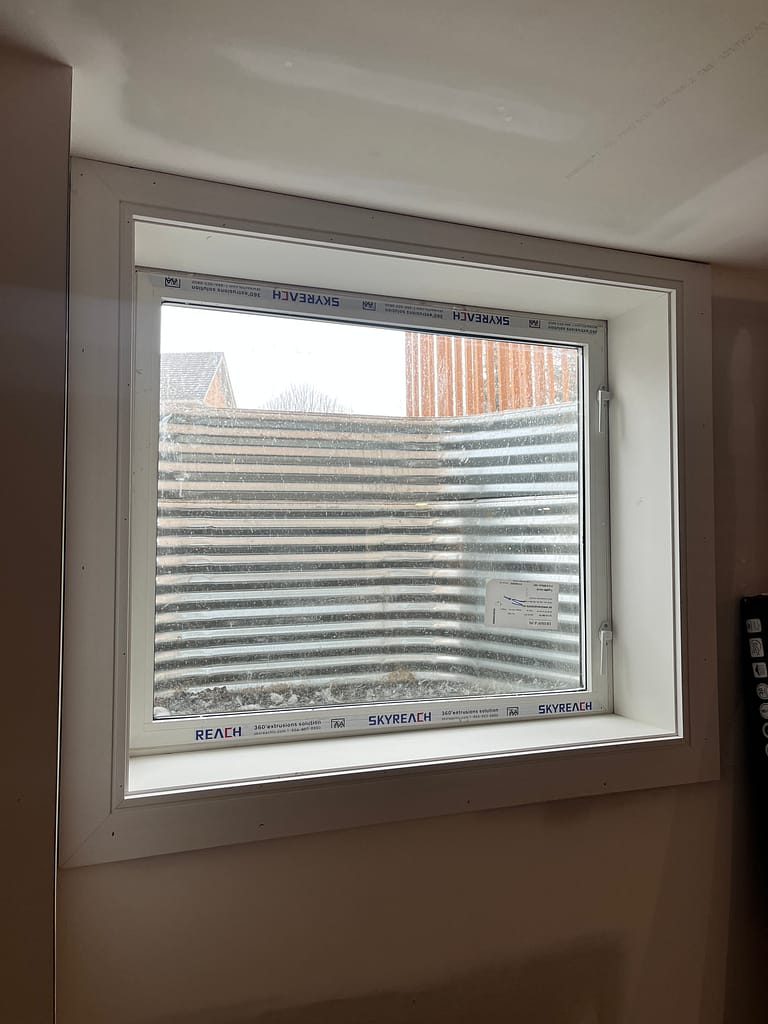
On-Site Fabrication: Milling for True Alignment and Square Reveals
To build a deep extension box capable of surviving a lifetime of local seasonal humidity shifts, we set up a dedicated mobile workshop directly on-site. We deploy professional cross-line laser levels to check the vertical plumb lines of the raw framing and verify the horizontal level of the concrete headers. Because poured concrete forms routinely bow outward or lean inward when the foundation is originally poured, we measure the depth of the window well at multiple points instead of relying on a single measurement. This thorough layout process allows us to map out a variable depth profile so the custom wood frame matches the shifting thickness of the walls perfectly.
Material selection at this stage determines whether your window trim survives long-term environmental stress or fails within a couple of seasons. High-volume crews often rely on cheap knotty pine, which twists aggressively under humidity shifts and bleeds yellow sap through finished paint, or standard MDF, which absorbs window condensation like a sponge and swells up. Instead, we source highly stable, paint-grade birch or maple plywood for deep spans, or upgrade to solid poplar and specialized moisture-resistant MDF (MR-MDF) engineered to withstand cold, damp foundation pockets. These premium material choices match the strict structural integrity and tolerances demanded by the Architectural Woodwork Institute Standards.
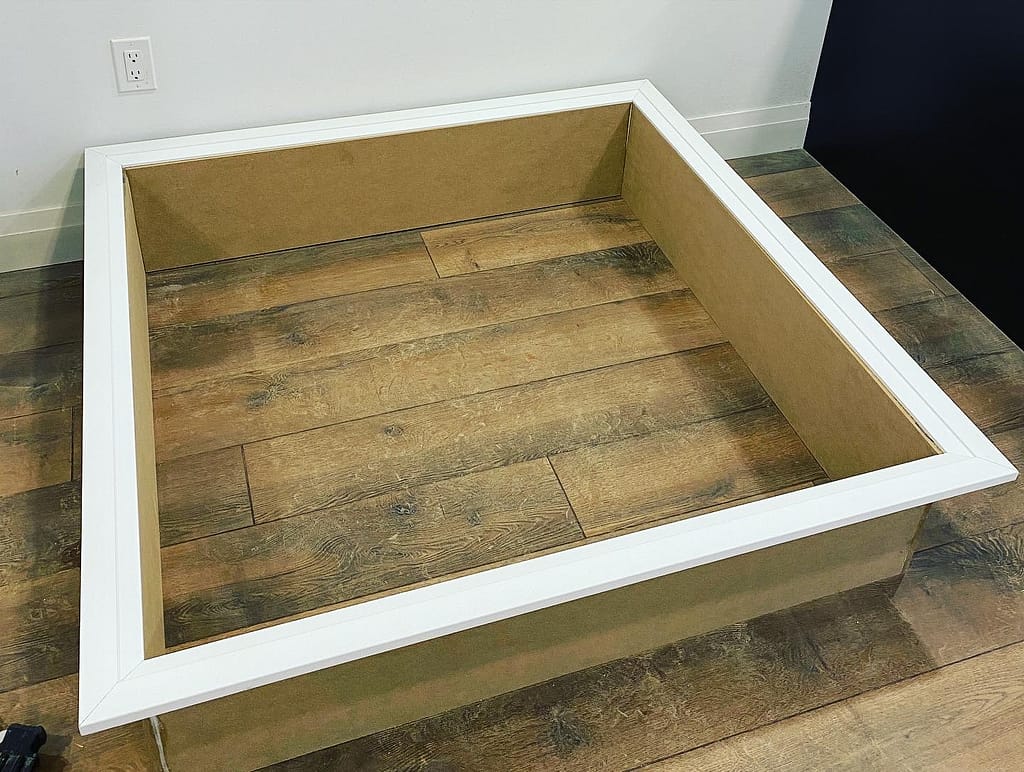
We rip these stable boards down to our custom-measured depths and pre-assemble the entire extension frame flat on the floor of the workspace. We cut and join the corners to tight wood-to-wood tolerances, locking the pieces together with heavy-duty industrial wood glues and hidden pocket fasteners to form a rigid, self-contained box. Building the deep frame completely on the ground allows us to seal and mechanically fasten the primary corner joints perfectly before the assembly ever touches the damp foundation walls.
Securing the Framework Against Foundation Shifting and Settling
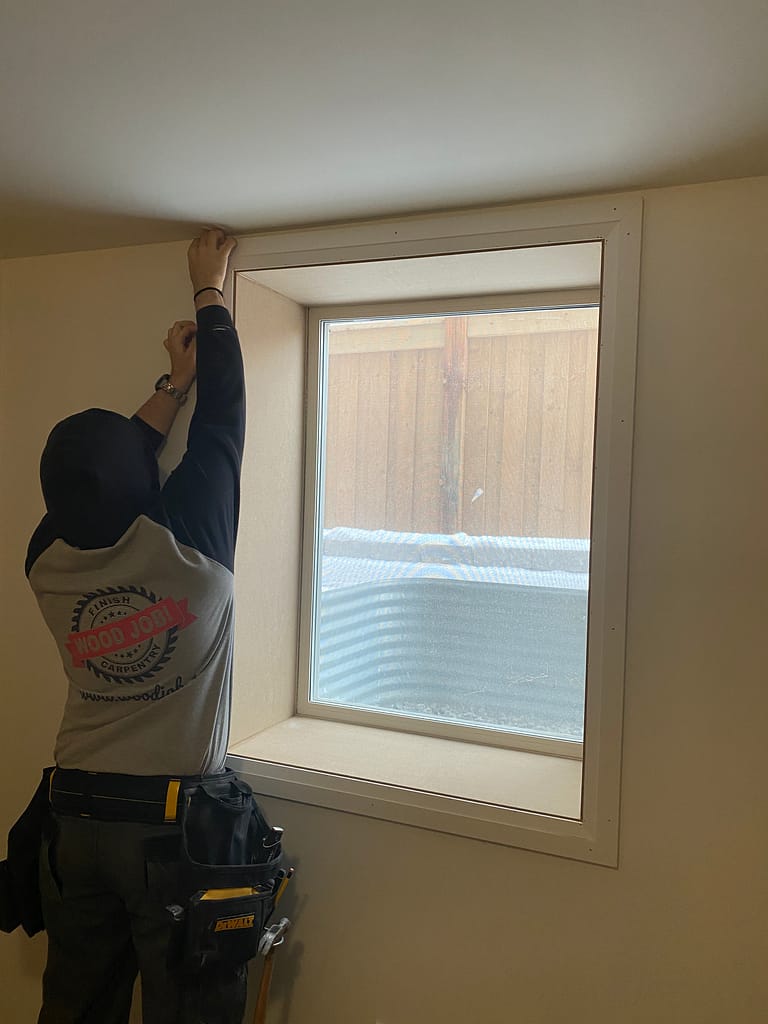
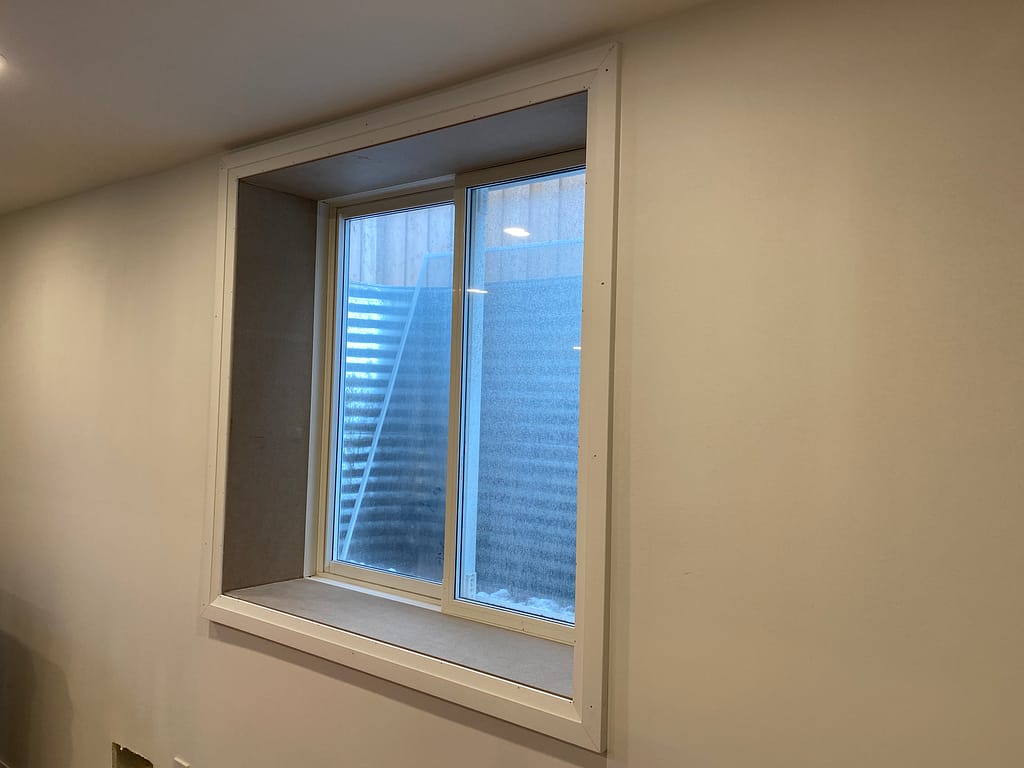
Installing a deep wood box into a cold concrete cavity requires a rigorous, permanent fastening sequence to prevent the assembly from bowing or warping later. We slide the pre-assembled extension box into the window opening, utilizing precise laser tracking lines to center the frame perfectly within the finished drywall field. Rather than driving vulnerable finish nails directly through the face of the wood, we pack the underlying spaces with solid, non-compressible shims placed directly behind our primary fastening points. This technique bridges the empty air gaps between the wood jamb and the concrete framing, ensuring the frame cannot pull back or twist when the house undergoes natural structural settling.
We secure the structure permanently by driving extended, heavy-gauge structural screws through the jamb and deep into the solid wood sub-framing studs bordering the foundation. This heavy anchoring methodology completely isolates the visible finish woodwork from the slow, heavy movements of the surrounding masonry. Once the extension box is permanently locked into a true, flat plane, it provides a perfectly square foundation for the final modern casing installation. We trim the perimeter with crisp, geometric modern bevel step casing, assembling the visible miters down on the floor to guarantee seamless joints that easily comply with professional trade metrics.
Resolving Chronic Finish Carpentry Problems in Lower Levels
Investing in custom-milled window frames isn’t just an aesthetic luxury; it is a critical element of managing the long-term environmental stability of a renovated lower level. By treating your basement as a permanent architectural project rather than a high-volume assembly line, we resolve the persistent finish carpentry problems that standard production contractors leave behind. Whether we are engineering a flush-fitting transition around an awkward layout constraint, custom-shaving a skewed casing to match an uneven header, or stabilizing a heavy entrance opening, we guide our clients through every technical step with complete transparency.
Every single component we bring into your living space is personally inspected for straightness, density, and moisture balance before it ever meets our hand tools. This patient, craftsman-led discipline ensures your lower-level upgrades look entirely intentional, maintaining tight margins and a pristine aesthetic for decades. If you are preparing to protect your square footage with an elite, durable trim package, look past volume-based shortcuts and secure a technical setup engineered to endure.
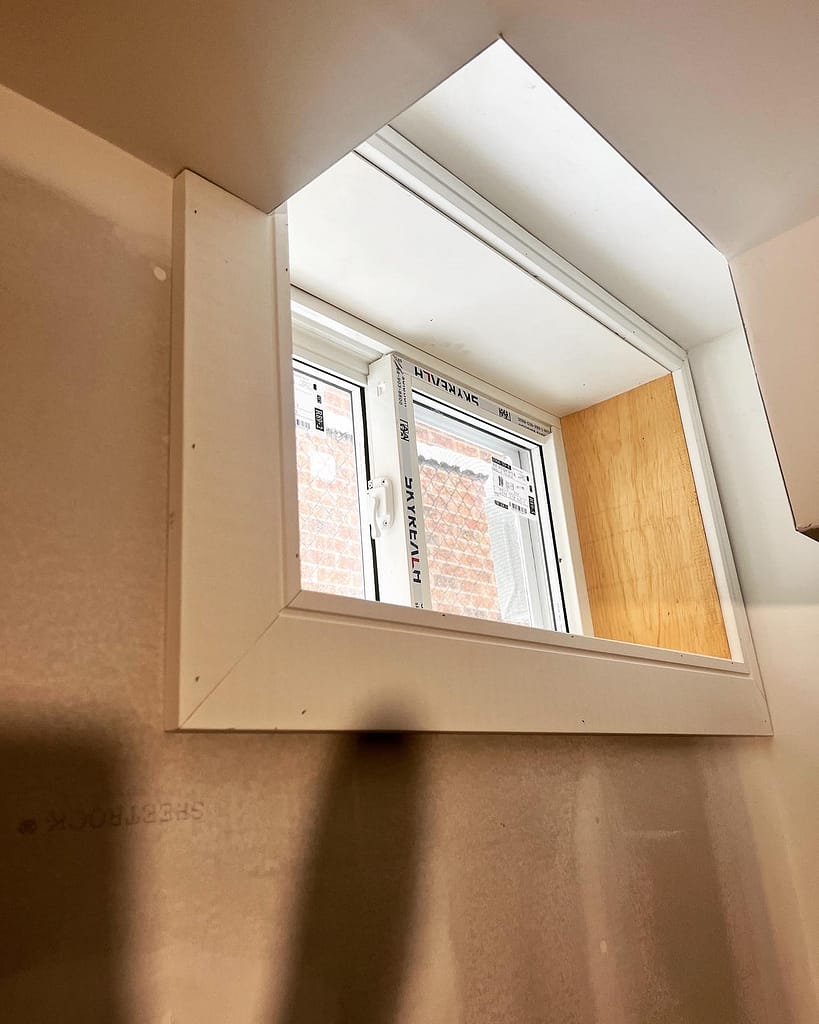
Do You Need to Trim and Finish Your Basement Windows?
Whether you are an owner-builder managing a luxury custom home build or a property owner planning a comprehensive, move-in ready finish carpentry upgrade in your basement, your square footage deserves the protection of stable materials and precise trade alignment. We bring boutique, craftsman-led discipline directly to your home’s interior framework, eliminating gaps and ensuring flawless reveals across every window well and entryway.
👉 Schedule an On-Site Basement Material and Design Consultation with Wood Job Finish Carpentry
Related Wood Job Pages
Why Owner-Led Finish Carpentry Matters
Before hiring a carpenter, it helps to know who will actually show up, take responsibility and handle the details inside your home.
Meet Jack Cenk Ozer
Learn more about the hands-on finish carpenter behind Wood Job Finish Carpentry and the personal craftsmanship behind the business.
Interior Door Installation
Interior doors, door replacement, hardware, hinge alignment, latch fitting, casing and clean door installation.
Finish Trim Carpentry
Door casing, window casing, baseboards, shoe moulding, trim repairs, custom jamb details and renovation finishing.
Photo-Based Rough Estimate
Send photos, measurements, project location and a short description of your small carpentry job.




