
Basements are full of small spaces that homeowners still want to use.
Under the stairs. Beside a bulkhead. Behind a short wall. Near a mechanical room. Inside a low storage opening.
These spaces may look small, but they still matter.
If the opening is left unfinished, the basement feels incomplete. If the wrong door is forced into the space, the result can look awkward. If the casing and baseboard are not planned properly, the whole corner can feel like an afterthought.
This is where custom basement storage doors become useful.
Not every basement opening can accept a standard pre-hung door. Not every opening is tall enough for a regular slab door. Sometimes the best solution is to modify a plain slab. Sometimes the door has to be built from MDF. Sometimes a flat door can be dressed with custom trim so it feels connected to the other doors in the basement.
The important part is simple:
The door has to serve the opening.
Not the other way around.
For larger door work, Wood Job explains the full service here: interior door installation and replacement.
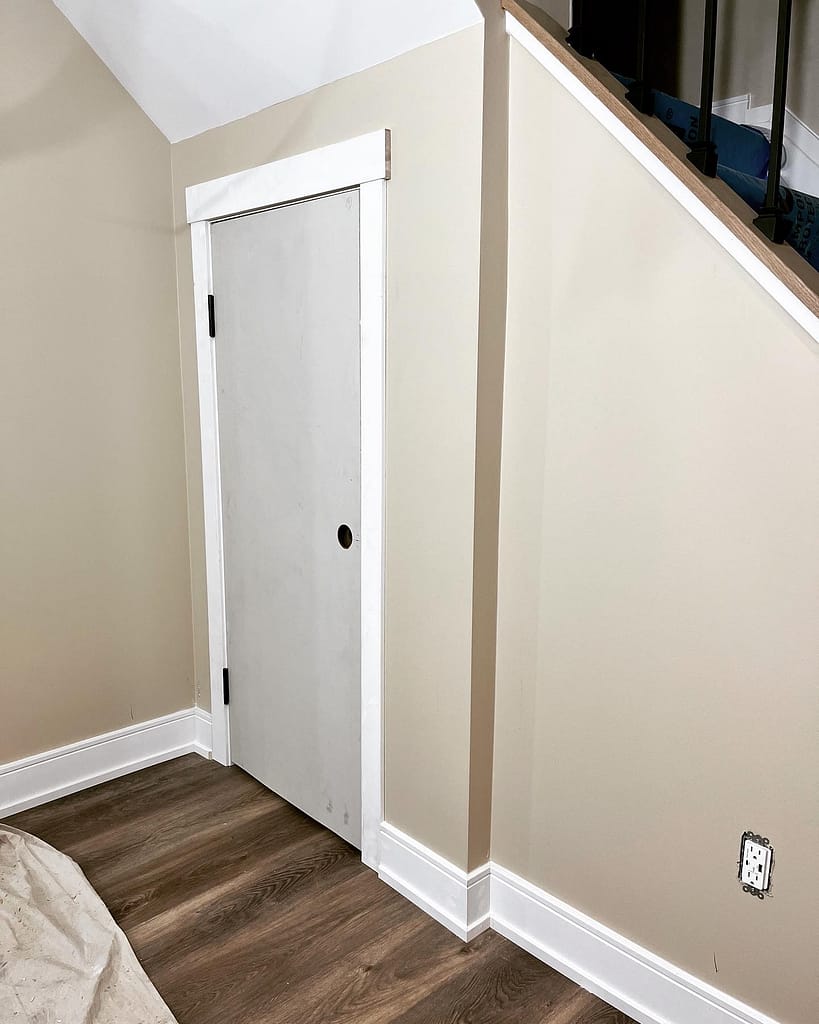
Why Basement Storage Openings Are Different
Basement openings are often not standard.
They may be affected by:
- Stair framing
- Low ceilings
- Bulkheads
- Ductwork
- Beams
- Sloped walls
- Mechanical spaces
- Flooring height
- Uneven framing
- Existing drywall conditions
- Baseboard transitions
- Limited swing space
In a main-floor bedroom, a standard interior door may fit with normal adjustment.
In a basement, the opening often decides the whole method.
A storage opening under the stairs may be too short for a normal door. A closet beside a bulkhead may be too wide, too low, or out of square. A mechanical access door may need to be practical more than decorative.
This is why basement door work should be checked before materials are ordered.
Wood Job also covers this problem in more detail here: Short Basement Doors: Why Custom Slabs Beat Pre-Hung Doors.
The Goal Is Not Only to Cover the Hole
A basement storage door should do more than hide an opening.
It should:
- Open and close properly
- Sit with a clean reveal
- Clear the floor
- Work with the surrounding casing
- Meet the baseboard in a clean way
- Look intentional beside the other doors
- Allow practical access to the storage area
- Fit the real shape of the opening
A small door can still look careless if the proportions are wrong.
A short door can look strange if too much is cut from the bottom.
A storage door can feel unfinished if the casing is too rough or the baseboard dies into it badly.
Small spaces show more detail than people expect.
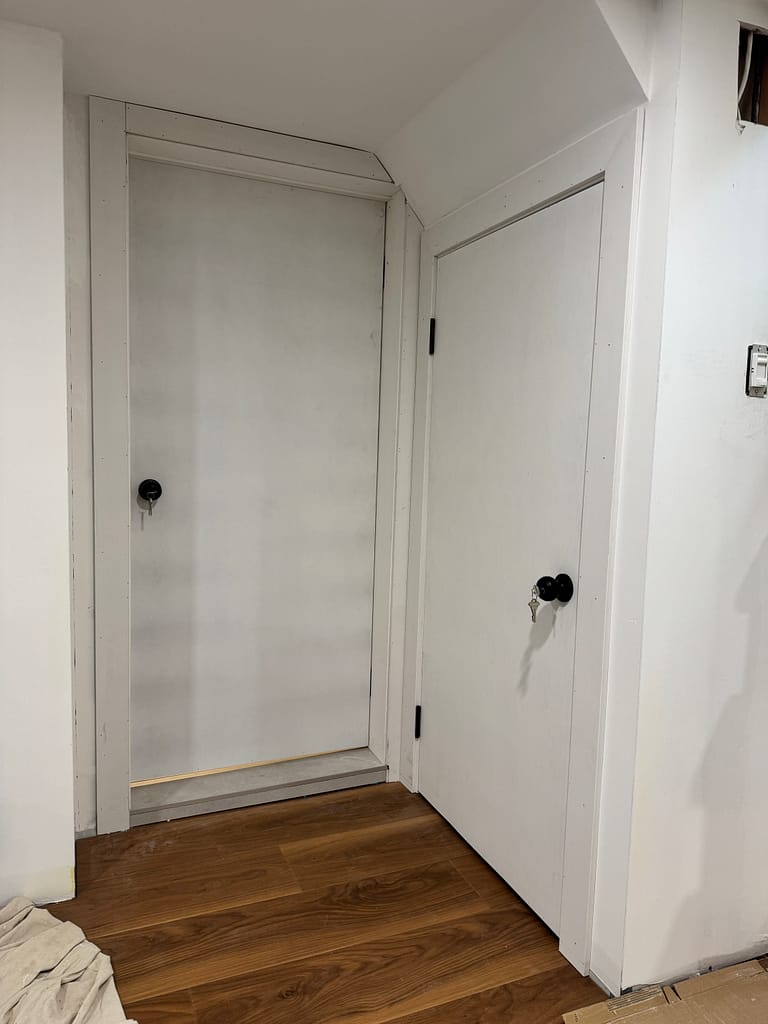
When a Plain Slab Door Can Be Modified
Sometimes the best starting point is a plain slab door.
A plain slab has no raised panels, shaker profile, or molded detail already built into the face. That gives the carpenter more freedom.
If the opening is short, the slab can sometimes be cut down to the correct height without destroying an existing panel layout.
After the slab is fitted, custom MDF detailing can be added to make it visually match other doors in the basement.
This can work well when the homeowner wants a cleaner look but the opening is too short for a normal door.
A plain slab gives the carpenter control over:
- Final height
- Hinge placement
- Bottom clearance
- Door proportion
- Simple panel layout
- Matching nearby door styles
- How the casing frames the opening
This is not the same as forcing a pre-hung unit into a short opening.
A pre-hung door already comes with its jamb, hinges, and stop assembled. That can be helpful in the right opening, but it limits adjustment in low basement spaces.
Wood Job explains that product decision here: Slab Door vs Pre-Hung Door: Which One Do You Need for Interior Door Replacement?.
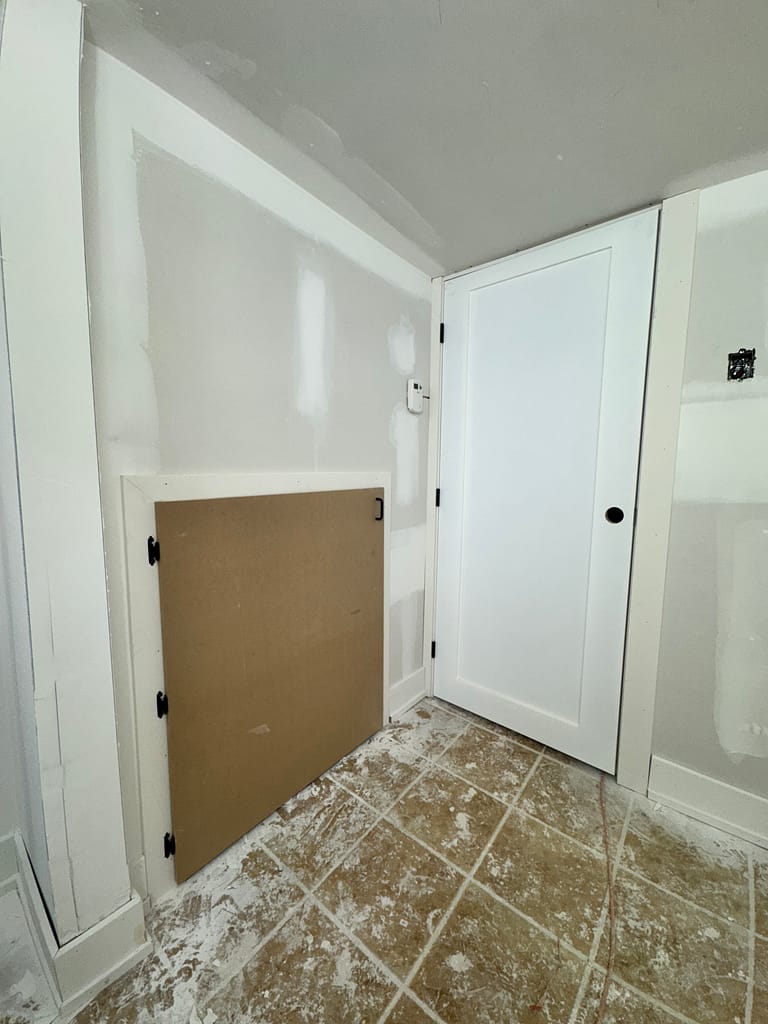
When a Custom MDF Door Makes More Sense
Some basement openings are too small or too unusual for even a modified slab door.
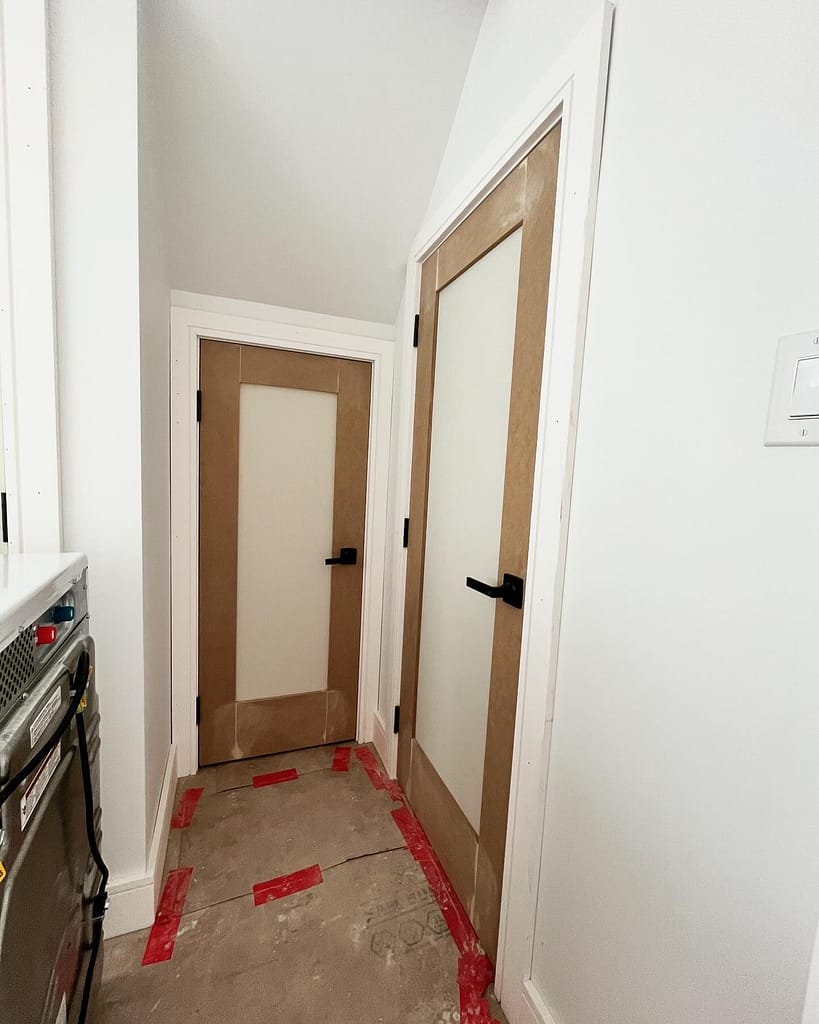
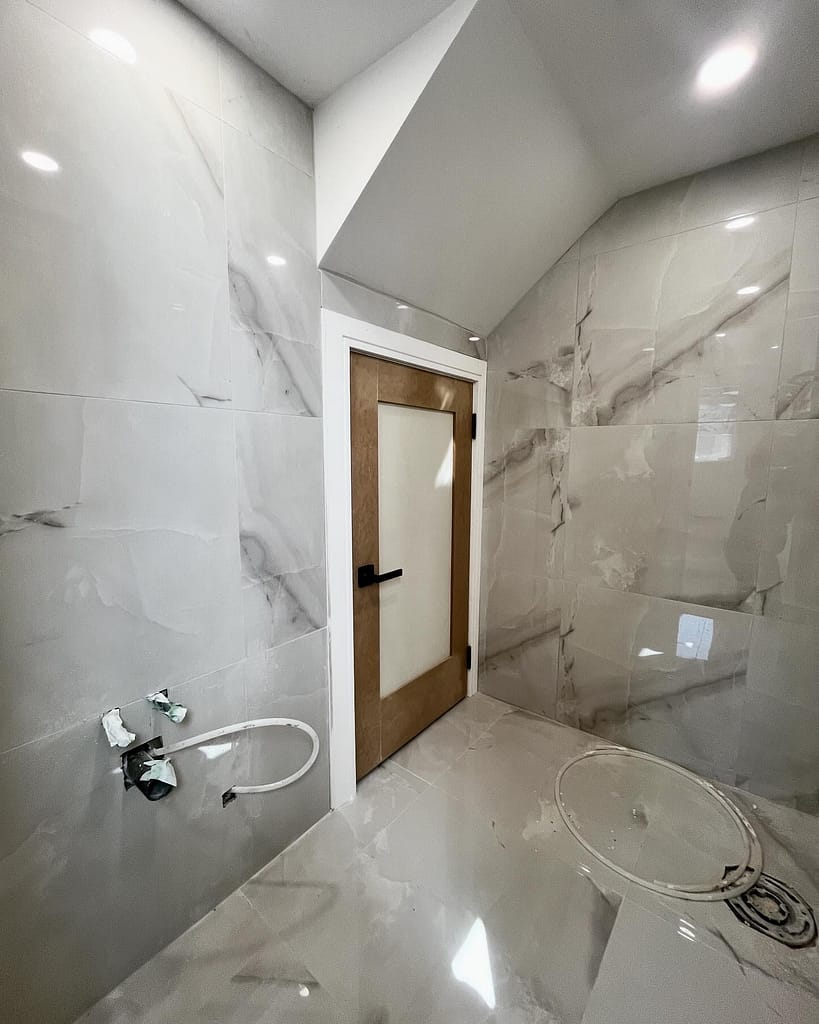
In those cases, a simple custom MDF door can make more sense.
This is common for:
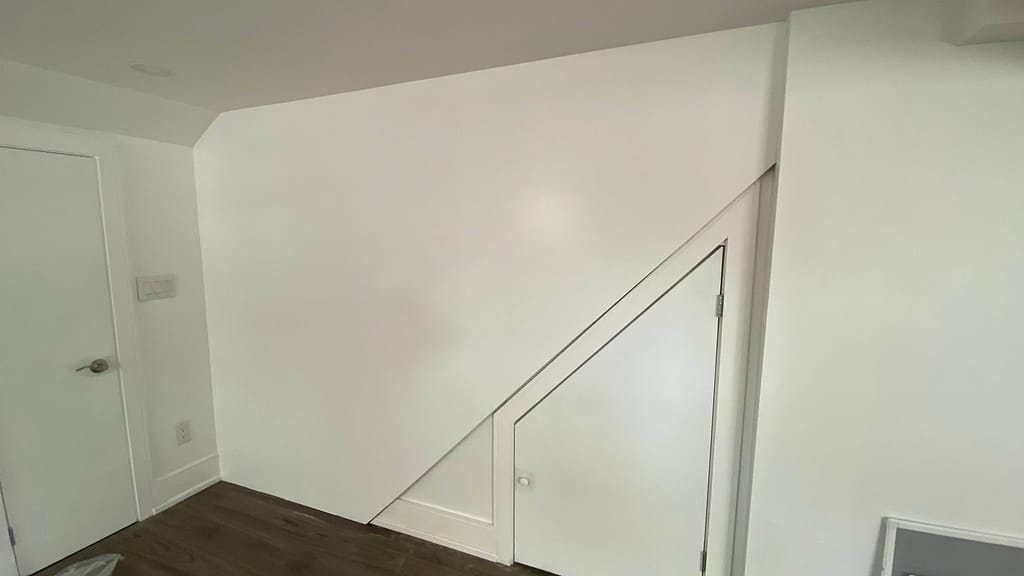
- Very low under-stair storage openings
- Access panels
- Small utility spaces
- Hidden storage areas
- Short openings where a regular door would look wrong
- Openings that need function more than a full interior door style
A custom MDF door can be built to the size of the opening, fitted with hinges, and trimmed so it feels like part of the room.
It may not need to look like a full bedroom door.
It needs to look clean, useful, and properly handled.
That difference matters.
A tiny storage door should not pretend to be a full-size door. It should be proportioned for the space.
Matching the Other Doors in the Basement
One of the challenges with custom basement storage doors is visual consistency.
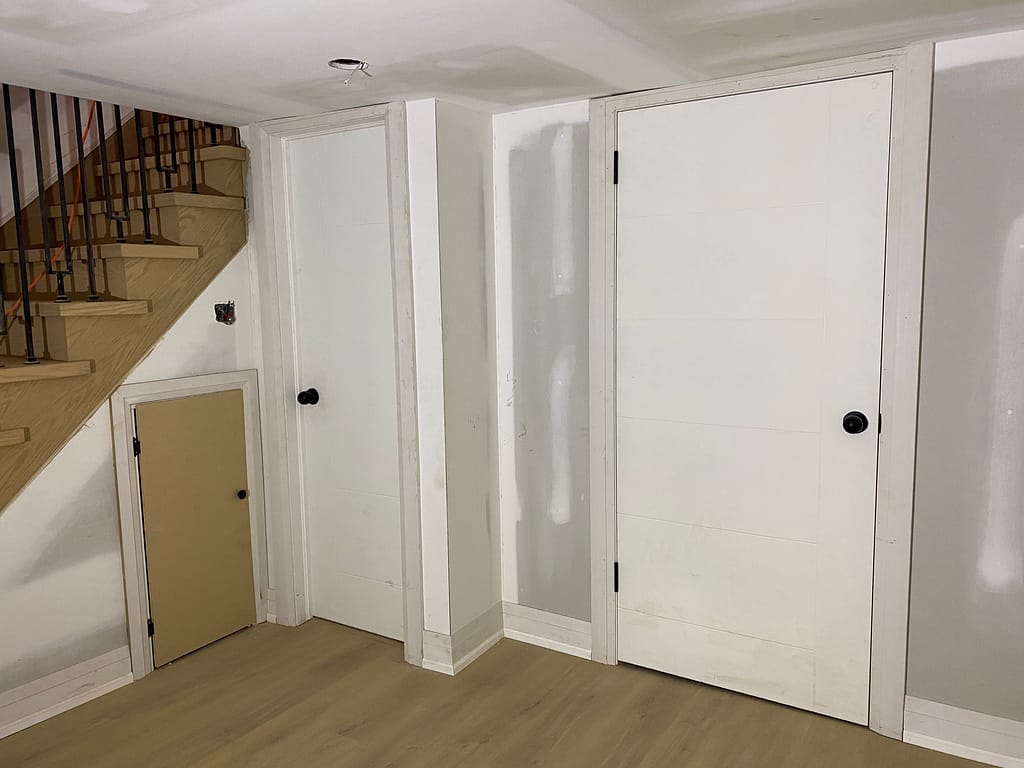
If the basement has one-panel shaker doors, a flat storage door can look too plain.
If the basement has simple flat doors, adding too much detail can look forced.
If the casing style changes from one opening to another, the basement can feel patched together.
Sometimes Wood Job modifies a plain slab and adds MDF trim detail to give it the feeling of a one-panel shaker door. The goal is not to fake a factory door perfectly. The goal is to make the custom door belong in the same basement.
The eye should not stop at the storage door and think, “Something is off here.”
The door should sit quietly in the room.
Casing and Baseboards Matter Around Small Doors
The door is only one part of the opening.
Casing frames the door. Baseboard finishes the wall. The way these two meet decides whether the storage opening feels clean or improvised.
This is especially important under stairs.
There may be an angled wall above the door. The casing may need to die into a sloped surface. The baseboard may need to wrap around a corner, step around the opening, or meet a short vertical piece of casing.
These are not big dramatic details.
But they are the details that make a basement feel finished.
Wood Job has also handled full basement scopes where doors, casing, baseboards, and flooring transitions had to work together. One related example is this Vaughan basement renovation with vinyl flooring, doors, baseboards, and casing.
Why Pre-Hung Doors Are Not Always the Right Answer
Pre-hung doors can be useful.
They come with the slab, jamb, hinges, and stop already assembled. For many normal openings, that can save time.
But short basement openings are different.
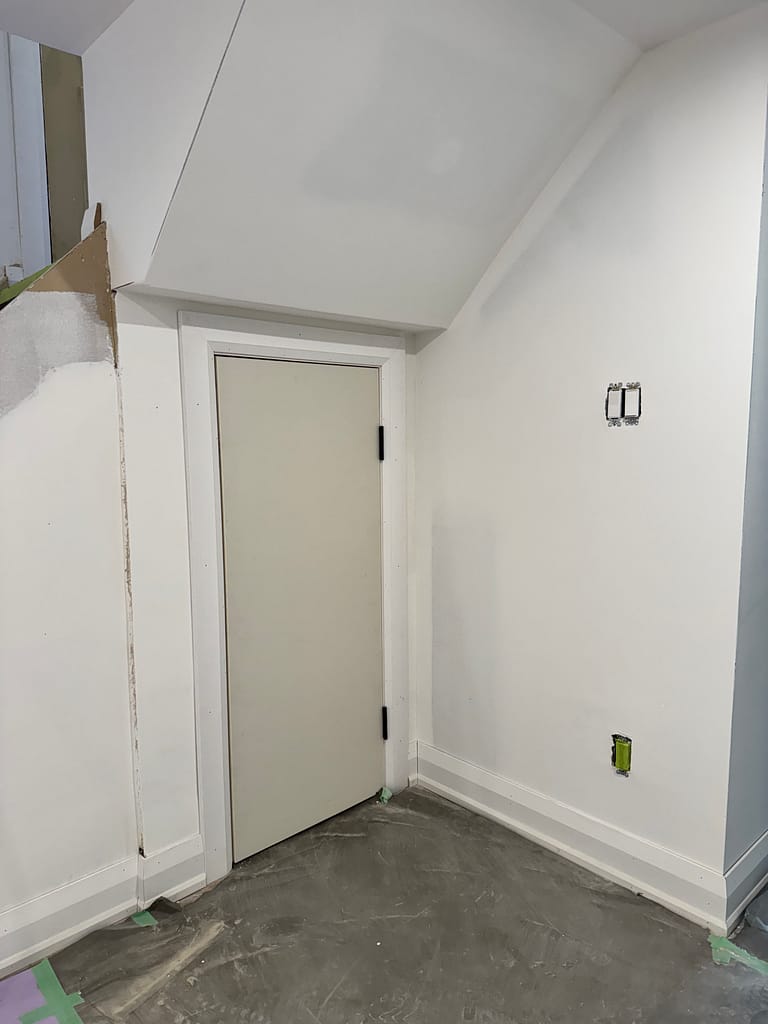
If the opening is too low, a pre-hung door may need heavy cutting. Once the door and jamb are already assembled, changing the height properly can become awkward.
You may have to deal with:
- Bottom rail proportion
- Hinge placement
- Jamb height
- Door stop location
- Latch height
- Casing alignment
- Finished reveal
- Floor clearance
At some point, the advantage of buying pre-hung disappears.
A custom-fitted slab or MDF door can sometimes produce a cleaner result because the door is built around the opening from the beginning.
This is why Wood Job checks the real opening before recommending the door type.
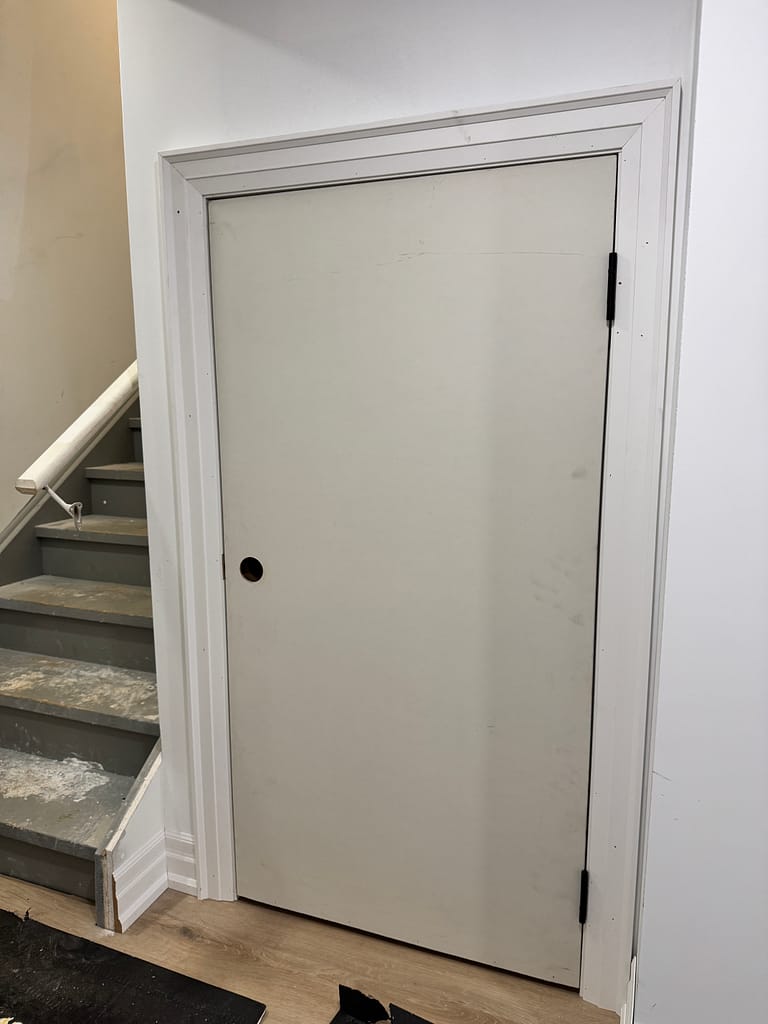
Small Storage Doors Still Need Real Finish Carpentry
A small basement door may look like a small job.
But it still needs the same kind of thinking:
- Is the opening square enough?
- Is the wall plumb?
- Does the door have room to swing?
- Will the floor clearance work?
- Where should the hinges sit?
- Does the casing have enough room?
- How will the baseboard meet the trim?
- Should this be a slab, MDF door, access door, or another solution?
- Will the door look right beside the other basement doors?
These decisions happen on site.
That is why owner-led work matters. A small adjustment to the casing, a hinge location, or the way a baseboard dies into a corner can change the final result.
You can read more about Wood Job’s approach here: Why Owner-Led Finish Carpentry Matters.
What We Look at Before Building or Installing a Basement Storage Door
Before deciding how to handle a basement storage opening, Wood Job looks at the actual space.
The important details include:
- Opening height
- Opening width
- Wall thickness
- Floor level
- Nearby baseboards
- Existing casing style
- Ceiling or stair angle
- Door swing direction
- Access needs
- Hardware choice
- Paint stage
- Whether the door should match other doors nearby
Sometimes the right answer is a modified plain slab.
Sometimes it is a simple custom MDF door.
Sometimes the opening needs jamb work, casing correction, or a more practical access-panel style.
The solution depends on the space.
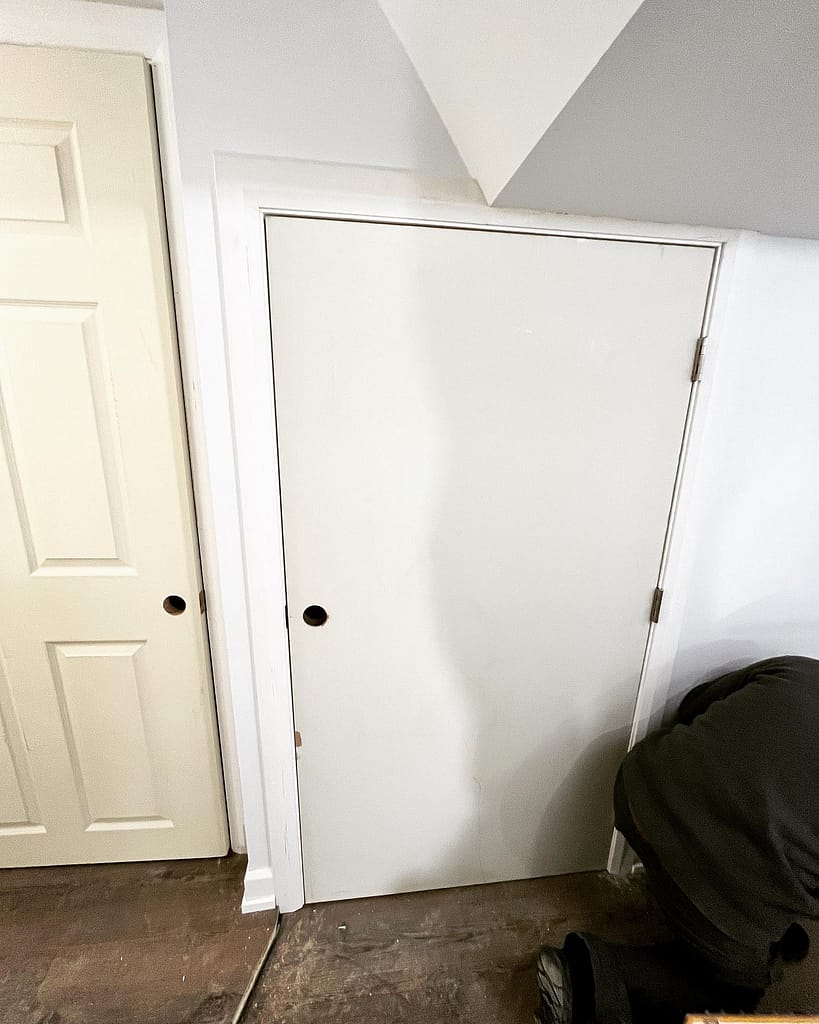
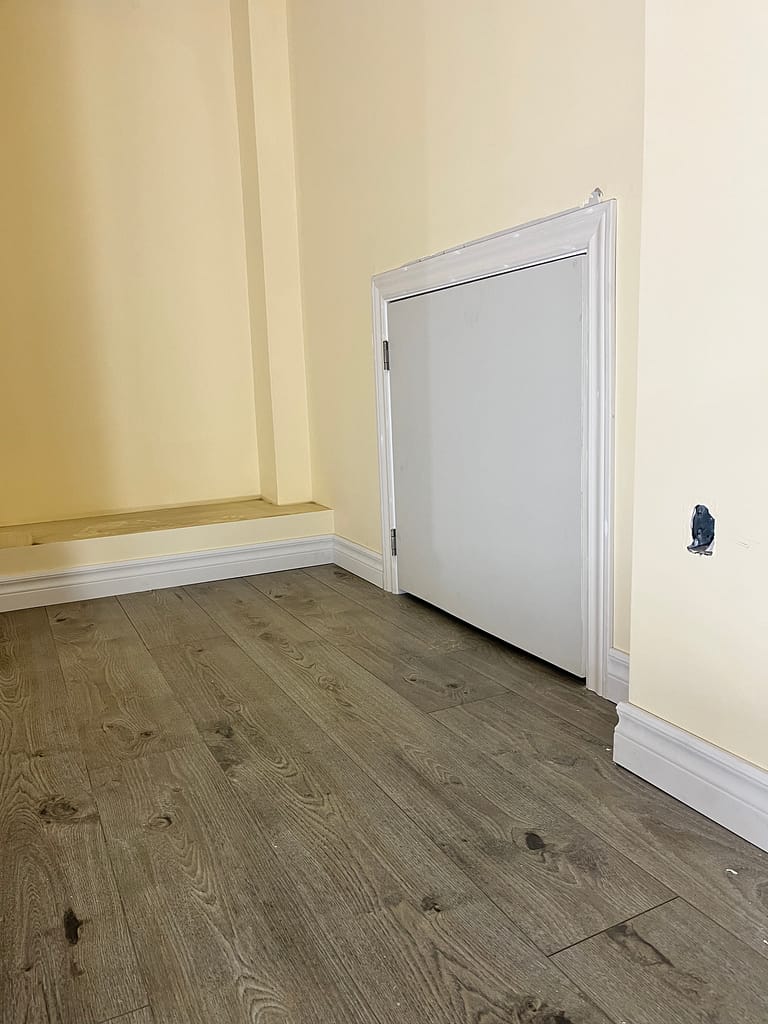
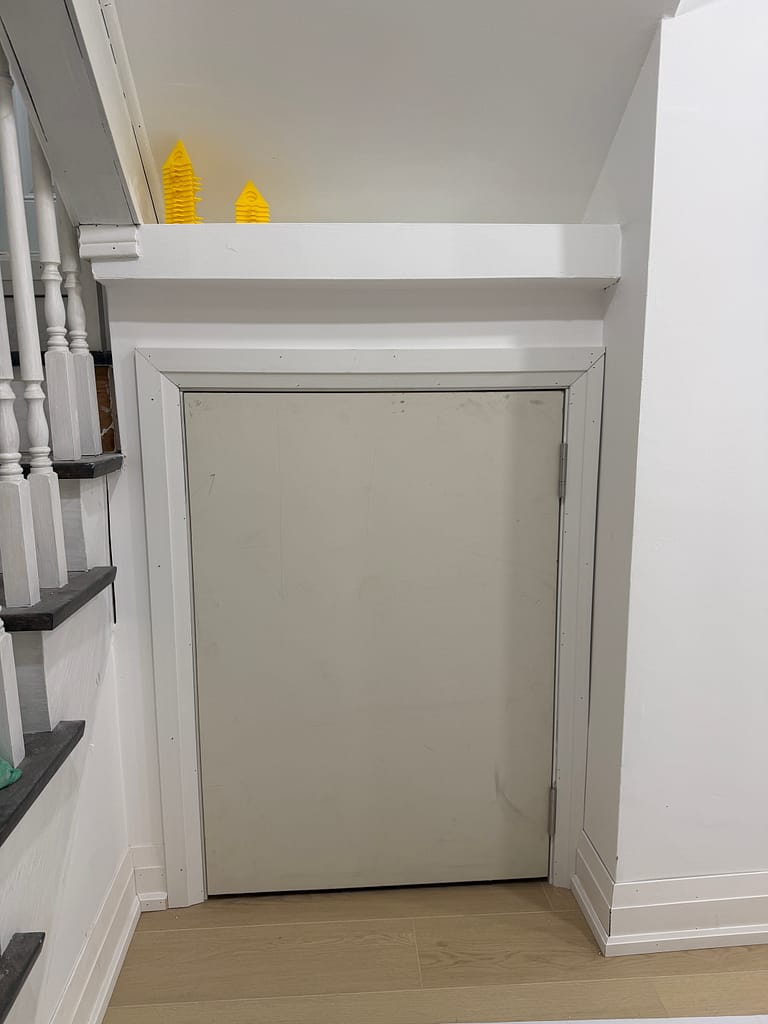
Basement Storage Doors Are Part of the Whole Basement
These doors are not always the main feature of a basement.
But they are often the details people notice after the renovation is finished.
A basement can have new flooring, fresh paint, finished drywall, and good lighting. But if the storage doors are rough, poorly fitted, or visually out of place, the space can still feel incomplete.
Good finish carpentry does not have to be loud.
Sometimes it is just a small door under the stairs that finally looks like it belongs.
For homeowners dealing with unfinished or awkward openings, Wood Job also has a related page here: Finish Carpentry Problems We Fix.
Planning a Similar Basement Door or Storage Opening?
If you have an under-stair space, low basement opening, mechanical access area, or small storage room that needs a door, send clear photos before buying materials.
Helpful photos include:
- A full photo of the opening
- A close-up of the left and right sides
- A photo showing the floor under the opening
- A photo showing the ceiling, stair angle, or bulkhead above
- Nearby doors you want to match
- Existing casing and baseboards
- Any hardware style you prefer
- A rough height and width measurement
Also include:
- Your project city
- What the space is used for
- Whether the door needs to lock
- Whether the door should match other basement doors
- Whether the area is already painted
- Whether flooring and baseboards are finished
Wood Job can review the details and let you know whether a rough estimate is possible from photos or if a walkthrough would be better.
You can start here:
FAQ
Can you install a door under basement stairs?
Yes, if the opening allows for a practical door swing and proper fitting. Under-stair openings often need custom thinking because the height, angle, casing, and baseboard conditions are not standard.
Can a regular slab door be cut down for a basement storage opening?
Sometimes. A plain slab door can often be modified more cleanly than a molded or pre-hung door. The final result depends on the opening size, door construction, hinge placement, and whether the cut will affect the door’s proportions.
What if the basement opening is too small for a normal door?
A custom MDF door or access-style door may be better. Very small openings do not always need a full interior door. They need a clean, practical door that fits the space and looks finished with the surrounding trim.
Can a small storage door match the other basement doors?
Often, yes. A plain slab can sometimes be customized with MDF detail to feel closer to a one-panel shaker door. It may not be identical to a factory door, but it can be made to look intentional beside the other doors.
Do basement storage doors need casing?
Yes. Casing helps the opening look finished and covers the transition between the jamb or opening and the wall. In tight basement spaces, casing may need to be adjusted around stairs, bulkheads, baseboards, or uneven drywall.
Should I buy the door before asking a finish carpenter?
For non-standard basement openings, it is better to ask first. Buying the wrong door can limit the options, especially if the opening is low, narrow, angled, or affected by stairs and bulkheads.
Can Wood Job build small custom doors for basement storage spaces?
Yes, depending on the opening and scope. Wood Job can review photos and measurements, then explain whether a modified slab, custom MDF door, jamb work, casing, or another approach makes sense.
Do you only work in Oakville?
No. Wood Job Finish Carpentry serves Oakville, Milton, Burlington, Mississauga, Cambridge, Guelph, Kitchener, Hamilton, Vaughan, Toronto, Halton Region, Waterloo Region, and the GTA.




