
This Oakville project was not a renovation repair, and it did not begin with one old door that needed replacing.
It was a new construction custom home, roughly 3,000 square feet across three floors, where the contractor needed the interior doors and trim package completed with care. In a house like this, finish carpentry is one of the last stages people see before the home starts to feel complete.
The framing is already done. Drywall is finished. Flooring, painting, stairs, cabinetry, and other trades are all part of the schedule. Then the doors, casing, baseboards, and small trim details come in and either bring the house together or make every rushed decision visible.
Wood Job Finish Carpentry handled the interior doors and trim in this Oakville custom home as an owner-led finish carpentry project. Jack Cenk Ozer was directly involved in the measuring, fitting, cutting, installation, and final checking.
For a contractor, that matters. The finish stage is not the time for confusion, guessing, or careless work.
★★★★★
77 Google Reviews.
Earned One Job at a Time.
Real projects. Real homes. Real customers.
Wood Job Finish Carpentry is trusted by contractors in Oakville who care about clean work, careful details, direct communication and finish carpentry that is handled with personal responsibility.
A full door and trim package for a new Oakville home
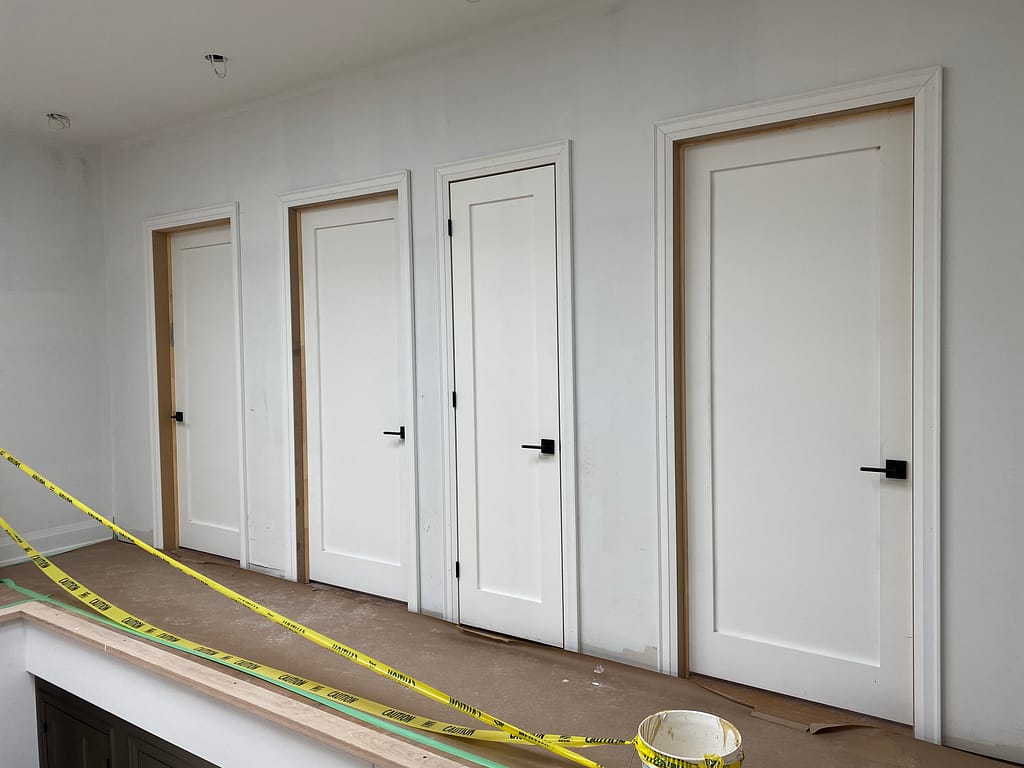
In a custom home, interior door installation is rarely only about hanging doors.
Each door connects to the jamb. The jamb connects to the drywall. The casing frames the opening. The baseboard runs into the casing. The hardware has to sit at the right height, latch cleanly, and feel consistent from room to room.
Across three floors, those details repeat many times.
That repetition is where the work becomes serious. One casing joint can be fixed. One reveal can be adjusted. One door can be tuned. But when the same detail repeats through a full house, the whole project depends on consistency.
This is why a full-house package needs patience before speed. The goal is not to rush through the house and say the trim is installed. The goal is to leave every level looking like the same careful hand worked through it.
For this project, the scope was focused on the visible interior finish details: doors, casing, baseboards, and related trim work. It was the kind of finish carpentry that supports the contractor’s larger build and gives the homeowner a clean final result.
You can see more about Wood Job’s main door work on the Interior Door Installation service page.
What changes in new construction
New construction sounds easier than renovation.
Sometimes it is. There is no old casing to remove, no painted-over jambs from thirty years ago, and no surprise layers of flooring hiding under the baseboard.
But new construction has its own problems.
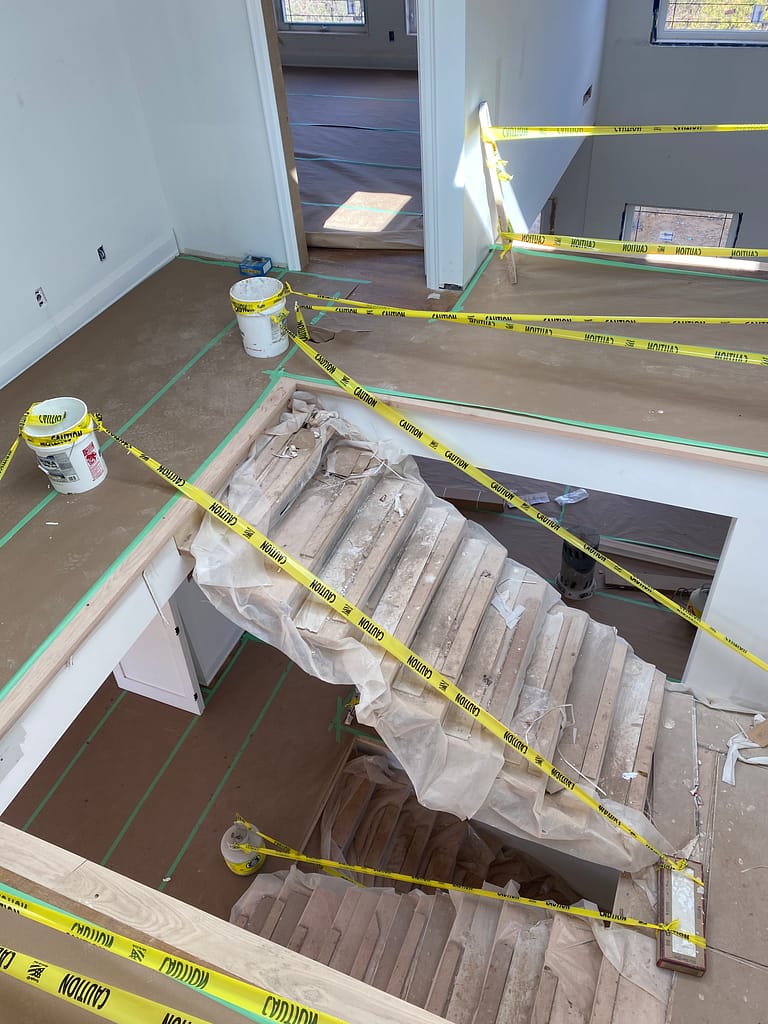
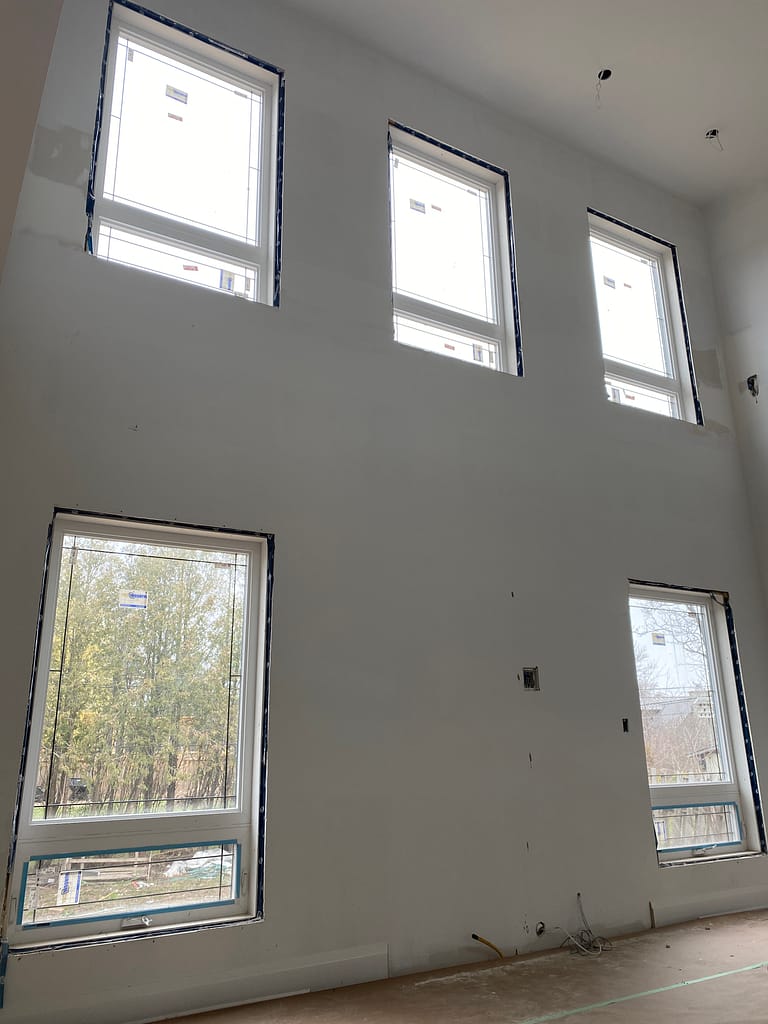
Openings can still be slightly out of square. Drywall can build up around a jamb. Floors can change level from one area to another. Framing can move a little. A wall that looked straight at the rough stage may show its shape once the trim goes on.
A finish carpenter has to read those conditions before cutting.
On a custom home, the contractor is usually watching schedule, trades, inspections, material deliveries, painter timing, and client expectations. The finish carpenter has to fit into that flow without creating new problems.
If the door package is late, the painter may be delayed. If the casing is installed poorly, the painter has to fight the joints. If baseboards are not handled cleanly, flooring transitions start looking rough. If latch alignment is ignored, the homeowner notices it the first week they live in the house.
That is why finish carpentry is not just the final decoration. It is part of how the house works.
For contractors and builders, Wood Job also has a dedicated page for Finish Carpentry for Contractors and Builders.
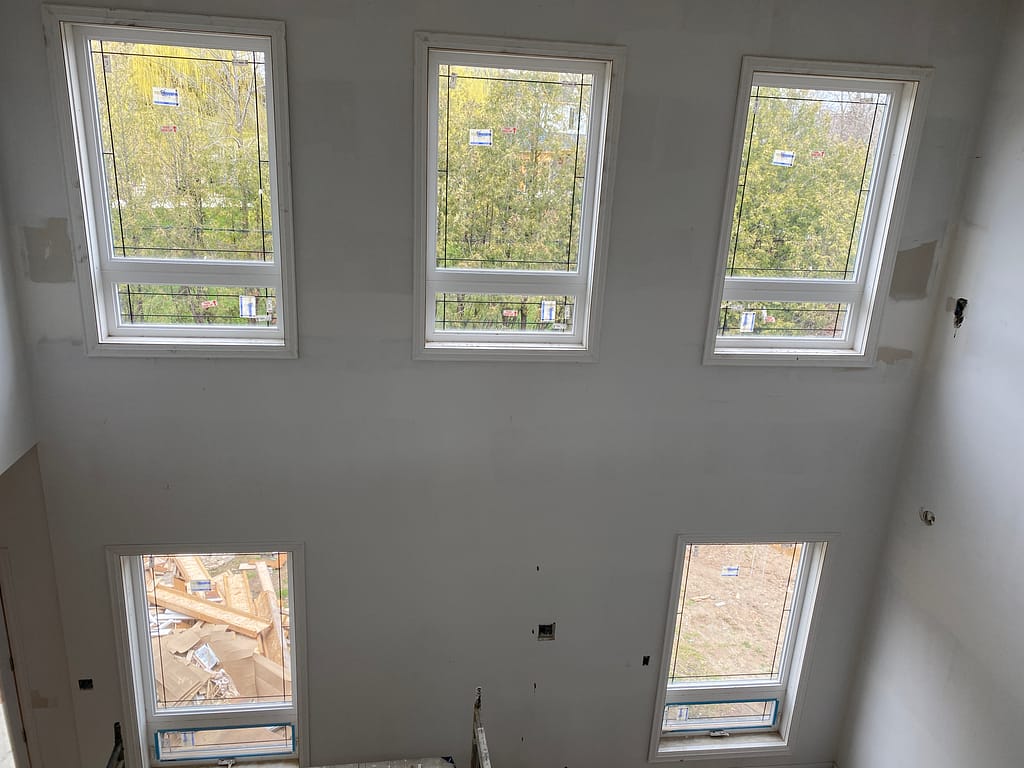
Door reveals, latch alignment, and the small lines people notice
Most homeowners do not walk through a new custom home talking about reveal lines.
But they see them.
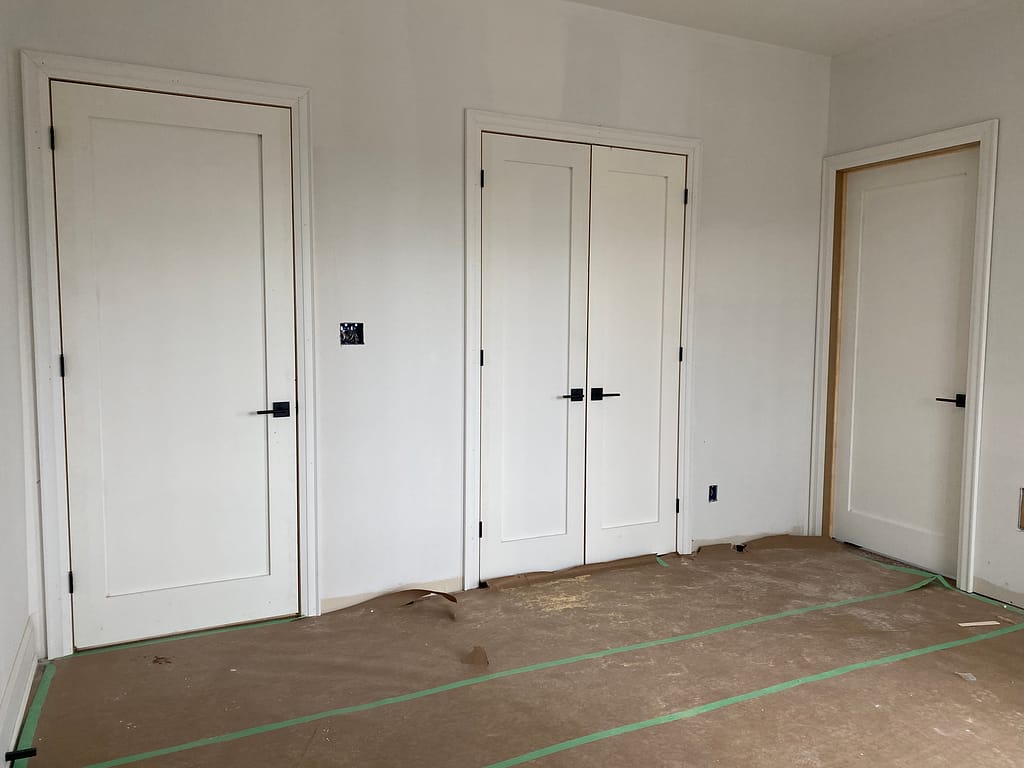
They notice when the gap around one door is tight at the top and wide at the bottom. They notice when a door rubs. They notice when a latch needs to be pushed hard to catch. They notice when one casing joint opens slightly after paint. They notice when the baseboard dies awkwardly into the door trim.
They may not have the carpenter’s words for it, but they feel the difference.
That is the strange thing about finish carpentry. When it is done properly, it becomes quiet. The door swings. The latch catches. The casing sits cleanly. The baseboard turns the corner. Nobody has to think about it.
When it is wrong, it becomes annoying every day.
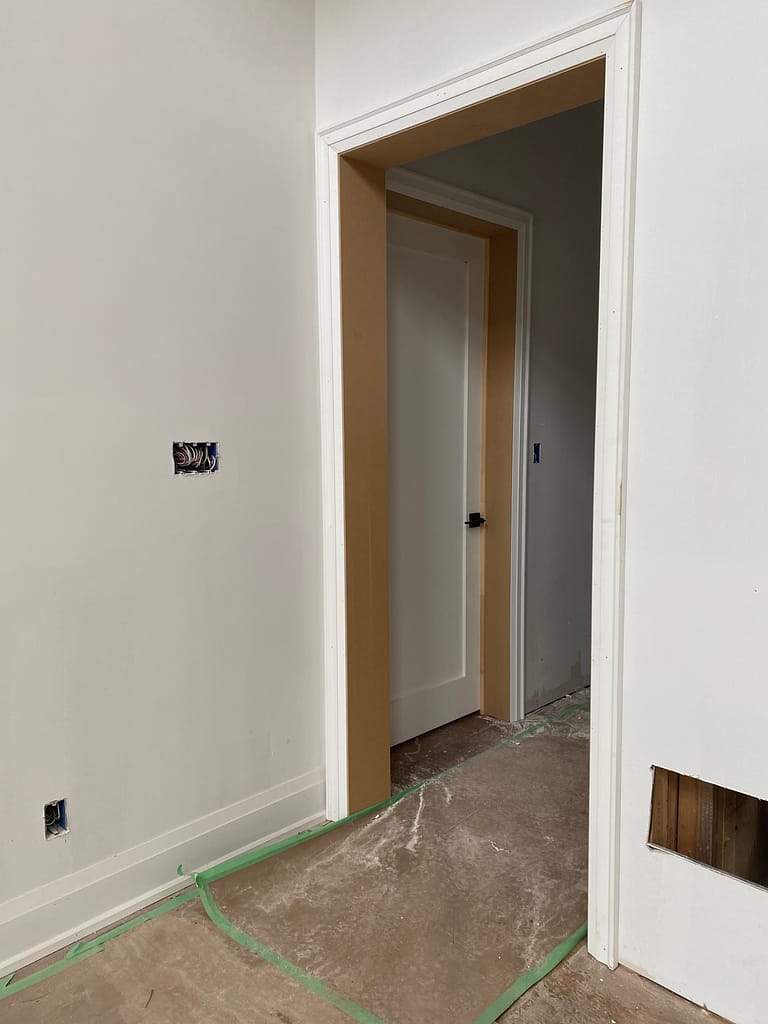
In this Oakville custom home, the work had to be checked opening by opening. Door swing, hinge placement, jamb position, casing reveal, floor clearance, latch alignment, and baseboard transitions all had to work together.
It is slow-looking work from the outside, but that is how clean finish details are built.
Trim connects the whole house
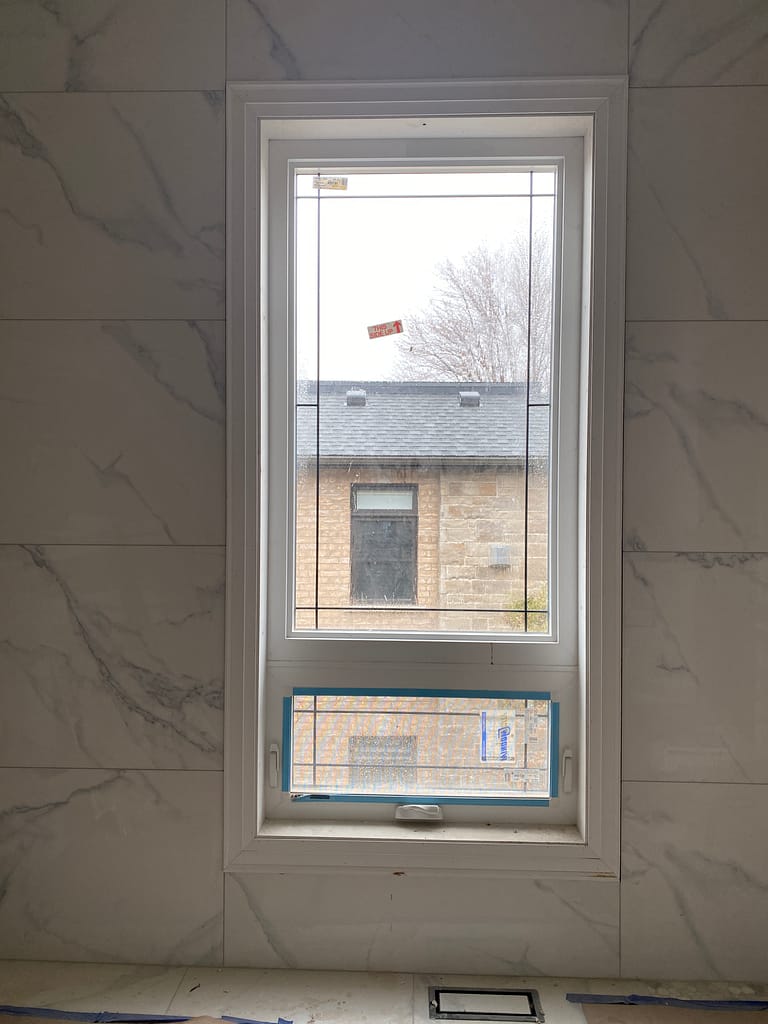
Doors are the obvious part of the project, but trim is what connects the house visually.
Casing frames the doors. Baseboards carry the line through hallways and rooms. Corners, returns, joints, and transitions decide whether the finished home feels calm or busy.
On a three-floor home, this matters even more. The trim profile should not feel different from one level to another unless the design intentionally calls for it. Hallways should feel consistent. Door openings should not look like separate little projects.
This is one of the reasons contractors bring in a finish carpenter instead of treating trim as a side task.
The work may look simple after paint, but there is a lot behind that simplicity: careful measuring, clean miters, steady nail placement, controlled reveals, and knowing when a piece needs to be adjusted instead of forced.
Wood Job’s broader trim work is covered on the Finish Trim Carpentry page.
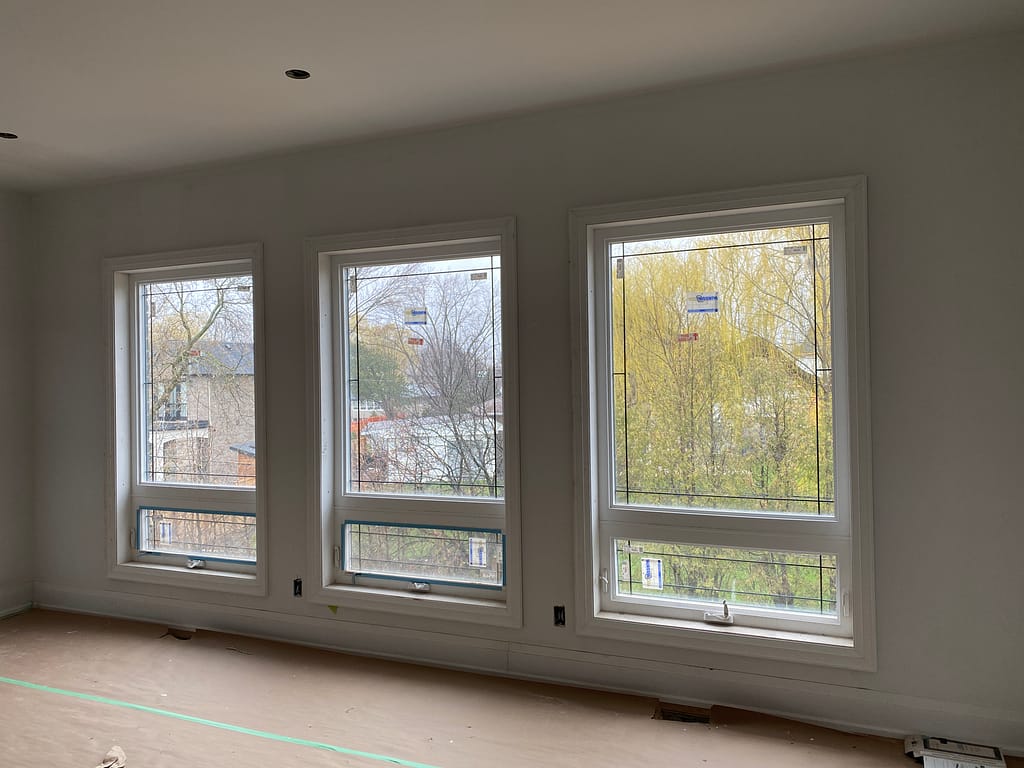
Working with the contractor’s schedule
A custom home has many moving parts.
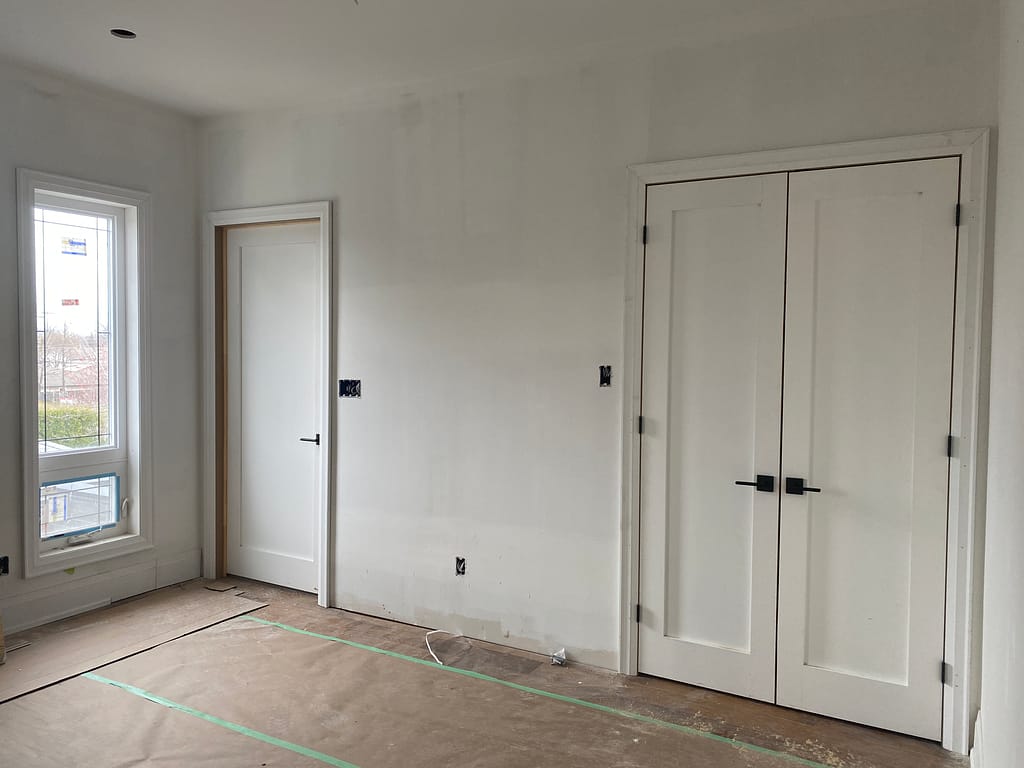
Finish carpentry depends on what came before it and affects what comes after it. Drywall quality affects casing. Flooring affects door clearance and baseboard height. Painting affects sequencing. Hardware selection affects preparation. Stairs, cabinets, and built-ins can affect trim transitions.
Good communication with the contractor is part of the work.
That does not mean long meetings or complicated language. Sometimes it is as simple as saying, “This opening needs attention before casing,” or “The painter should know about this joint,” or “This door will need a little more clearance because of the finished floor.”
Small notes at the right time can prevent bigger problems later.
For Wood Job Finish Carpentry, working small and owner-led helps here. The person measuring the detail is not separate from the person installing it. The responsibility stays close to the work.
That is useful for homeowners, but it is also useful for contractors. When there is a question on site, the answer comes from the person actually doing the finish work.
The thinking behind this approach is explained more on Why Owner-Led Finish Carpentry Matters.
Being called back for the fireplace feature
This Oakville custom home also led to another piece of finish carpentry on the same site.
After the interior doors and trim package, the contractor called Wood Job Finish Carpentry back for the fireplace feature wall. That return call matters. On a new construction project, contractors usually do not bring someone back unless the first stage went properly: communication, timing, site behaviour, and finished details all have to make sense.
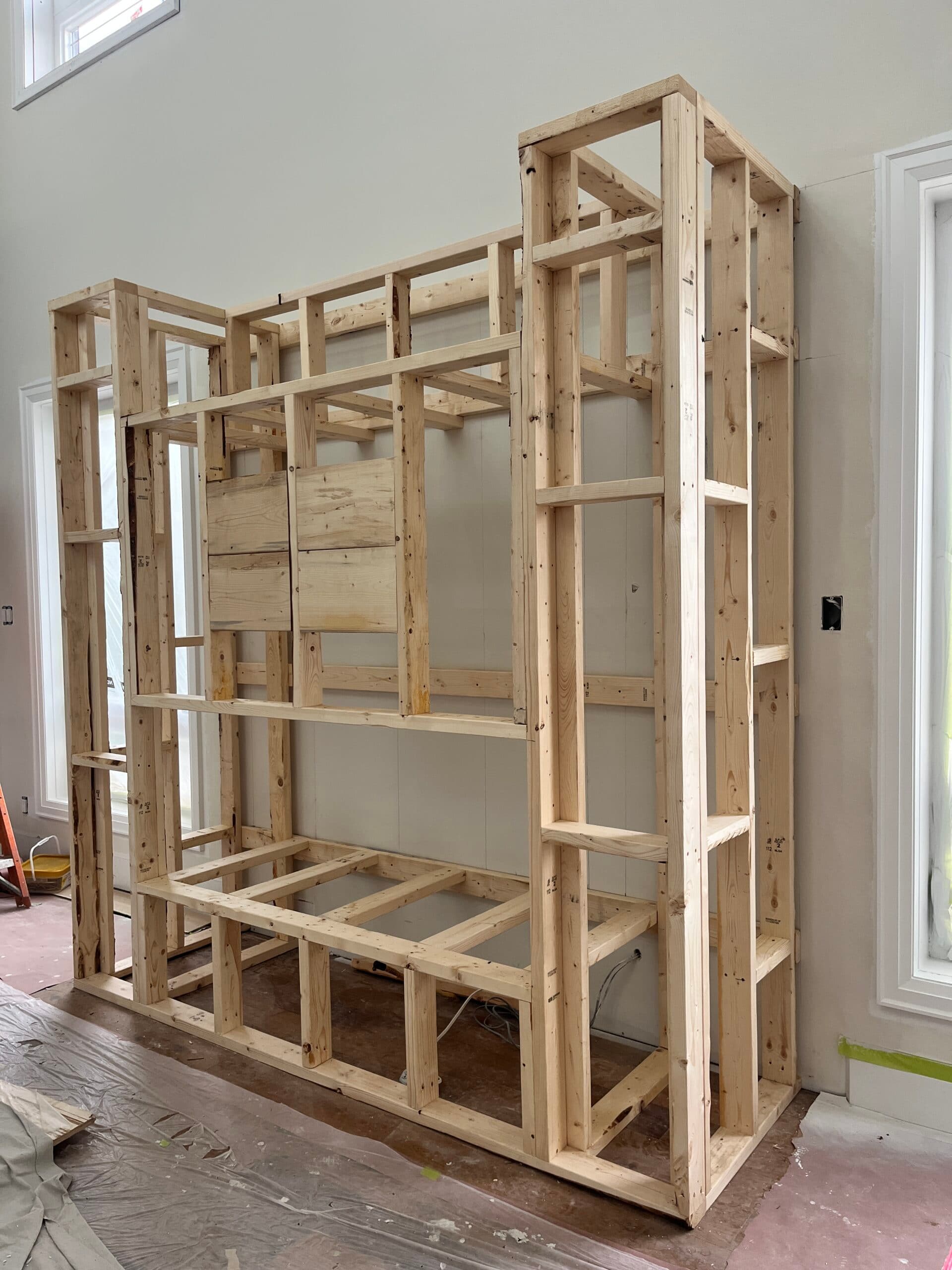
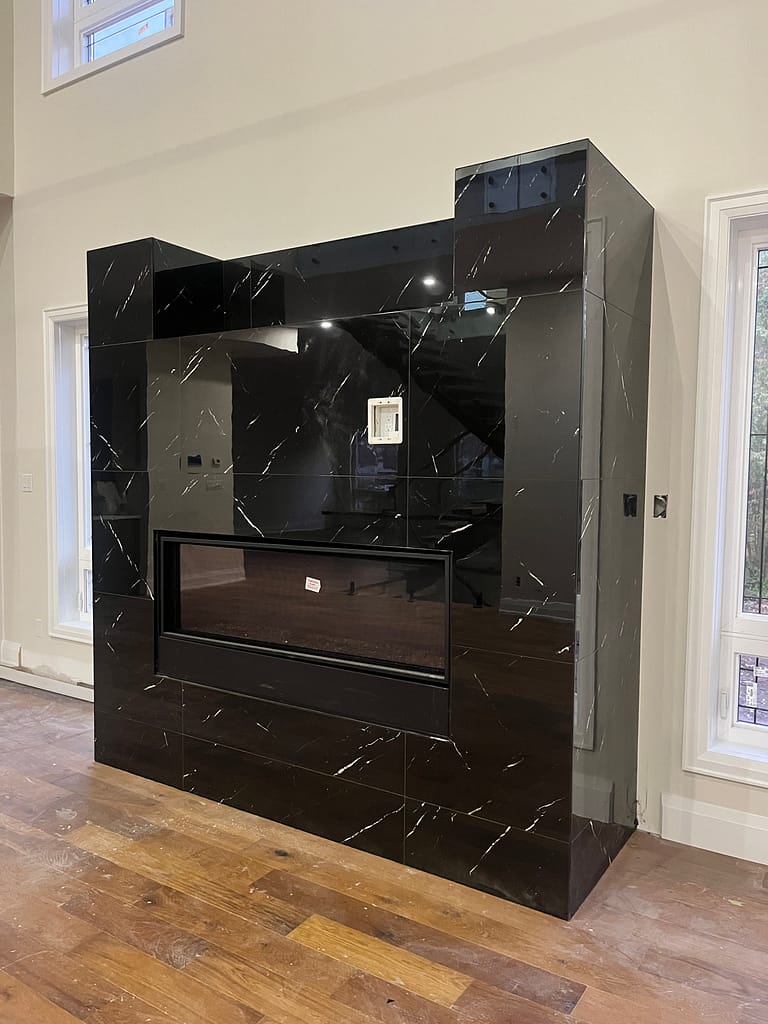
The fireplace wall was a different kind of work from the doors and trim, but it needed the same habits. The layout had to be marked carefully. The frame had to be built with the final black tile surface in mind. The proportions had to feel right before any finished material went on.
That is one of the quiet realities of custom home finish work. A carpenter may start with doors and casing, but the trust often comes from how the details are handled on site.
You can see that related Oakville project here: Custom Black Tile Fireplace Feature Wall in Oakville
What Wood Job checks before the work moves forward
Before installing doors and trim in a new custom home, the first job is to slow down enough to understand the openings.
A door opening can look ready until the level, tape, and eye get involved. Some jambs need more attention. Some drywall edges are not sitting the same on both sides. Some floors need to be considered before final door clearance is set.
On this kind of project, Wood Job looks at the practical details before cutting too far into the package.
The main questions are simple. Are the openings ready? Are the jambs sitting properly? Are the reveals going to look consistent? Will the casing sit cleanly against the drywall? Are the baseboard transitions planned? Is the hardware ready? Is the painter coming before or after final installation? Is there anything the contractor should know before the work gets buried under paint?
Those checks are not dramatic. They are just necessary.
Good finish carpentry is often a series of small decisions made correctly.
Why this matters for contractors
Contractors and builders are usually judged by the finished home, not by the rough work hidden behind the walls.
That may not be fair, but it is true.
A homeowner may never see the framing detail that was corrected. They may not know how many trades had to be coordinated. But they will see the doors, casing, baseboards, stairs, walls, ceilings, and final lines every day.
That makes the finish stage sensitive.
A contractor needs someone who can come in, understand the site, communicate clearly, and handle the visible details without creating extra stress. Not every project needs a large crew. Some projects need a careful finish carpenter who can move through the home with control and keep the details consistent.
That is the role Wood Job Finish Carpentry played in this Oakville custom home.
Small by choice does not mean small responsibility. On a project like this, it means the work is not passed through too many hands.
A note for Oakville homeowners reading this
Although this project was done for a contractor, the final result belongs to the homeowner.
If you are building or renovating a custom home in Oakville, the door and trim package is worth paying attention to early. Door style, casing profile, baseboard height, hardware finish, painting sequence, and flooring height all affect the final look.
It is much easier to plan these details before material arrives than to correct them later.
For homeowners looking specifically for local work, Wood Job also has an Oakville service page for Interior Door Installation in Oakville and a broader Finish Carpenter in Oakville page.
Planning a similar custom home finish package
If you are a contractor, builder, designer, or homeowner planning a door and trim package for a custom home, the first step is to share the basic project information.
A useful message usually includes the project location, approximate square footage, number of doors, floor count, door type, trim profile if already selected, stage of construction, painting schedule, and a few site photos or drawings.
For a full-house package, photos of typical door openings, hallway areas, baseboard runs, stair areas, and any special trim conditions are especially helpful.
Wood Job Finish Carpentry can review the details and let you know whether the project can be estimated from drawings and photos, or whether an on-site walkthrough makes more sense.
You can start with the Request a Photo-Based Estimate page.
FAQS
Do you work with contractors on new construction homes?
Yes. Wood Job Finish Carpentry works with contractors, builders, renovators, designers, and homeowners on residential finish carpentry projects. For new construction homes, the work can include interior doors, casing, baseboards, trim packages, custom jambs, wall details, ceiling details, and final-stage interior finishing.
Is interior door installation different in a custom home?
Yes. In a custom home, the work is usually part of a larger finish package. The doors, jambs, casing, baseboards, flooring, hardware, and painting schedule all affect each other. The goal is not only to hang the doors, but to keep the final lines consistent throughout the house.
Why do door reveals matter?
The reveal is the small gap around the door. If the reveal is uneven, the door may look poorly fitted even if it technically opens and closes. Clean reveals help the doors look intentional and properly installed.
Can trim be installed before painting?
Usually, yes, but the exact sequence depends on the project. In many new construction homes, trim is installed before final paint. The painter then fills, caulks, primes, and finishes the material. Timing should be coordinated so the work does not create extra sanding, touch-up, or delay.
What should a contractor send before requesting a rough estimate?
For a custom home door and trim package, send the project location, number of doors, floor count, approximate square footage, trim profile, door type, drawings if available, current construction stage, painting schedule, and clear photos of typical openings and special areas.
Does Wood Job only work in Oakville?
No. Wood Job Finish Carpentry serves Oakville, Milton, Burlington, Mississauga, Cambridge, Guelph, Kitchener, Hamilton, Vaughan, Toronto, Halton Region, Waterloo Region, and the GTA.
Related Services
Interior Door Installation in Oakville
For the door installation service in Oakville, including solid-core doors, slab doors, prehung doors, casing, jambs, hardware and custom fitting.
Finish Carpentry for Contractors
Wood Job Finish Carpentry is reliable partner for custom home contractors in Oakville
Finish Carpenter in Oakville
Owner-led finish carpentry in Oakville, including doors, trim, crown moulding, fireplace walls, feature details and custom interior finishing.




